
Solo Project
Genre: Third Person Action Adventure
Engine: Unreal Engine 5.7
Development: 8 weeks
Iterations: 6
Playtests: 10
Tools: Jakub W AGLS, UE Blueprints, Affinity, Miro
Iterations Overview

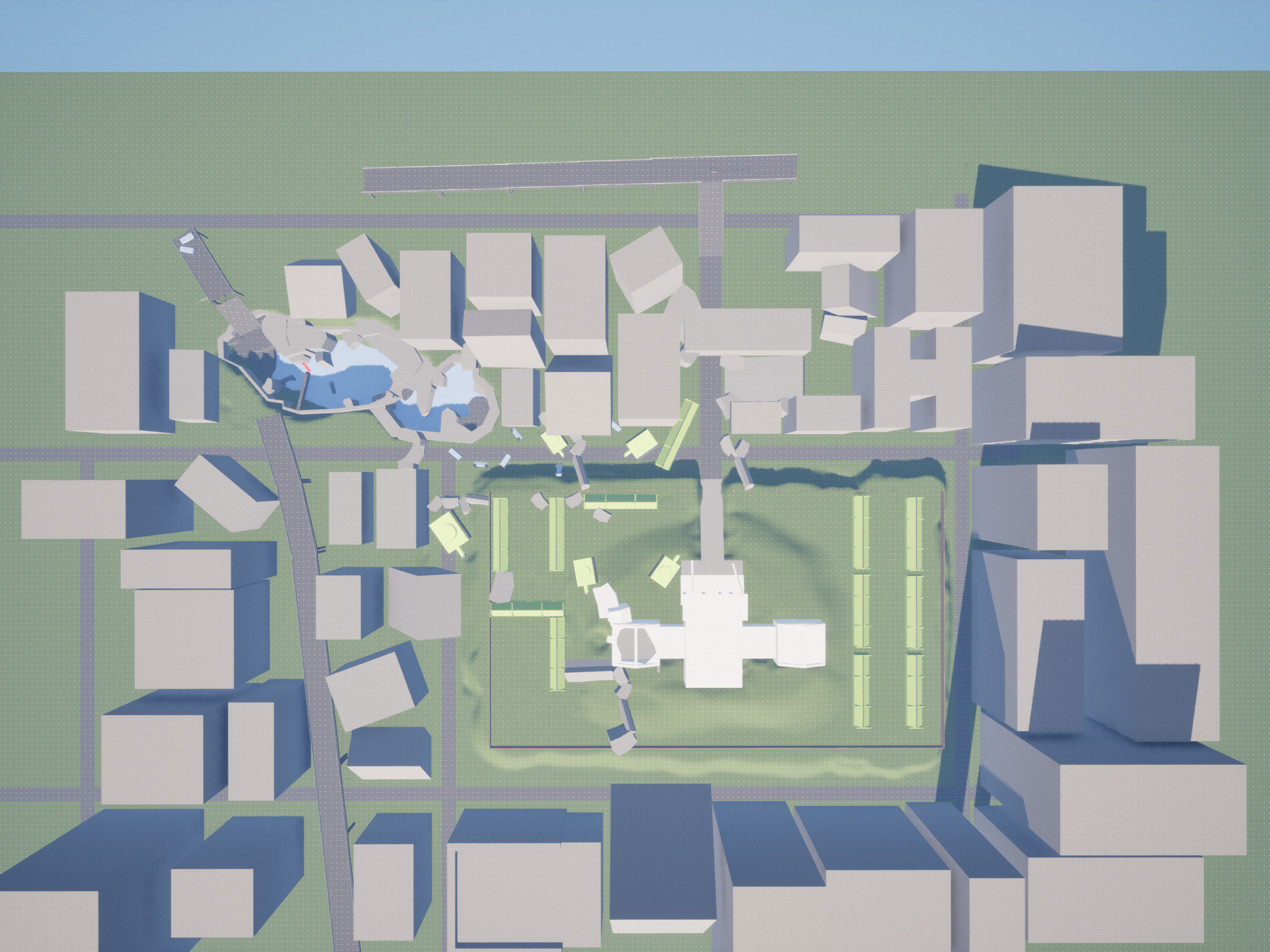
Blockout Iteration 1
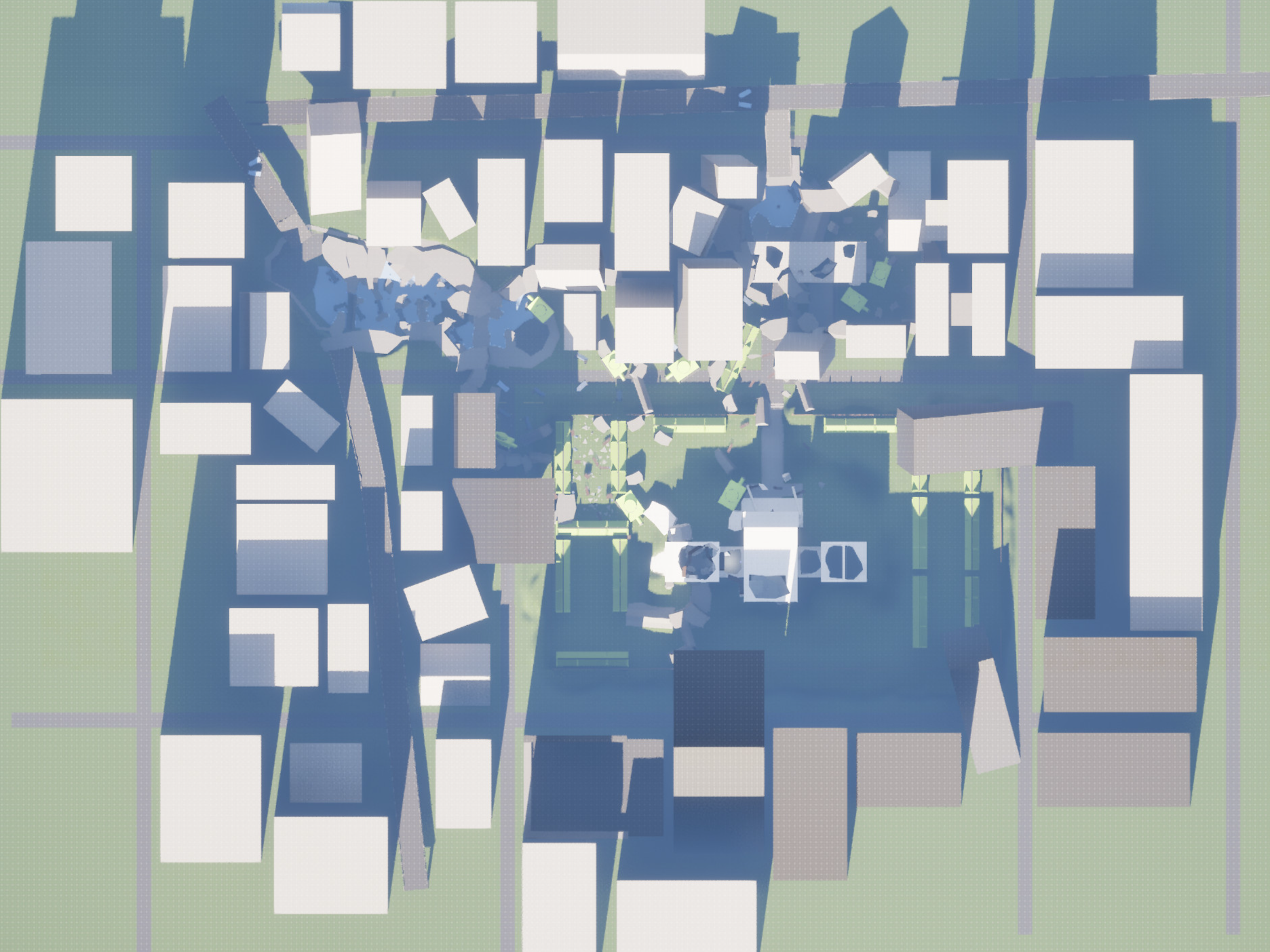
Blockout Iteration 2
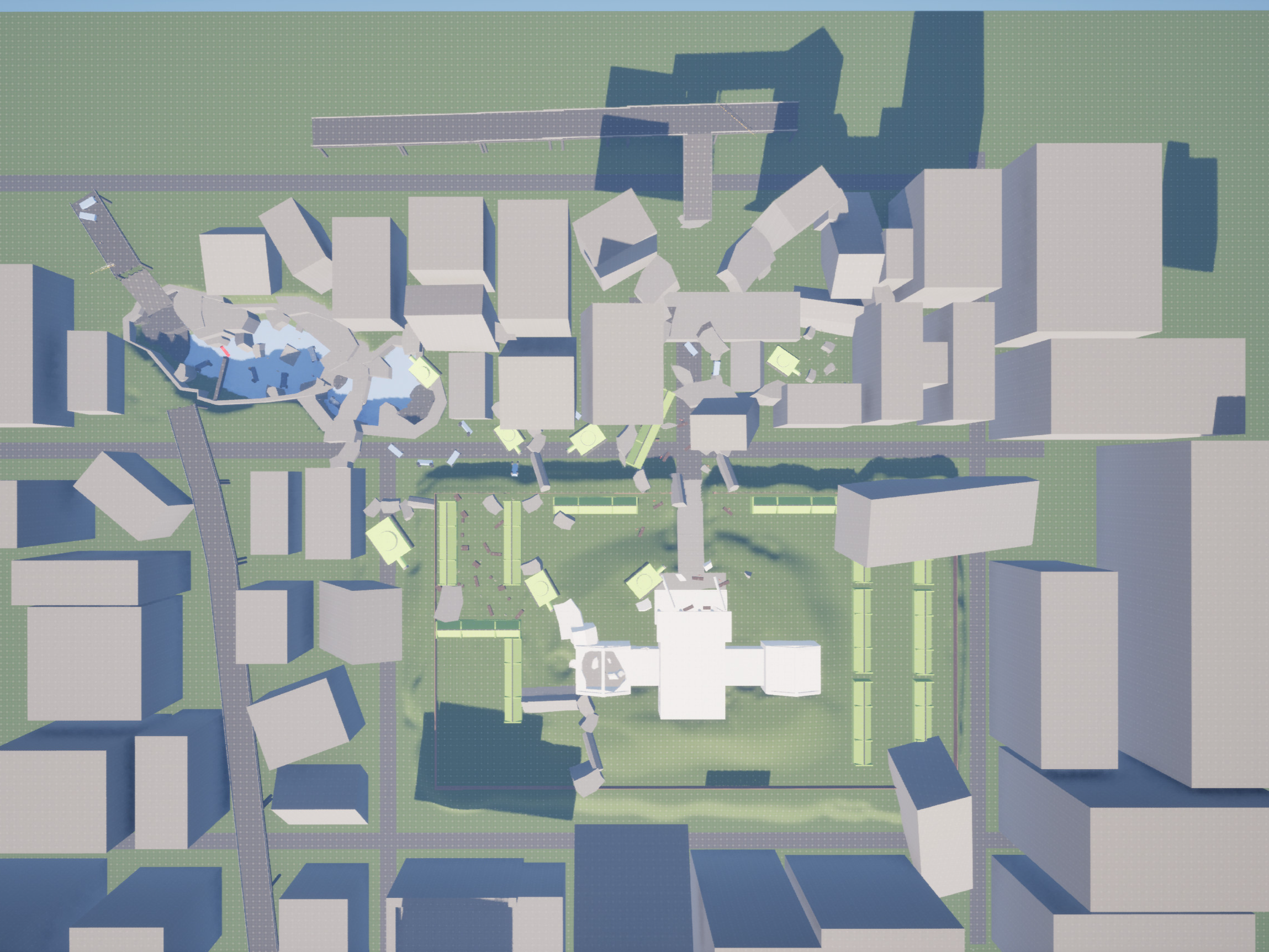
Blockout Iteration 3
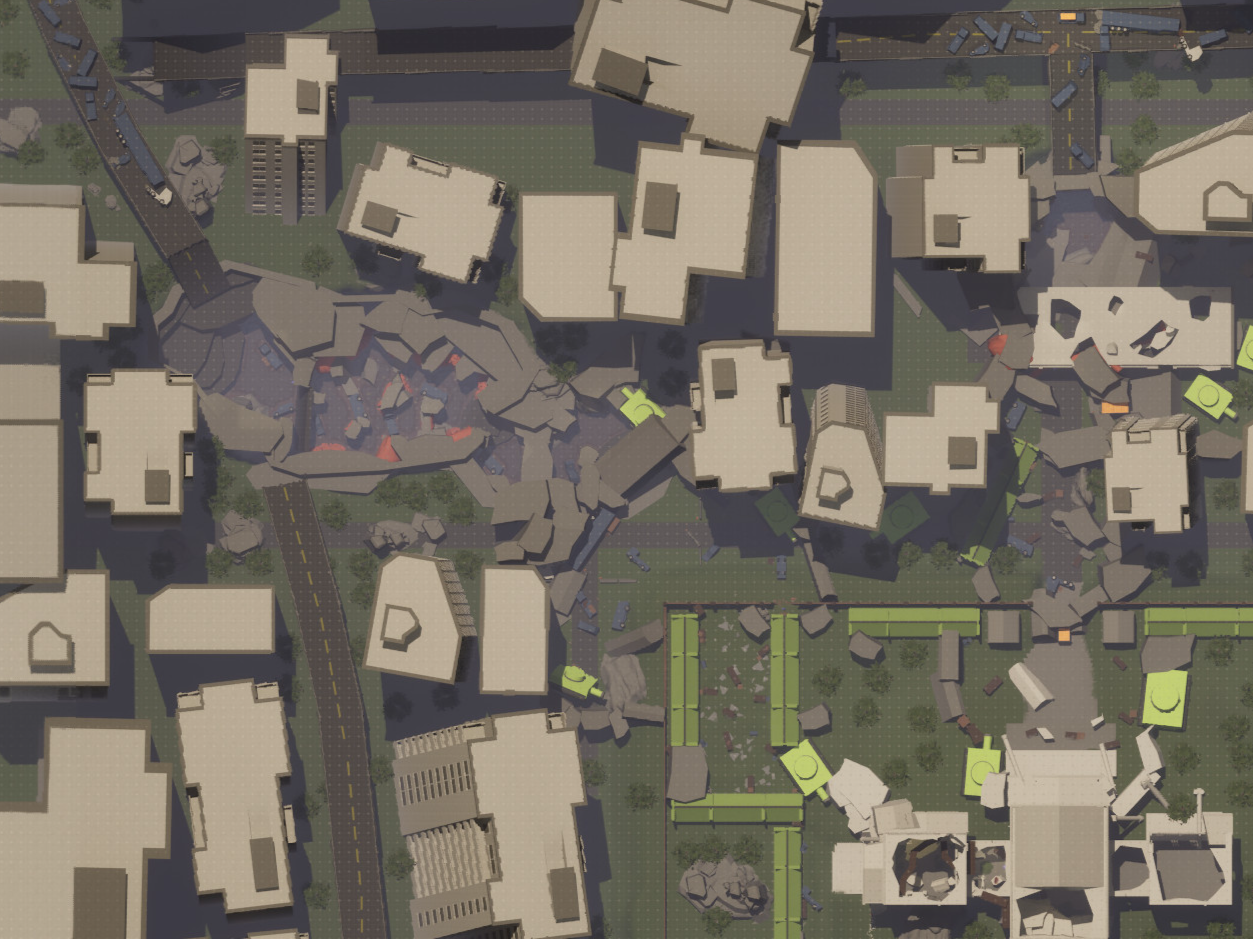
Blockout Iteration 4
Polish Iteration
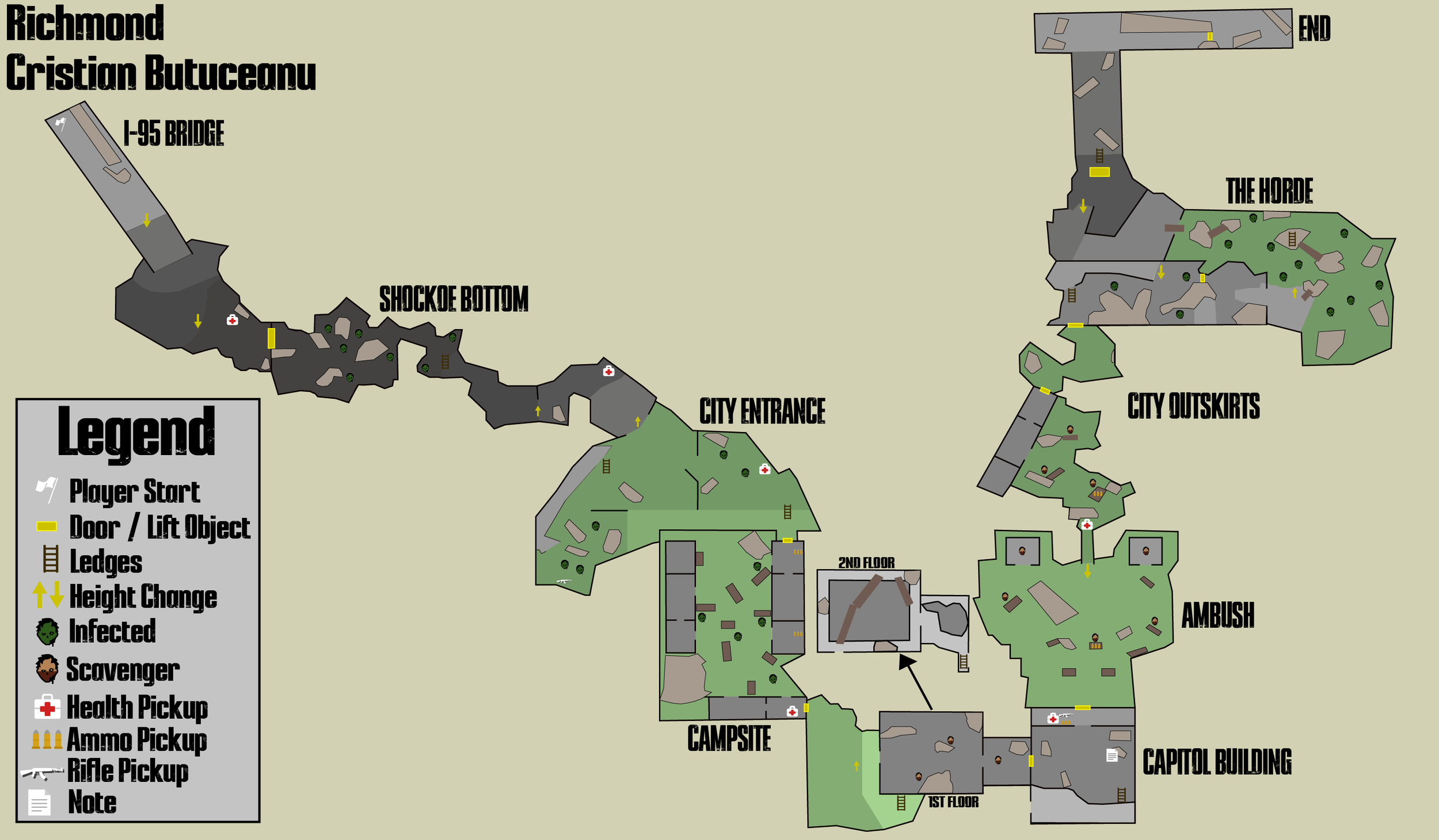
2D Map
Project Goals
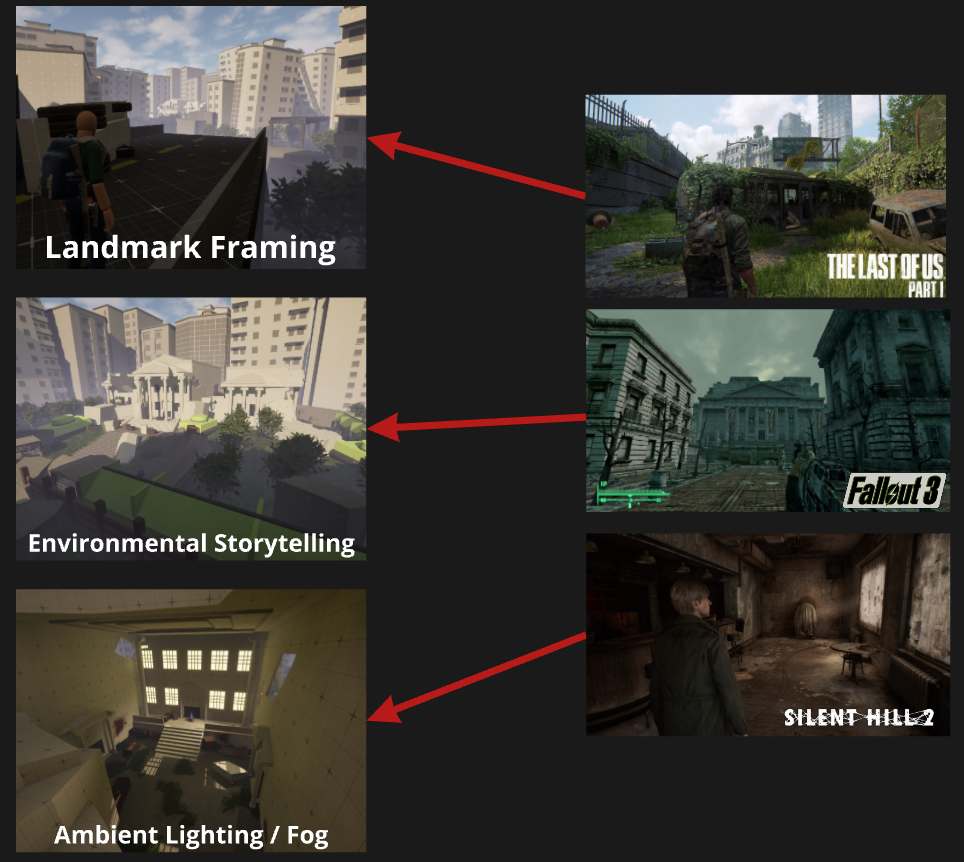
My goal was to create a cinematic, narrative-driven level that pulls the strongest elements from the games I admire: The Last of Us Part I, Fallout 3, and Silent Hill 2. It was a chance to sharpen my core level design craft through hands-on iteration, with a focus on readable, well-paced spaces while replicating a scale and layout-accurate Richmond, VA. I focused on
Using Landmarks to guide the player through the level.
Designing readable spaces using sightlines, cover, and composition.
Driving mood and tension through environmental lighting and set dressing.
Iterating from playtest feedback to tighten layout and flow.
Level Overview
The level takes place across a flooded Richmond, Virginia in 2016, 3 years after the Cordyceps outbreak. Joel and Tommy's mission is to follow a radio broadcast to a reported survivor settlement and confirm whether anyone is there.
Players move through outdoor and indoor spaces that balance exploration, stealth, and combat.
The level is linear but, player paced that rewards exploration through finding alternate paths to give you an advantage
Environmental storytelling through a settler journal and campsites overrun by infected reveals what happened to the settlement without exposition.
Midway through the level players face a faction ambush outside the Richmond capitol building, peaking the tension of the level.
Beat Breakdown
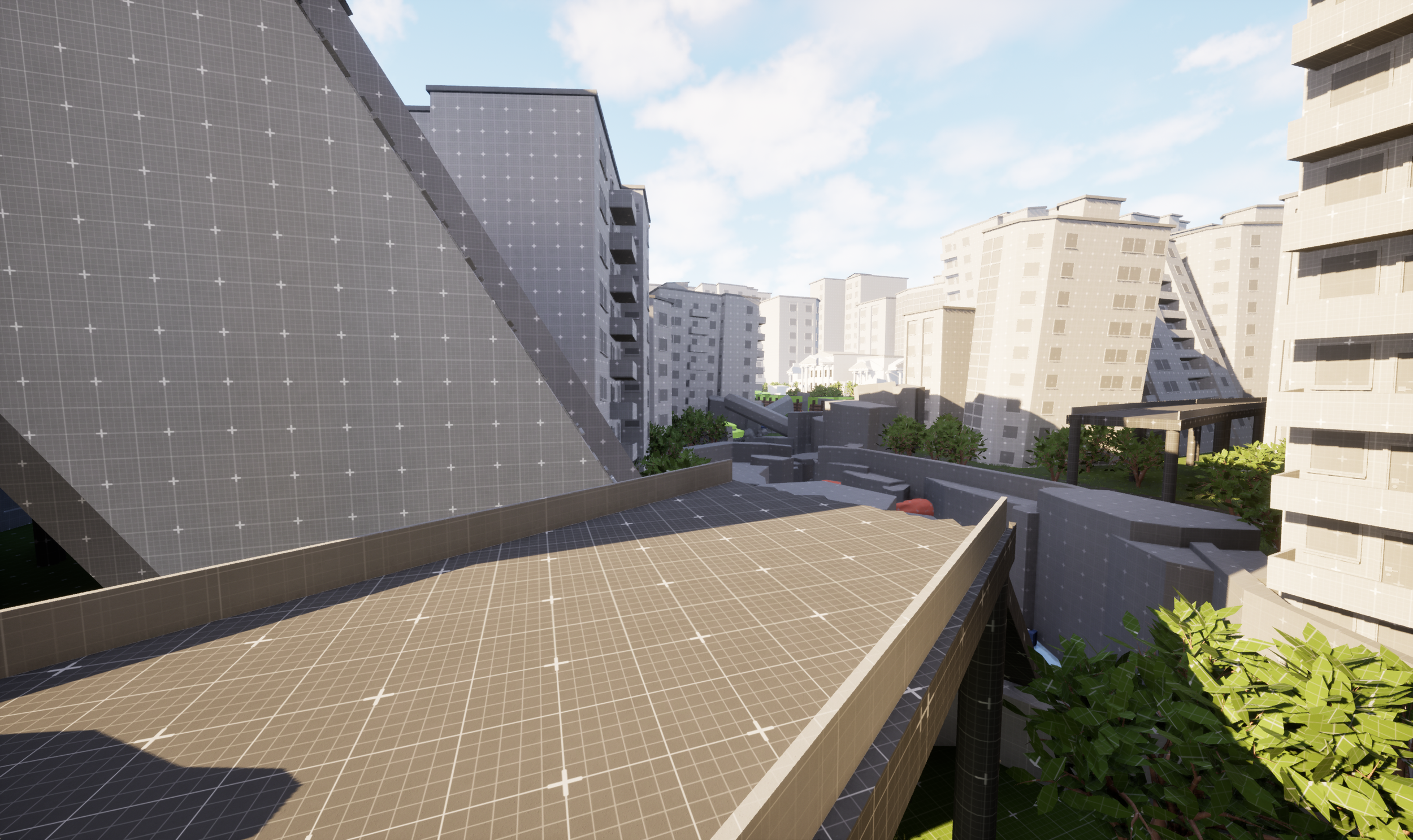
Beat 1: Exposition
Tommy & Joel start on the I-95 Bridge and hear a radio broadcast offering shelter to those running from FEDRA and to “Rebuild America.” Although Joel has his doubts, he will see this through, for Tommy.
Players are introduced to the characters and their differing opinions
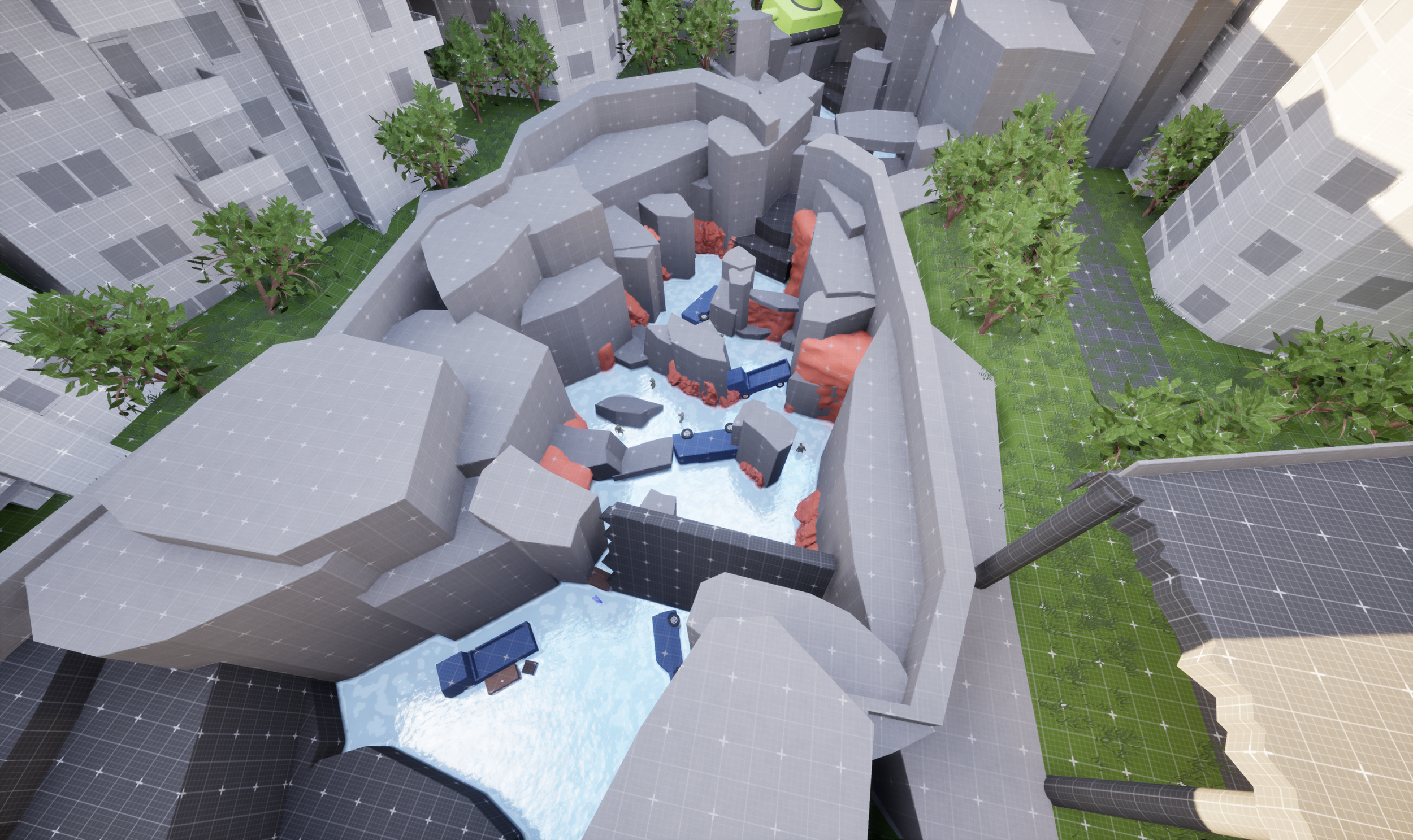
Beat 2: Shockoe Bottom
Tommy & Joel slide down a broken section of the bridge into a collapsed section of the city, here the two run into infected and set up a plan for Joel to flank the infected while Tommy covers him. the two then climb out into the city.
Players are introduced to stealth elements, healing items, and combat
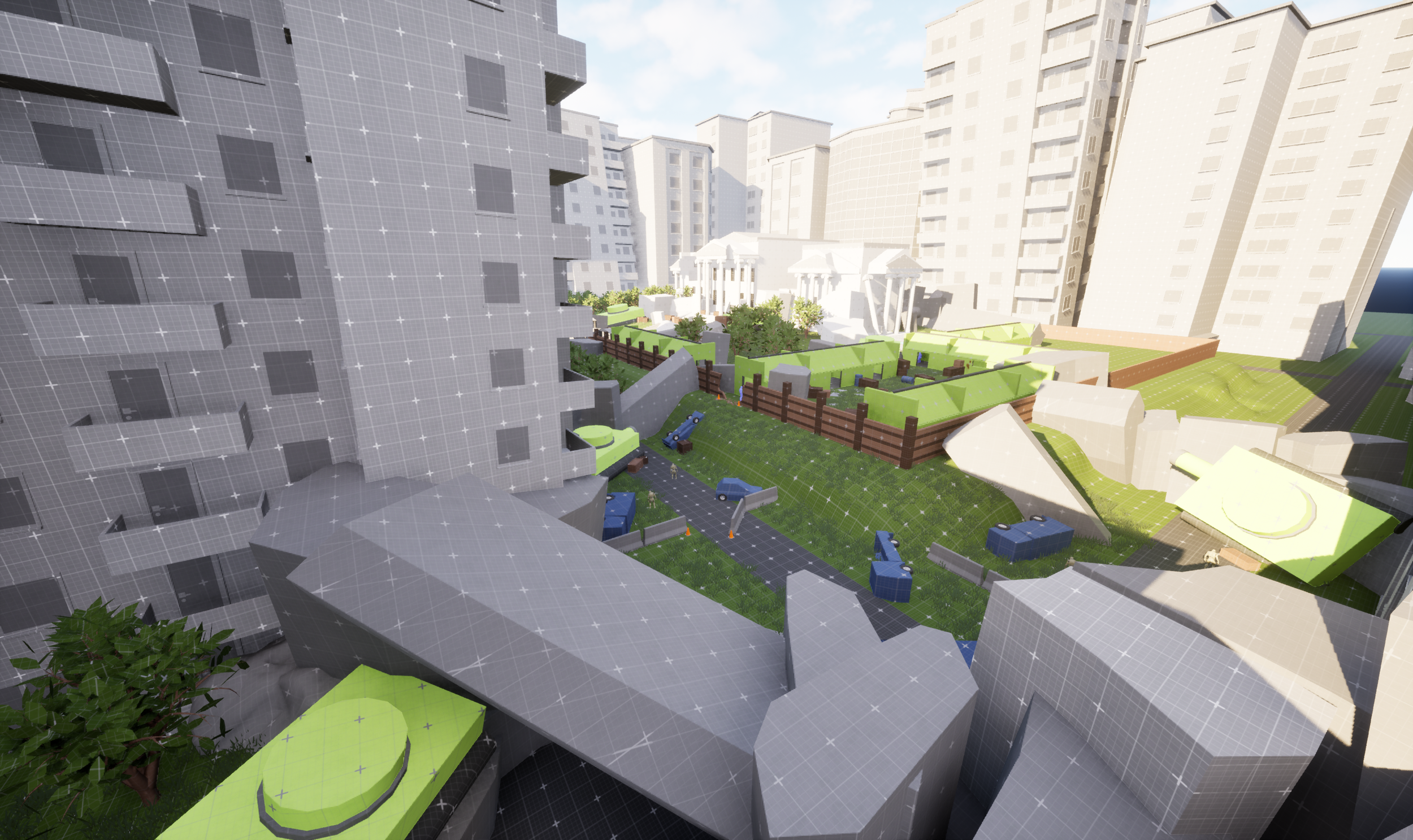
Beat 3: Overrun
Tommy & Joel enter the city to find a breach into the settlement and infected in the streets, as doubt grows between the two they push forward into the settlement, Tommy & Joel push through another group of infected in a campsite to move closer to the capital building.
Players are shown stealth takedowns with infected then offered multiple paths through the campsite.
Beat 4: The Capitol
Tommy & Joel approach the Capitol building to see armed people with blood stains on the walls, while Tommy thinks that they found what the were looking for, Joel disagrees and suggests they find another way around, once in they find a note from a settler documenting their last moments.
Player is introduced to human enemies and multiple paths to progress.
Beat 5: Ambush
After exiting the Capitol Building, Tommy & Joel are ambushed by the scavengers. With no where to run, the two are forced to push through while working together.
Player is introduced to combat with human enemies, switching shoulder cameras, and offering multiple cover points to advance through the courtyard.
Beat 6: City Outskirts
After escaping the ambush, Tommy & Joel enter an abandoned building to find more infected they can either sneak around, or take out.
Players get a short break after the intense ambush before a slow stealth encounter.
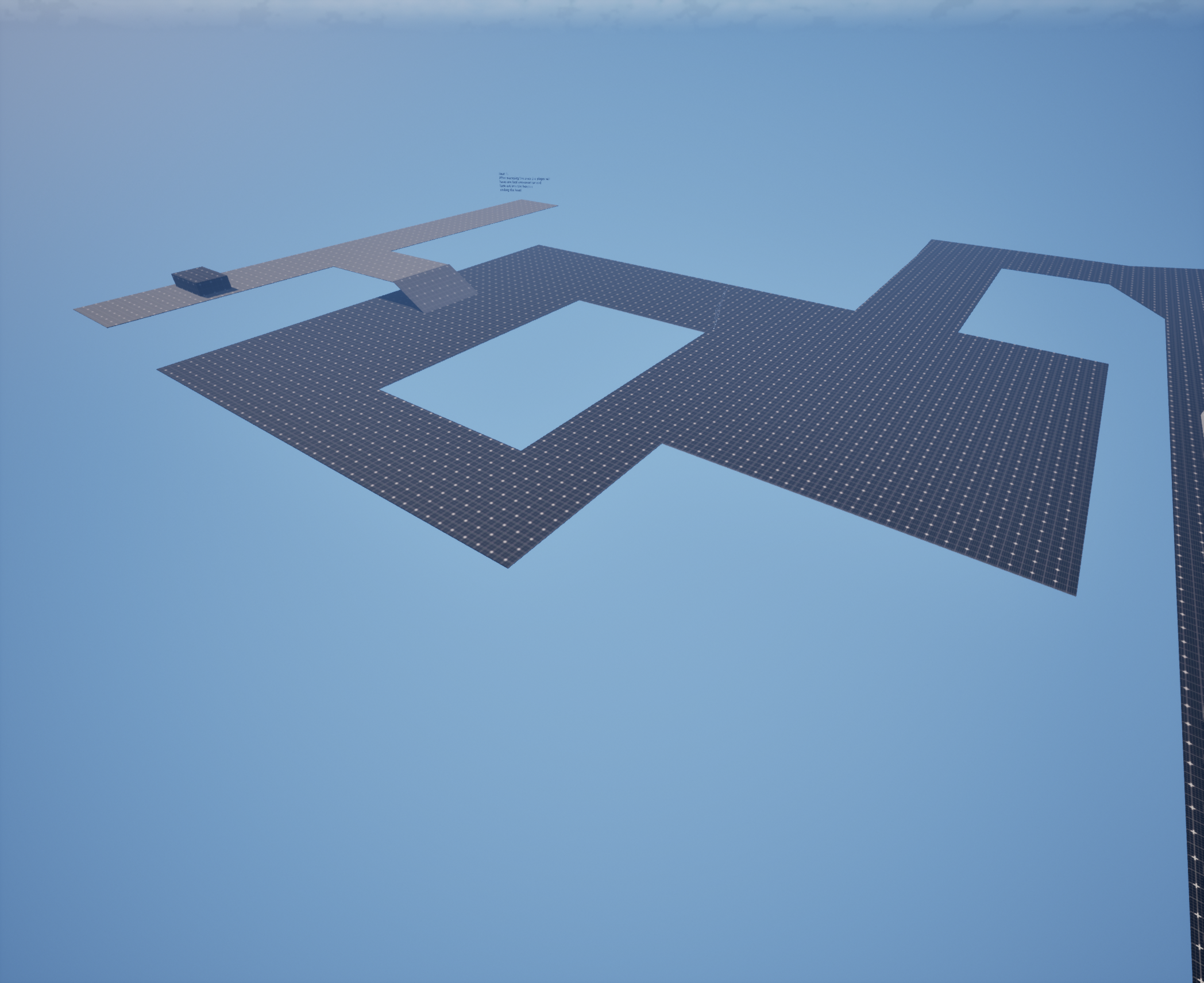
Beat 7: The Horde
Once leaving the building Tommy and Joel enter and open area with a horde of infected surrounding them, jumping from ledge to ledge to avoid falling down. Then climb a wall to finally reach the I-95 Bridge.
Players will have one last tense encounter that requires precise movement and good timing to complete.
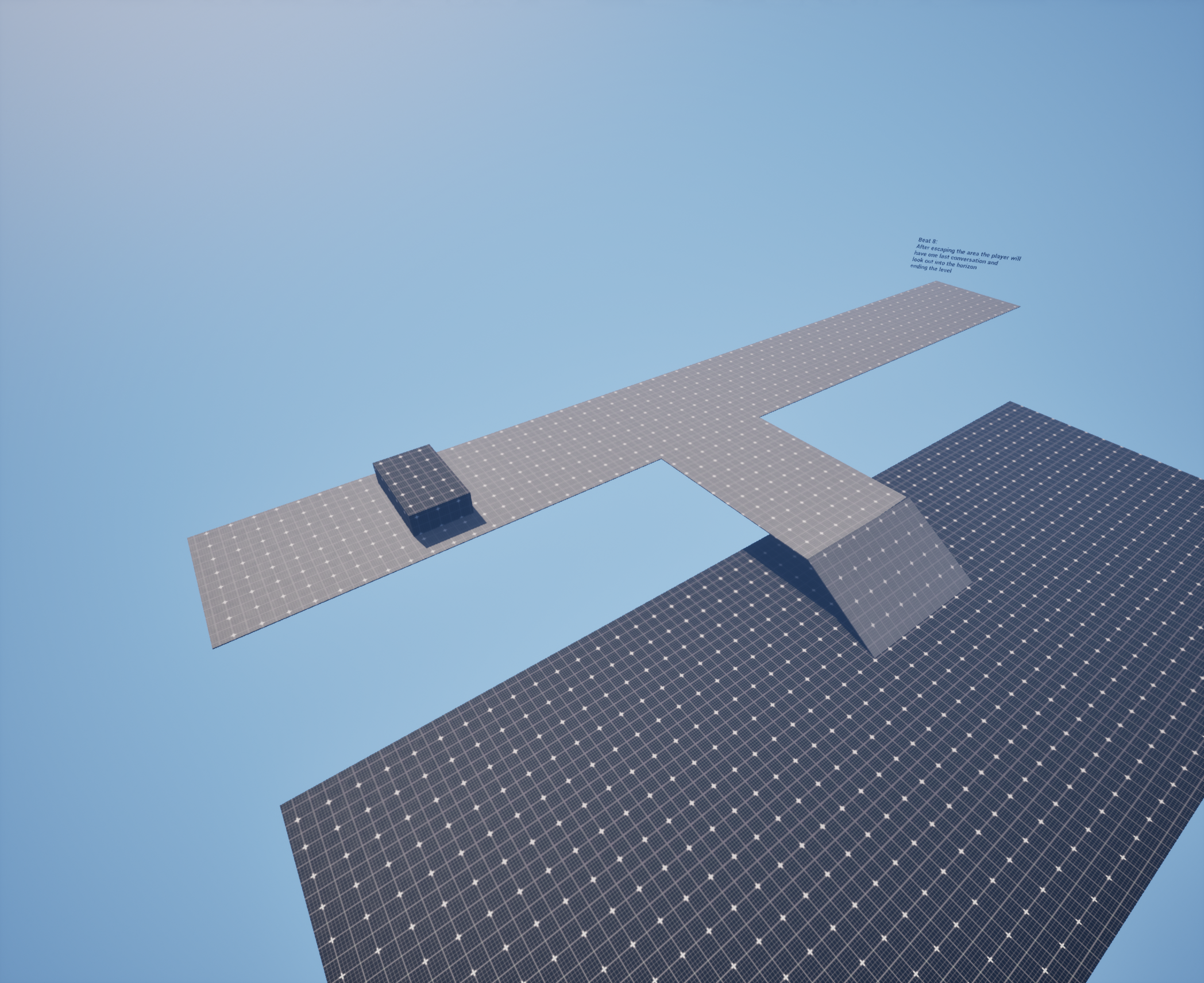
Beat 8: Close
After getting onto the bridge Tommy & Joel have a heated conversation about the decision to follow the signal in the first place, leaving the level on a tense note.
Players get insight into Tommy & Joels relationship starting to fall apart before the events of The Last of Us Part 1.
Technique Highlights
Framing Landmarks
I framed key landmarks to support navigation and establish clear points of orientation across the level.
How I applied it: large, elevated structures were purposely placed to help guide players between areas and reinforce spatial understanding of the area.
Level examples:
Capitol Building: Shown multiple times throughout the level to serve as the main objective before the ambush.
I-95 Bridge: Is shown to the player before the ambush as a potential way out, then shown again, carving a path as an exit.
Enforcing Player Agency
Throughout the level, I offered the player multiple paths to progress, some allowing stealth.
How I applied it: Main encounters took place in a wider area, allowing space for multiple routes and to have those routes within sight for the player.
Level examples:
Shockoe Bottom: Introduced stealth elements while offering direct combat with infected.
Capitol Building Campsite: Campsite has multiple framed paths for the player and 2 entrances to the capitol building
Capitol Building Entrance: Narrative hints at multiple paths but suggests stealth.
Environmental Storytelling
I used environmental storytelling to communicate story beats and gameplay segments, foreshadowing dangers and reinforcing the post apocalyptic atmosphere.
How I applied it: I placed props and decals throughout the level to help prepare players for events and deepen immersion.
Level examples:
Shockoe Bottom & City Outskirts: Fungus in each area to suggest infected presence.
Capitol Building: Blood stains, rubble, and a note to reveal what happened in the capitol building before the scavengers arrived.
Key Iterations
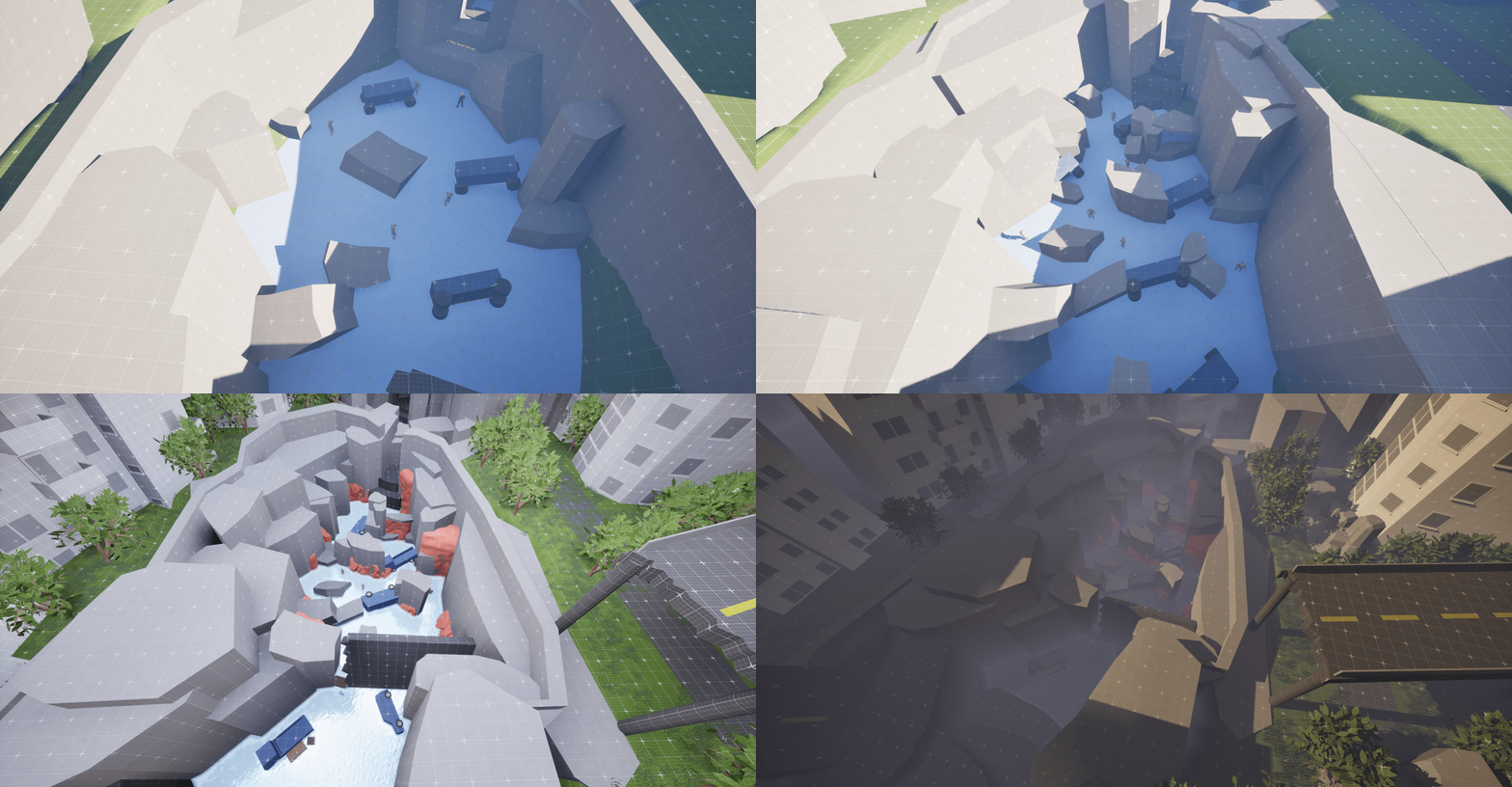
Pre - Production
I researched games, real world references, and other forms of media to better shape the project. This research helped guide the Beat Sheet, 2D map, and LDD.
Games: The Last of Us Part I, Fallout 3, Silent Hill 2
Real-World References: Downtown Richmond, VA
Other Media: No Country for Old Men, York New City, Children of Men
LDD: Creating the LDD helped me organize the structure of the level and clearly define the player's objectives, the narrative context, and the gameplay systems present in the level. This made it easier to keep the design focused and ensured that every beat supported the central goal of the level, It contains:
Level Objectives
Narrative & Setting (world context, themes, tone, and environment)
Gameplay Mechanics (movement, traversal, stealth, combat, and player interactions)
Enemy & NPC Behaviours
Beat Structure, flow, and pacing across all eight beats
Points of interest
Beat Sheet: The beat sheet helped me structure the pacing of the level to ensure a clear and balanced flow between exploration, stealth, combat, and narrative moments while maintaining a clear progression for the player across all eight beats.
2D Map: The map helped plan the level before blockout, defining the Critical Path. . improving spatial understanding before moving into engine work.
Iteration 1 - Roughout
Goal: Define a playable layout with proper scale, readability, and movement flow through blocked out buildings and encounters
Results: The level felt too open and long, lacked strong landmarks & lacked the verticality I was aiming for.
Implementation:
Blocked out buildings and encounter spaces using Unreal Engine's Modeling Tools
Used very simple geometry to focus on framing landmarks and readability
Shaped movement paths between sections so the player naturally flows through the level

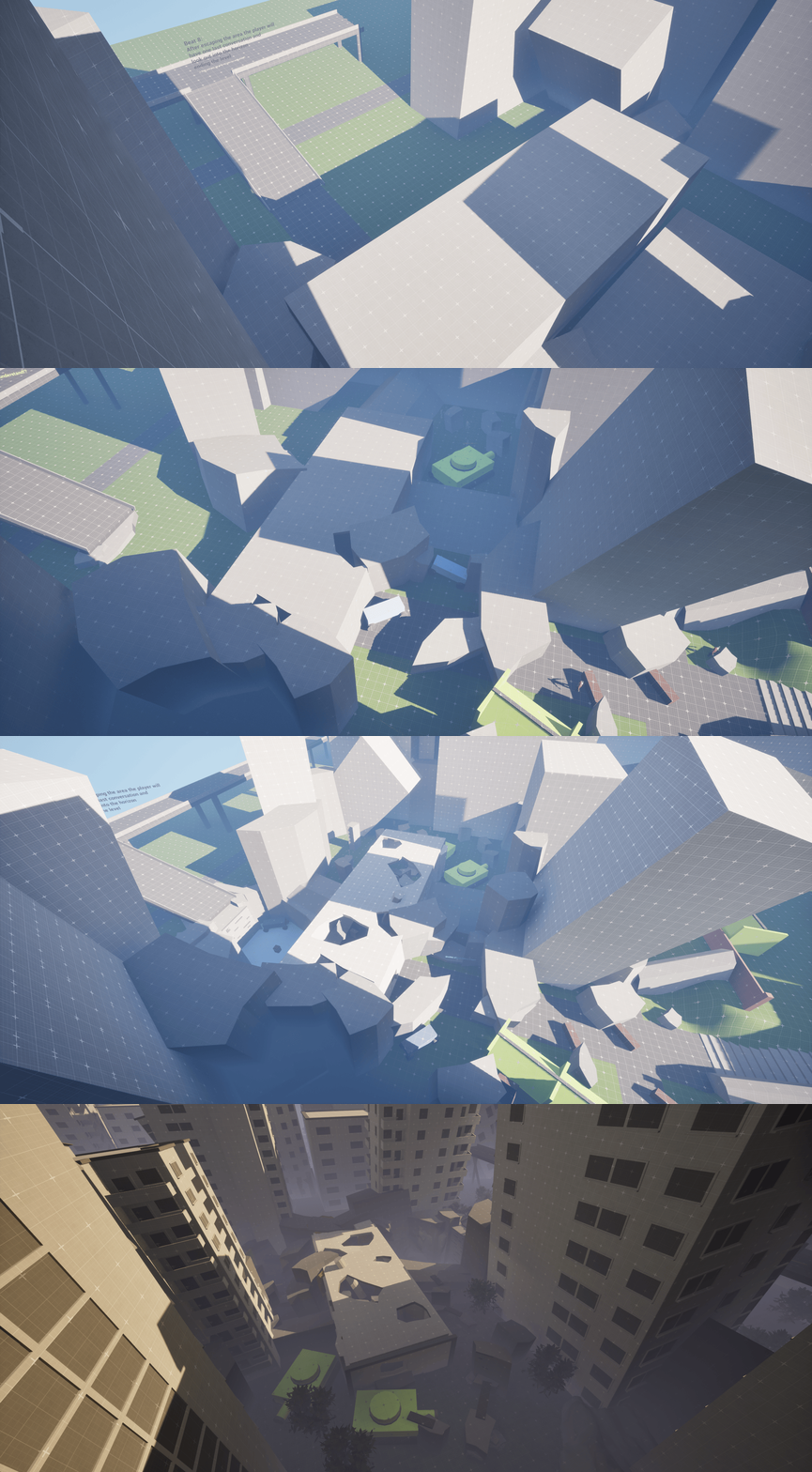
Topdown
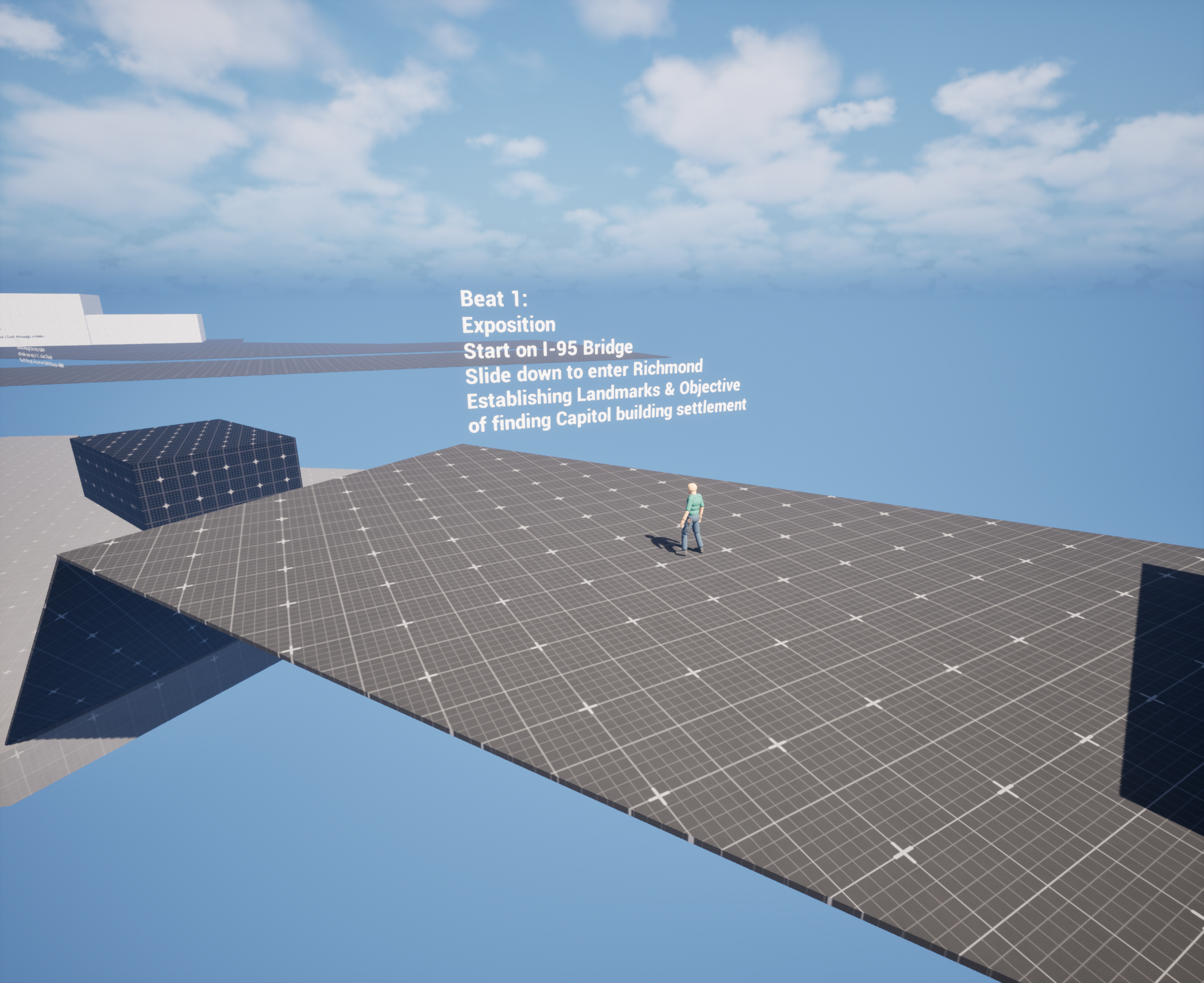
Beat 1
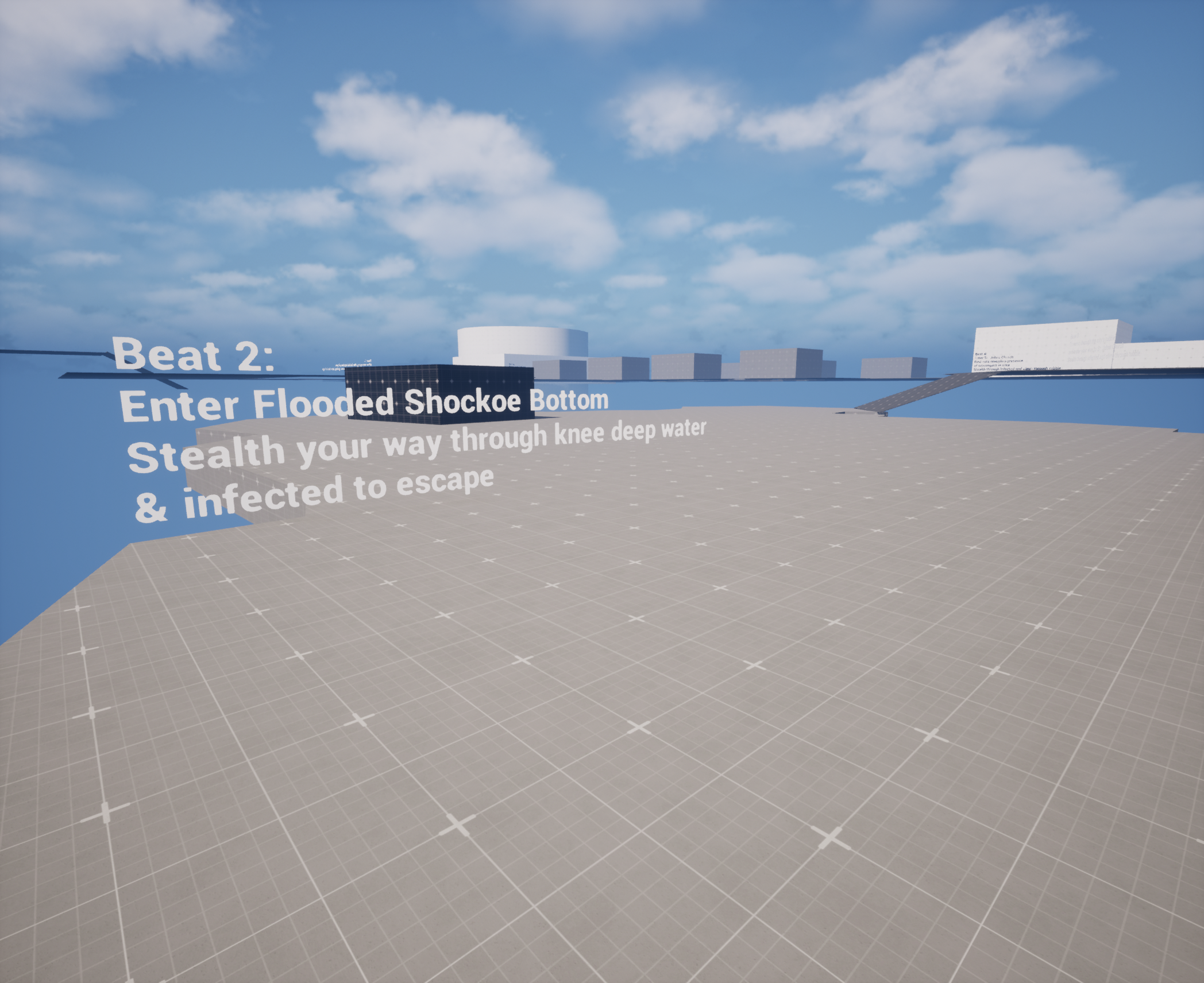
Beat 2
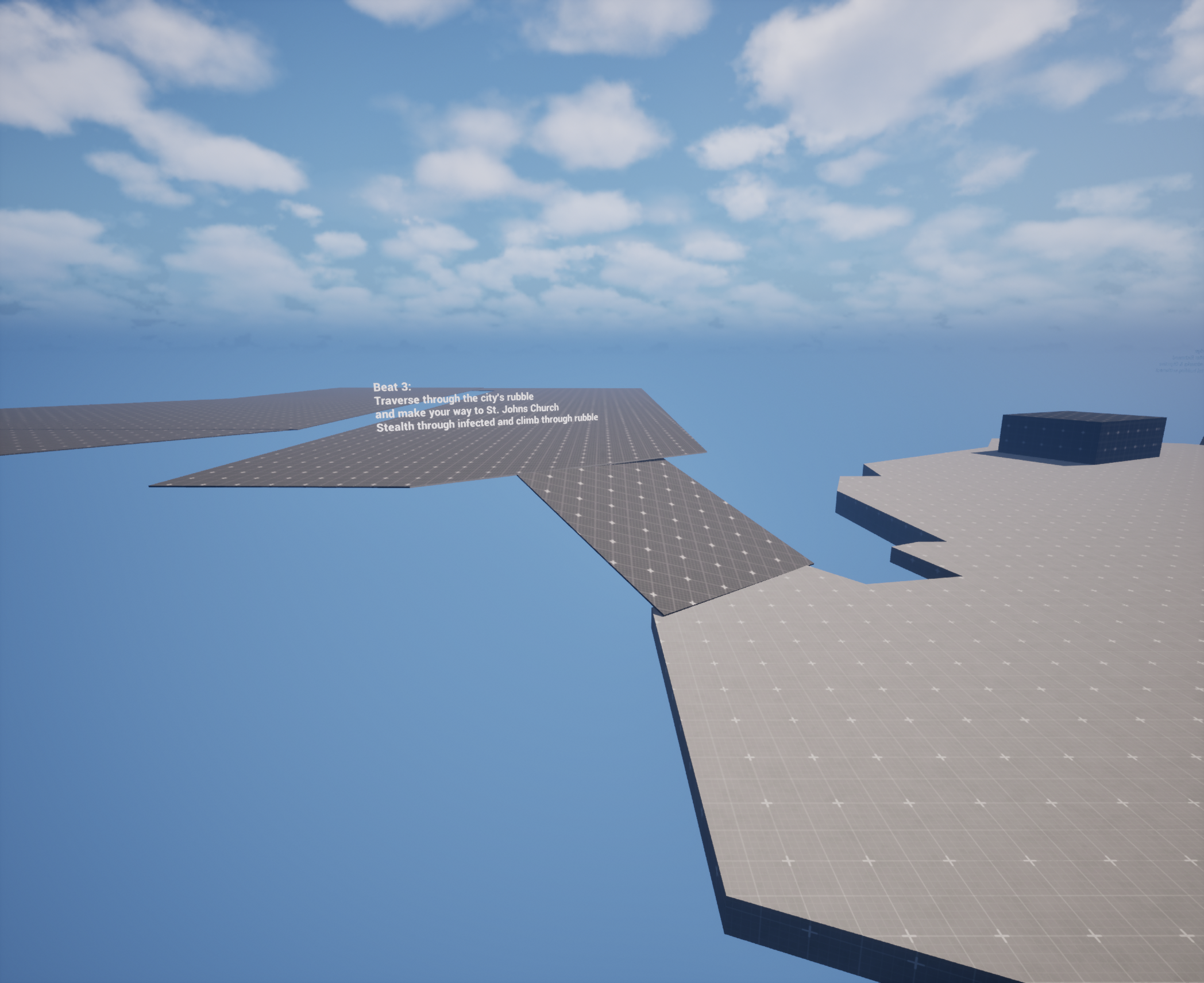
Beat 3
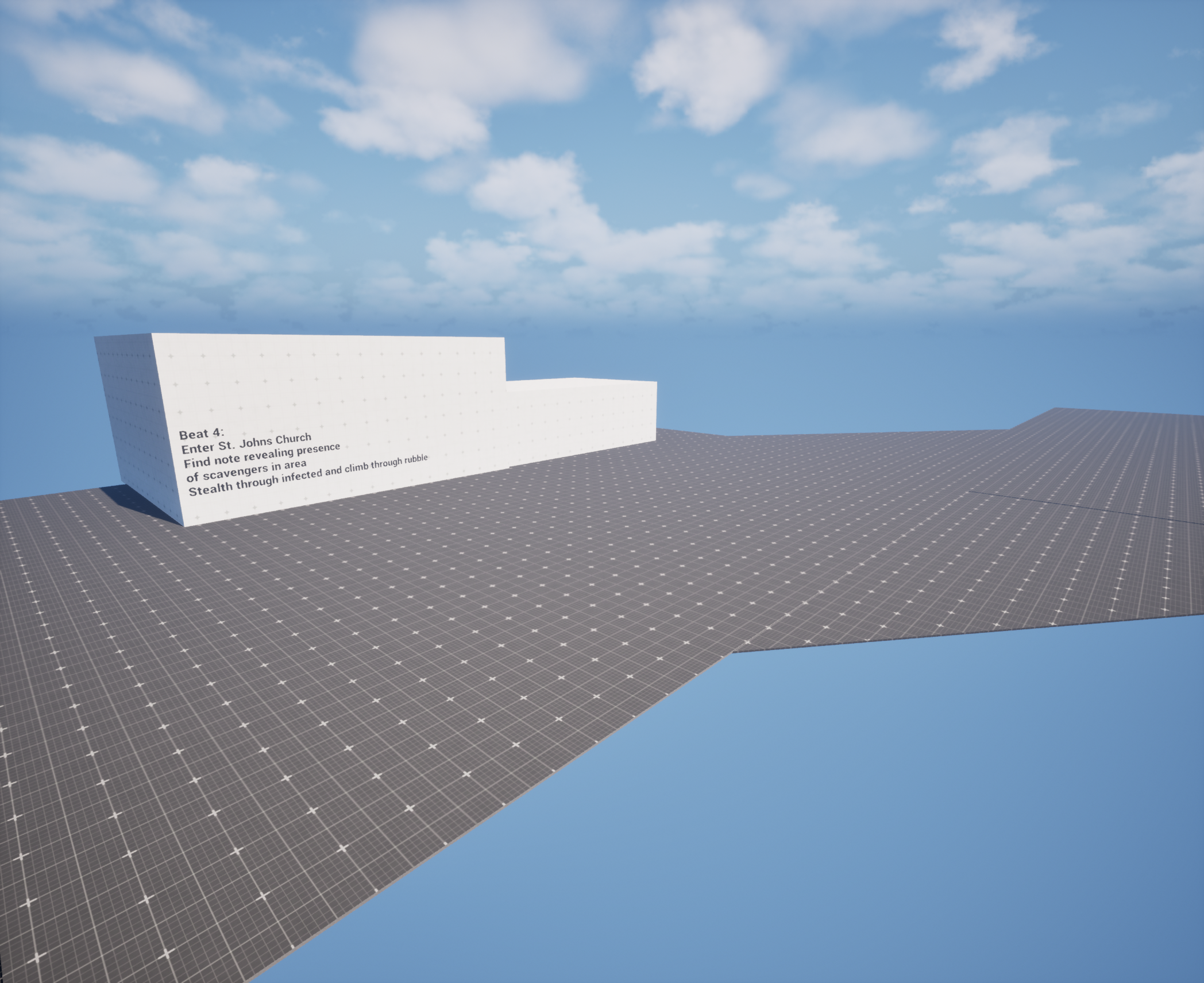
Beat 4
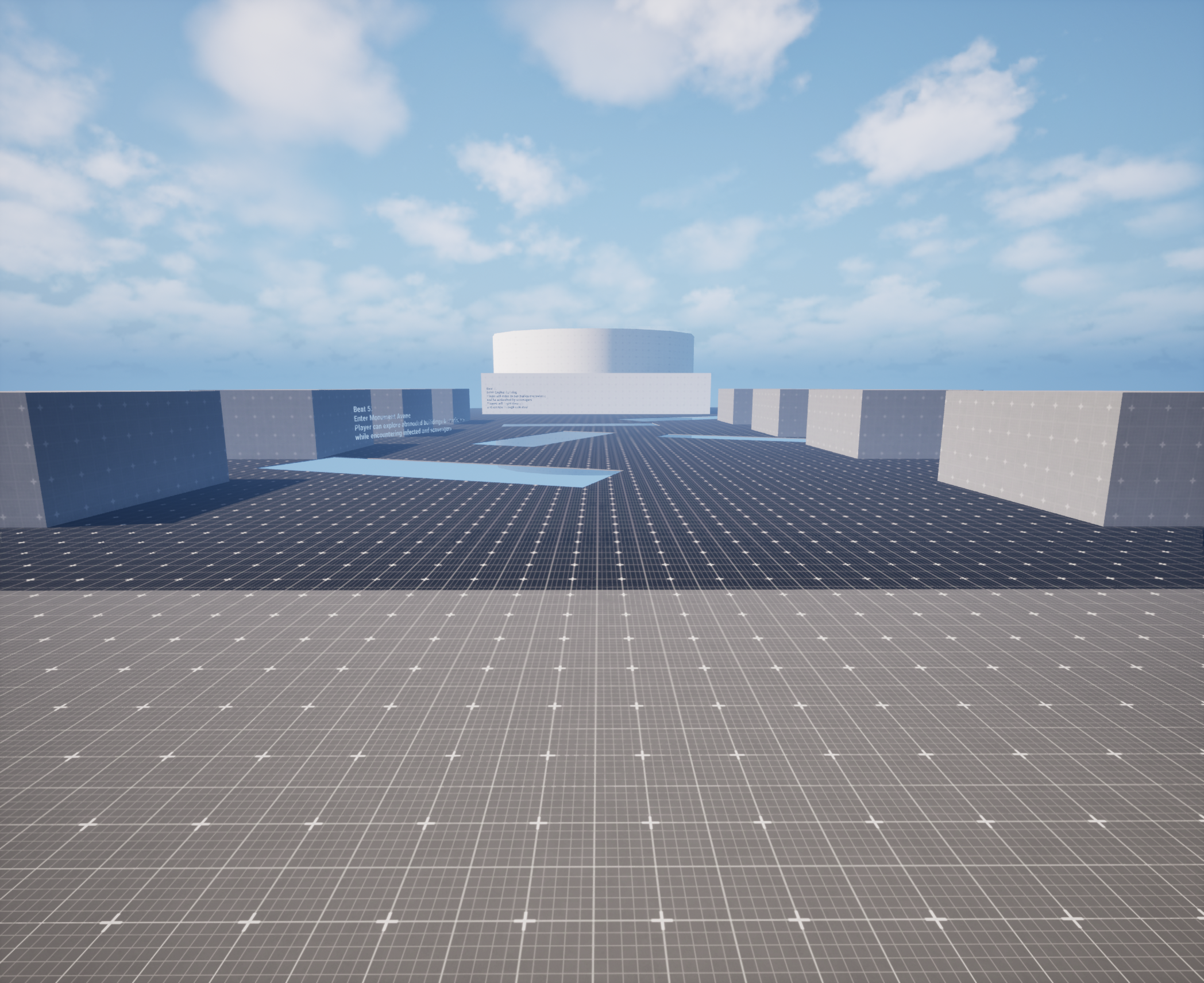
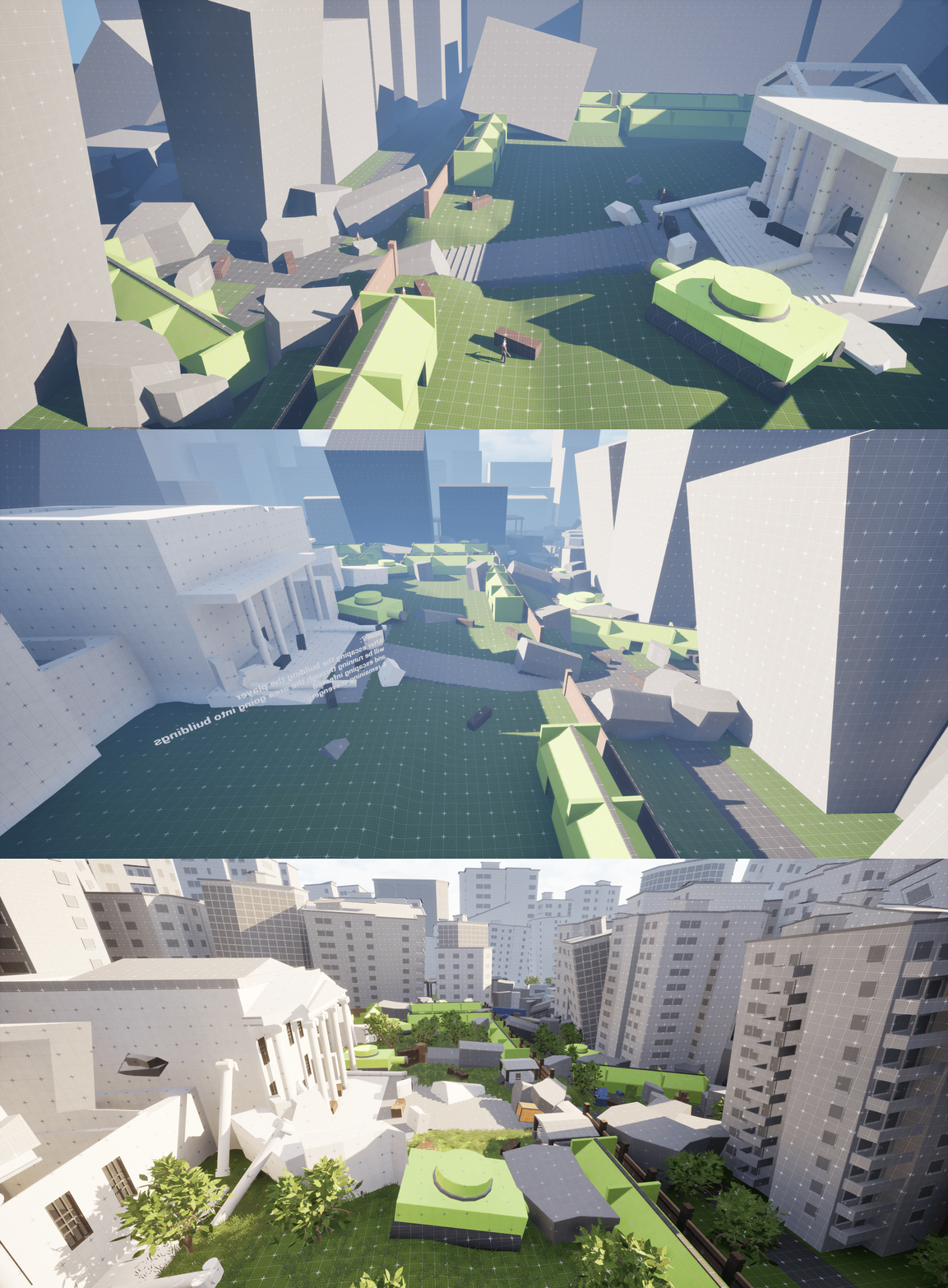
Capitol Building Vista
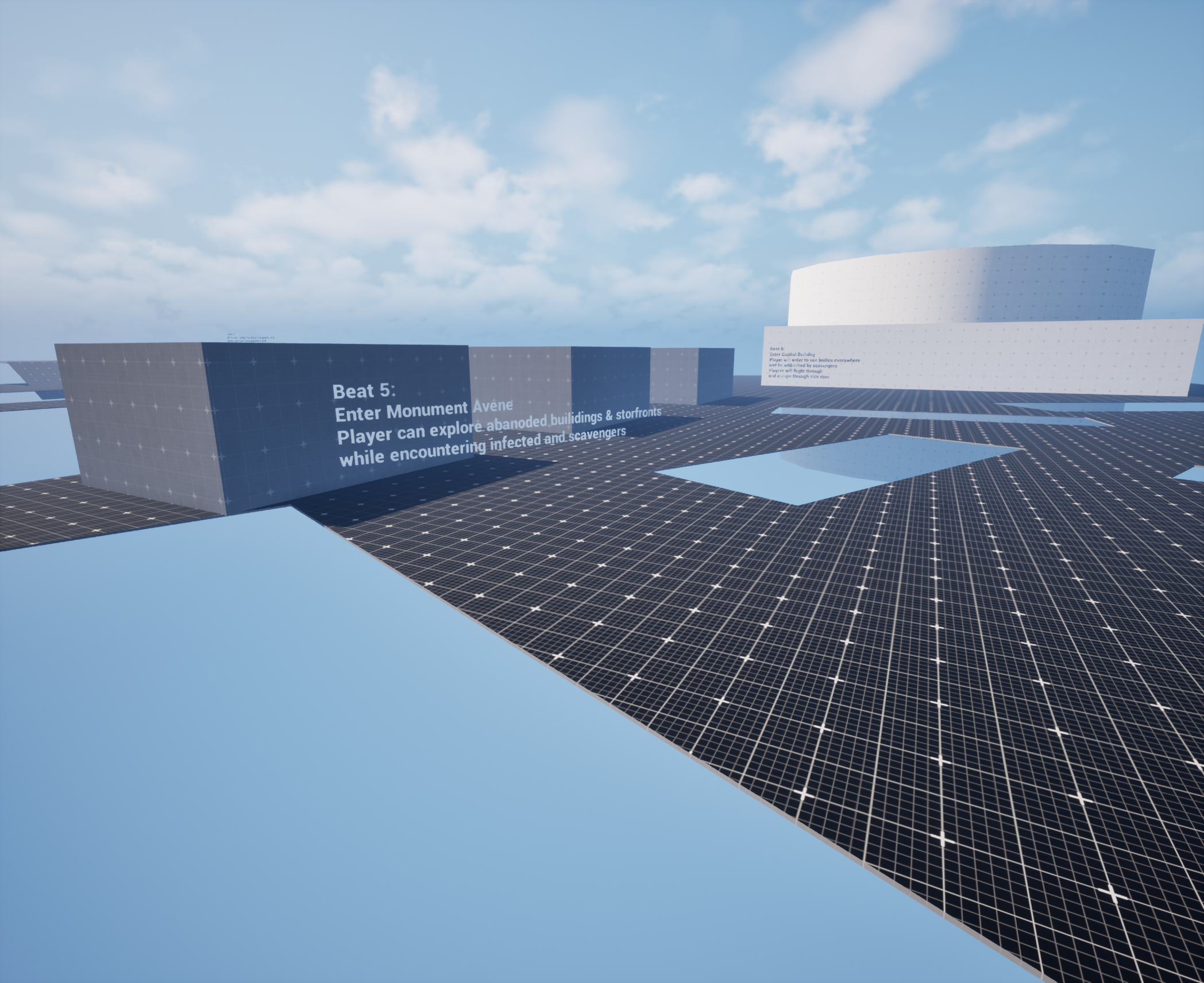
Beat 5
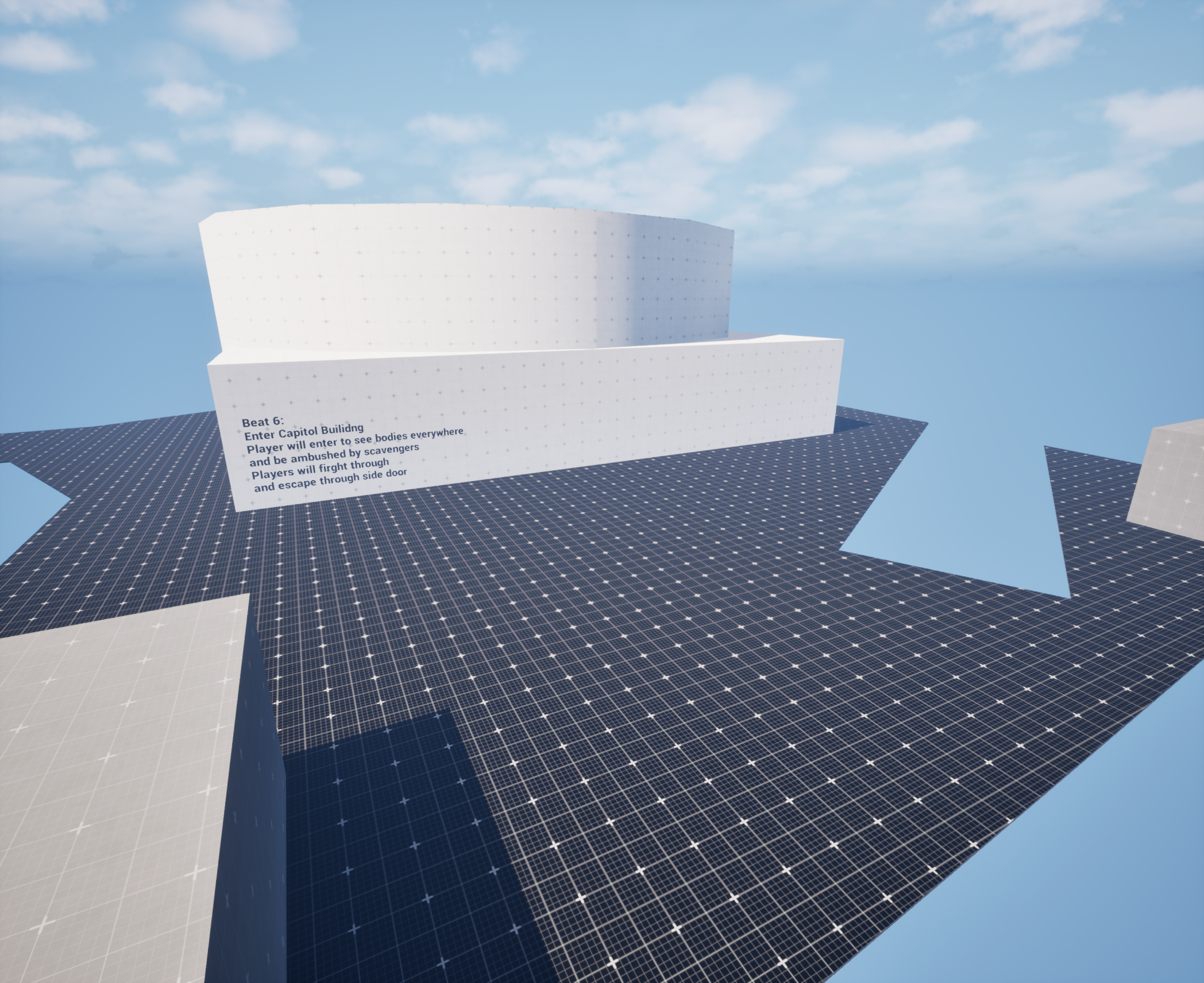
Beat 6
Beat 7
Beat 8
Iteration 2 - Narrative Integration
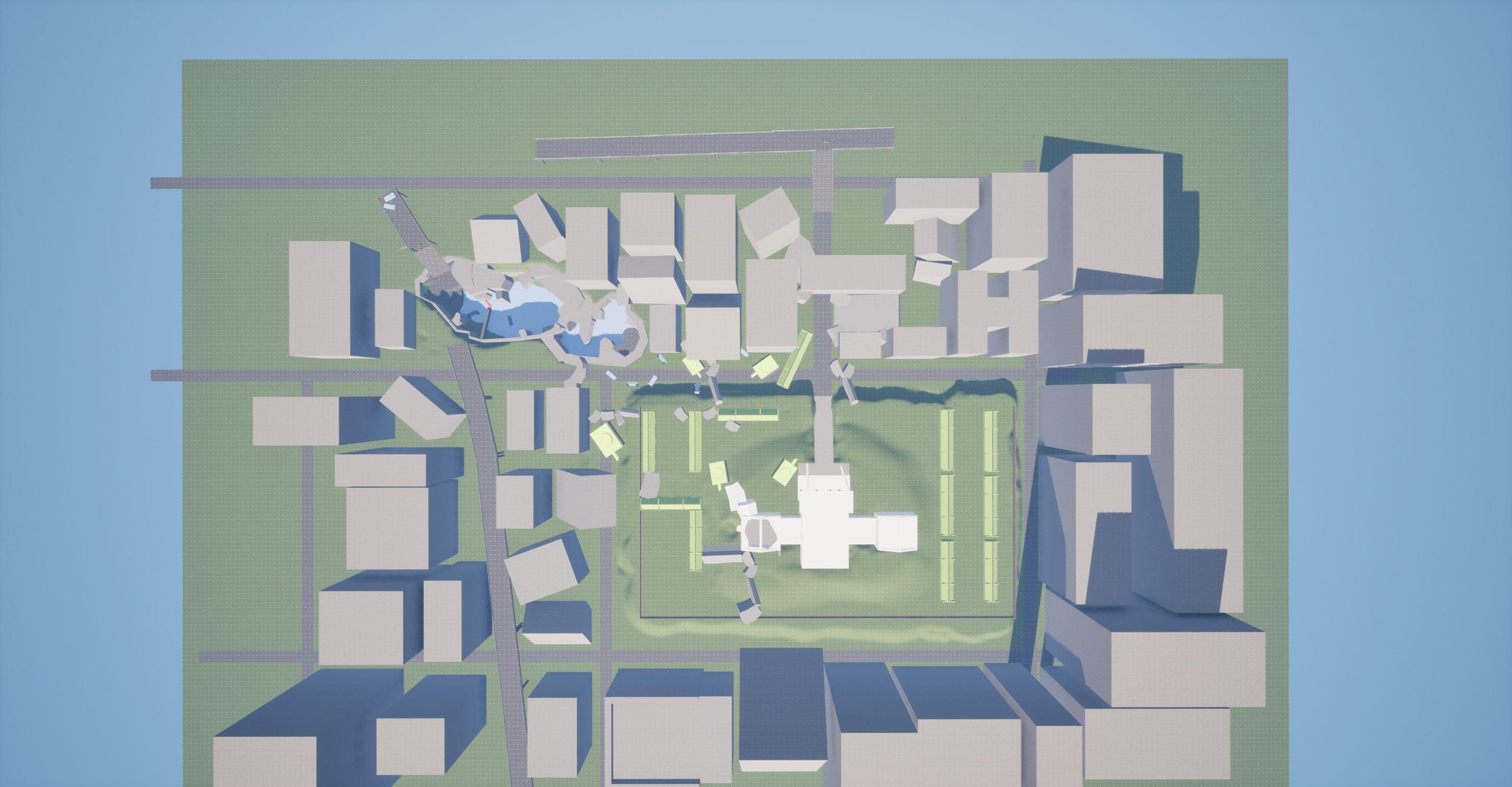
Goal: Shrink the blockout and add narrative context as well as begin introducing verticality, so spaces read as purposeful rather than abstract and long.
Results: The level felt more defined and grounded, the Capitol building felt stronger as a landmark, but verticality was only applied to specific areas, so the rest of the level still felt open and flat by comparison.
Implementation:
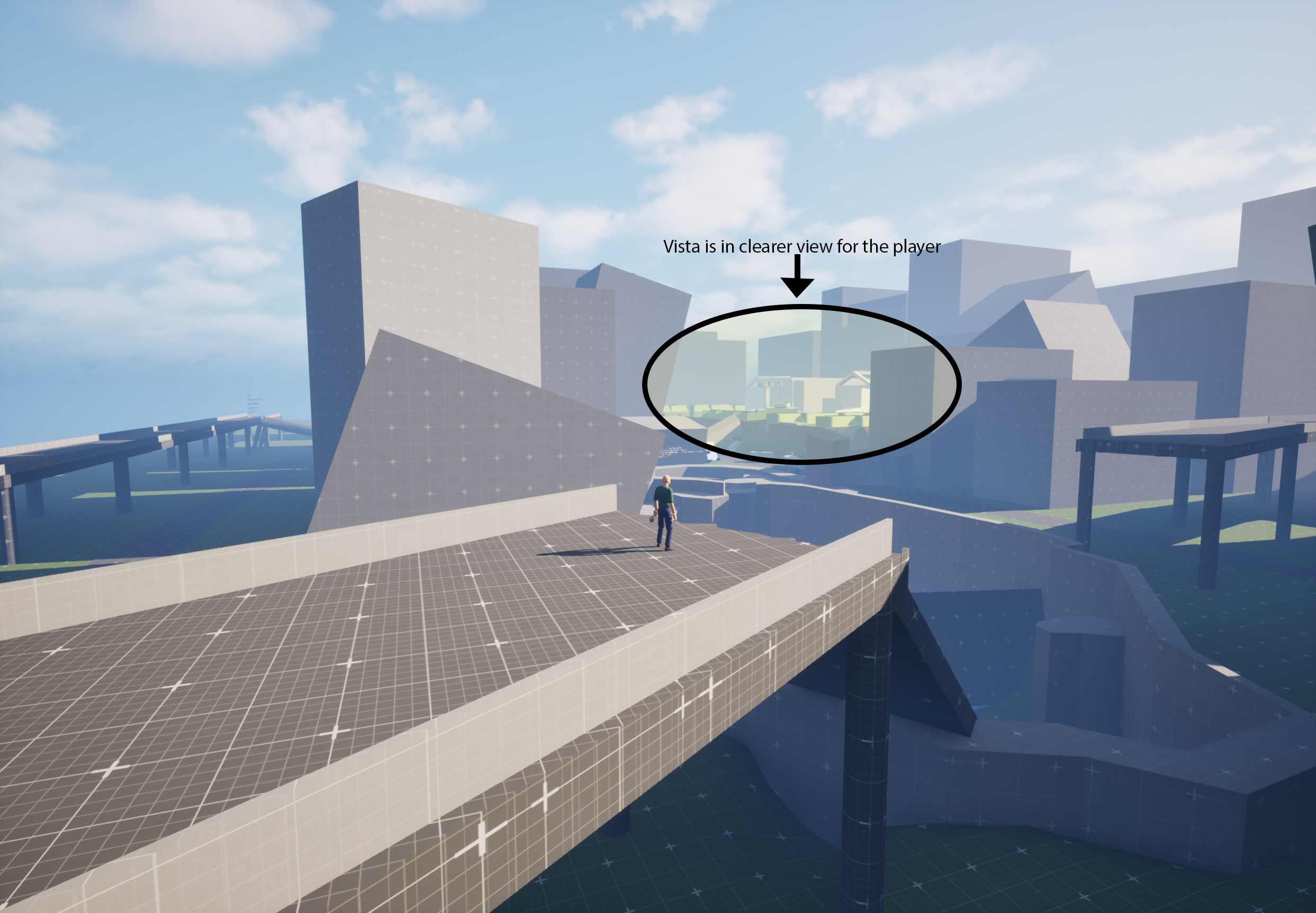
Reworked the Capitol building into a wayfinding compass, being visible from multiple points to help players orient and navigate toward it
Introduced verticality into select areas of the level, surfacing the need to apply it consistently across the whole space
Top Down
Beat 1 / Capitol Vista
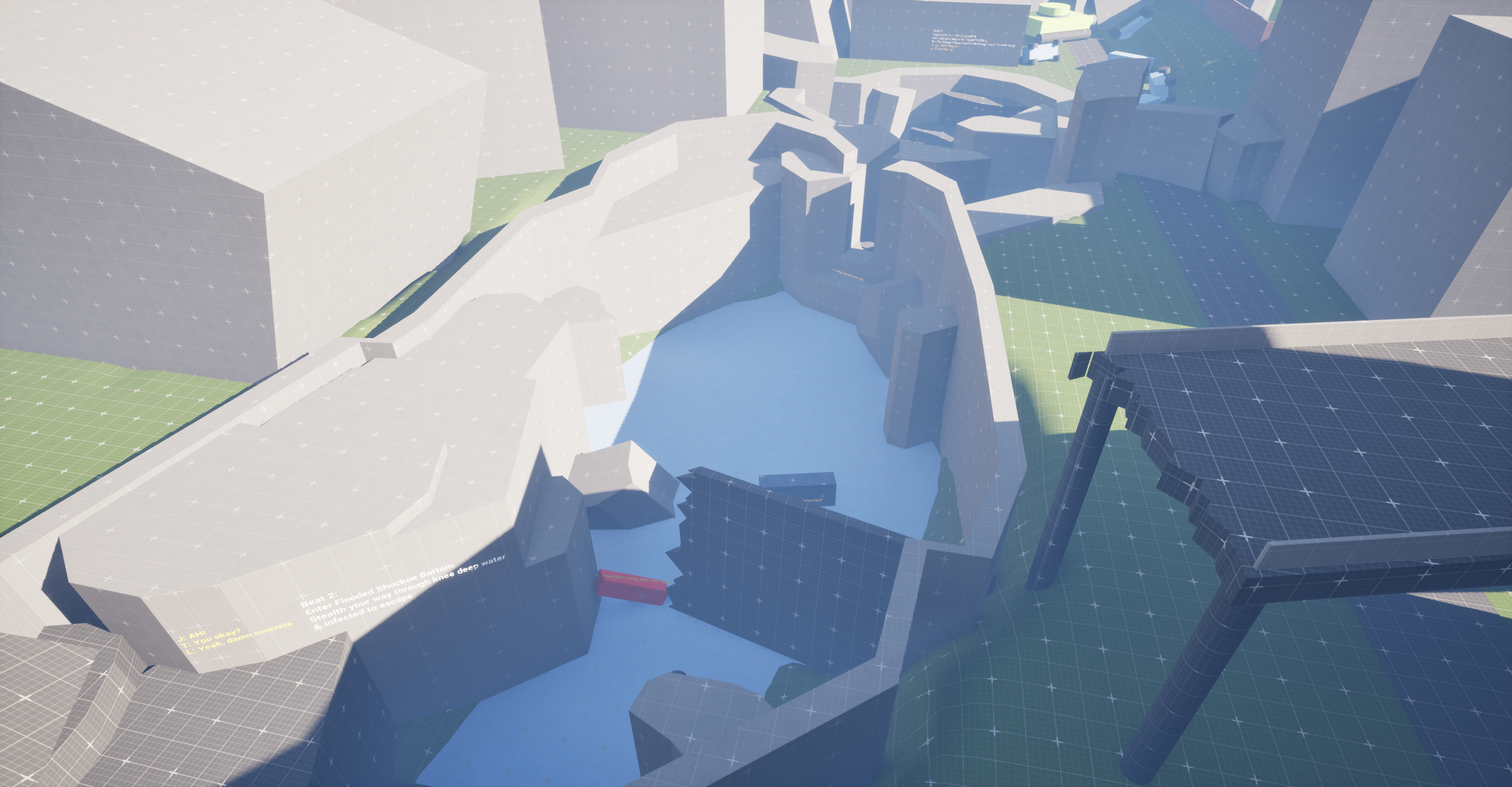
Beat 2
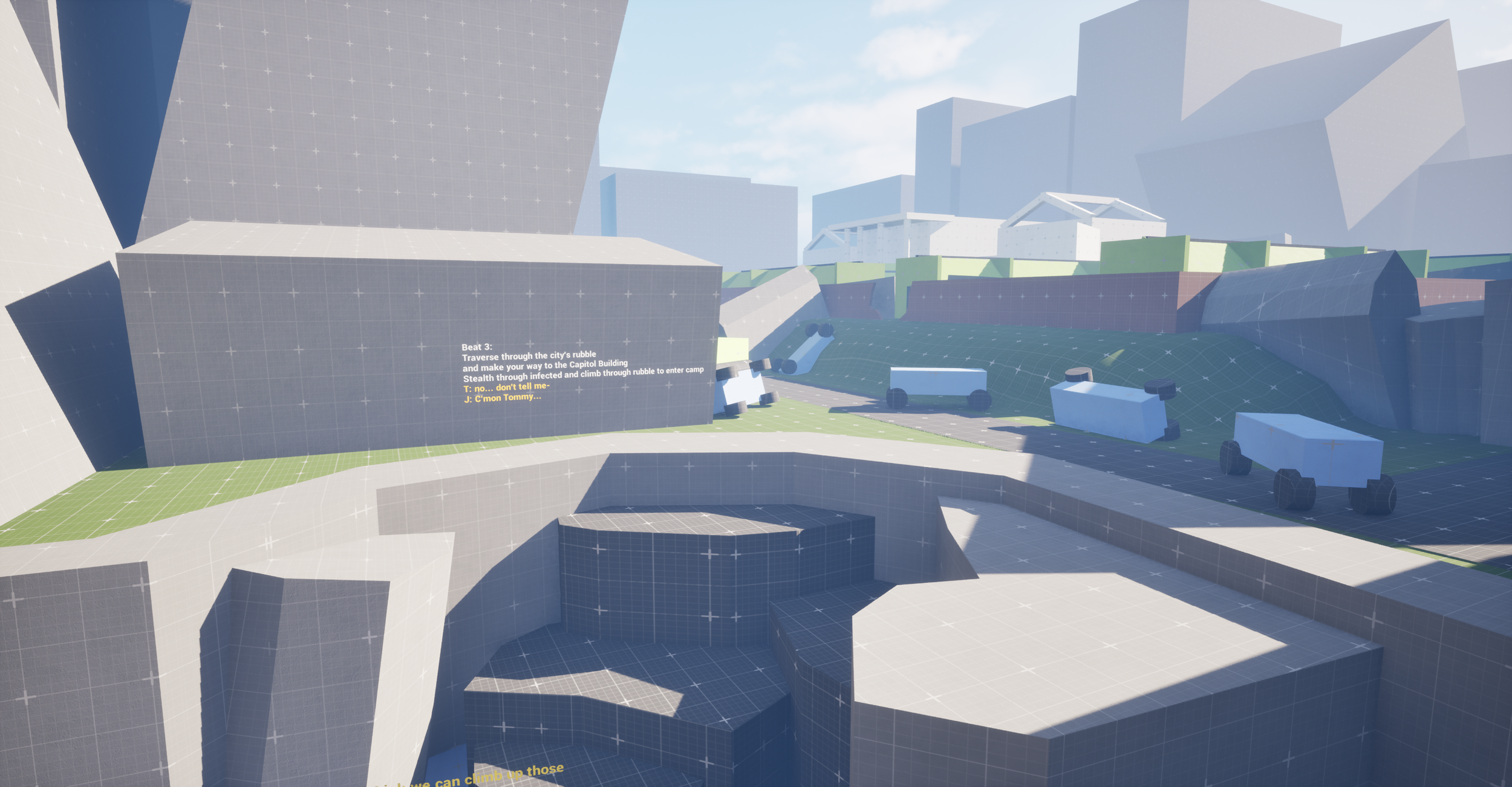
Beat 3
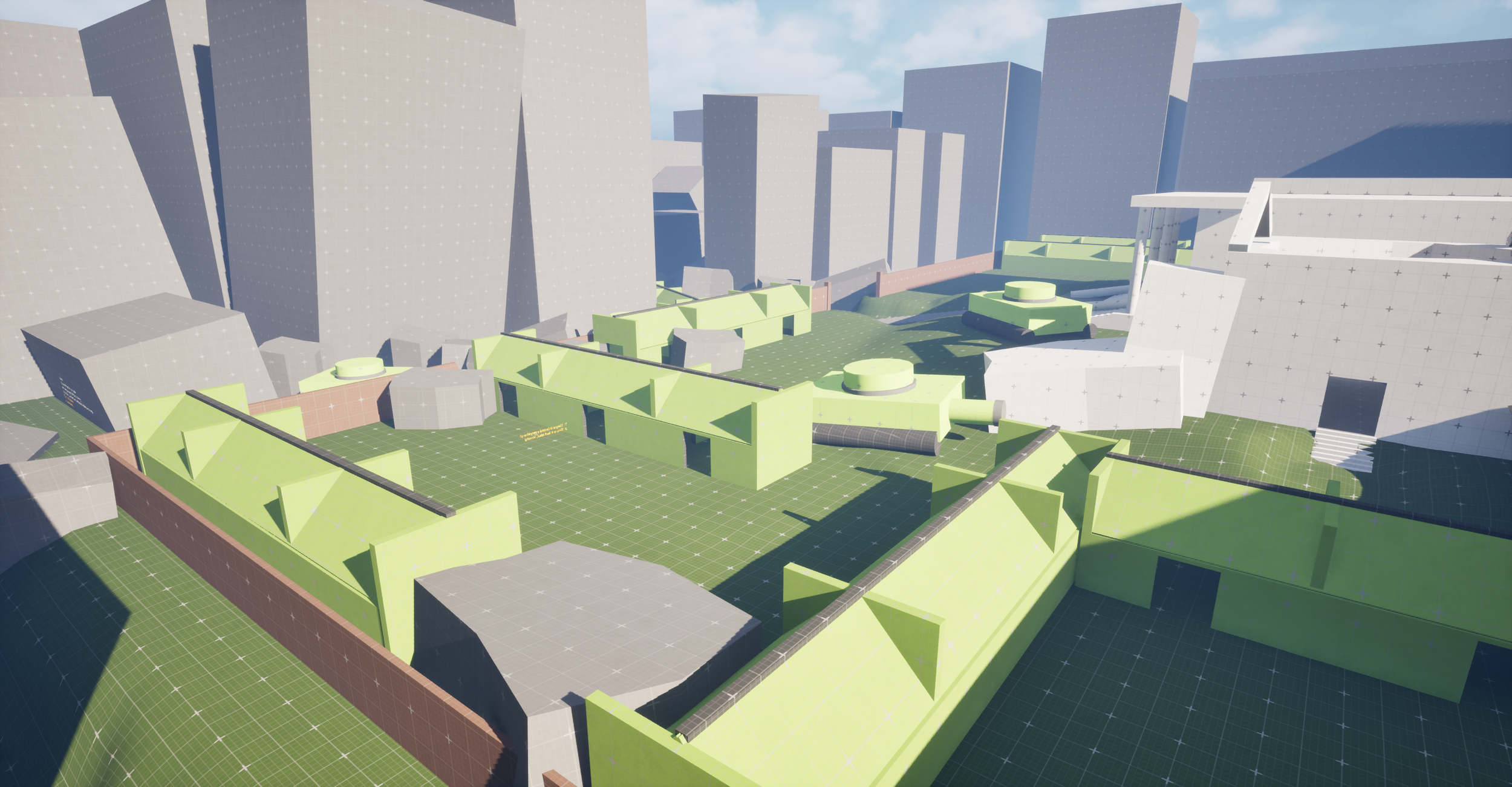
Beat 4
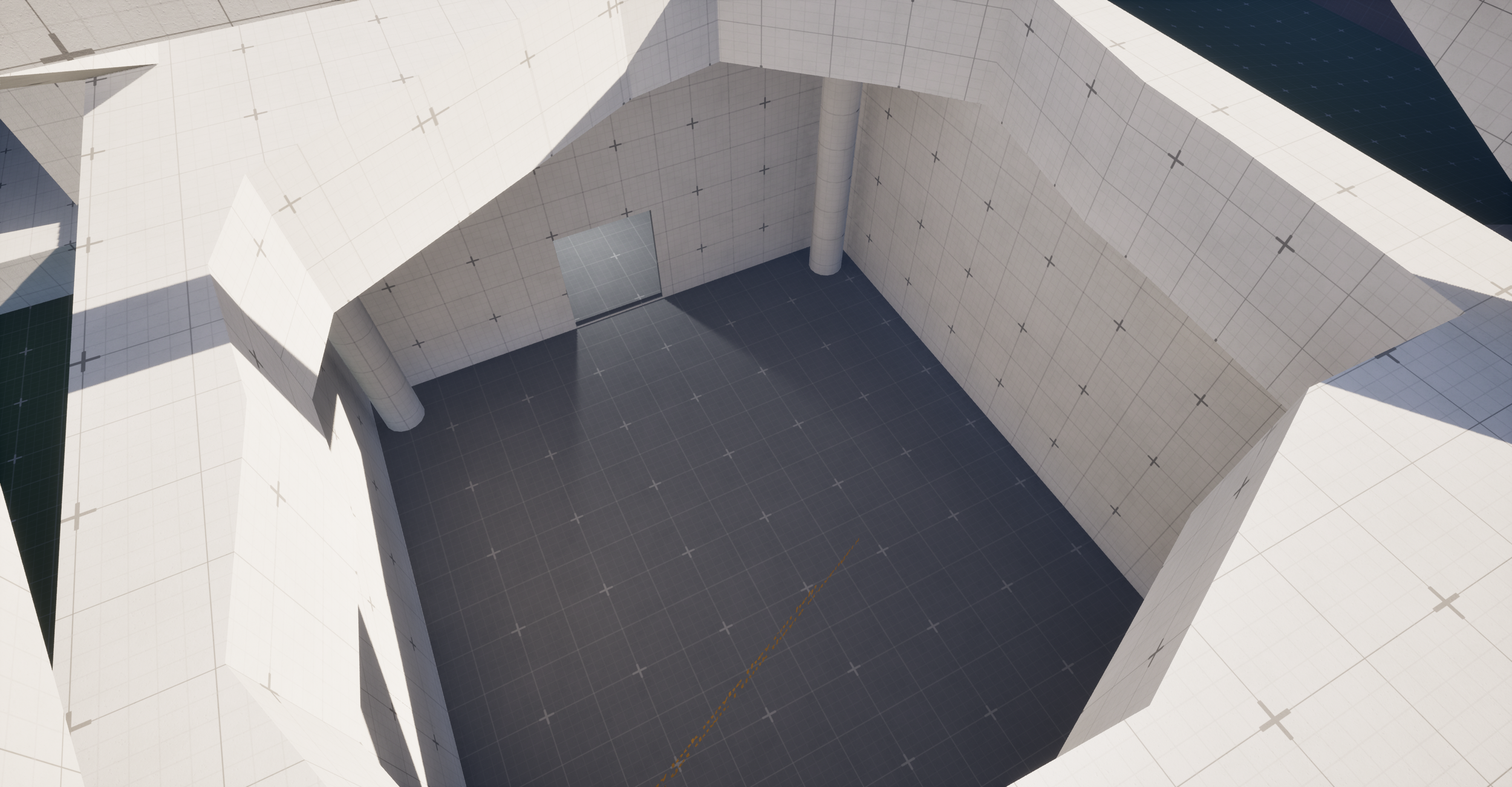
Beat 5
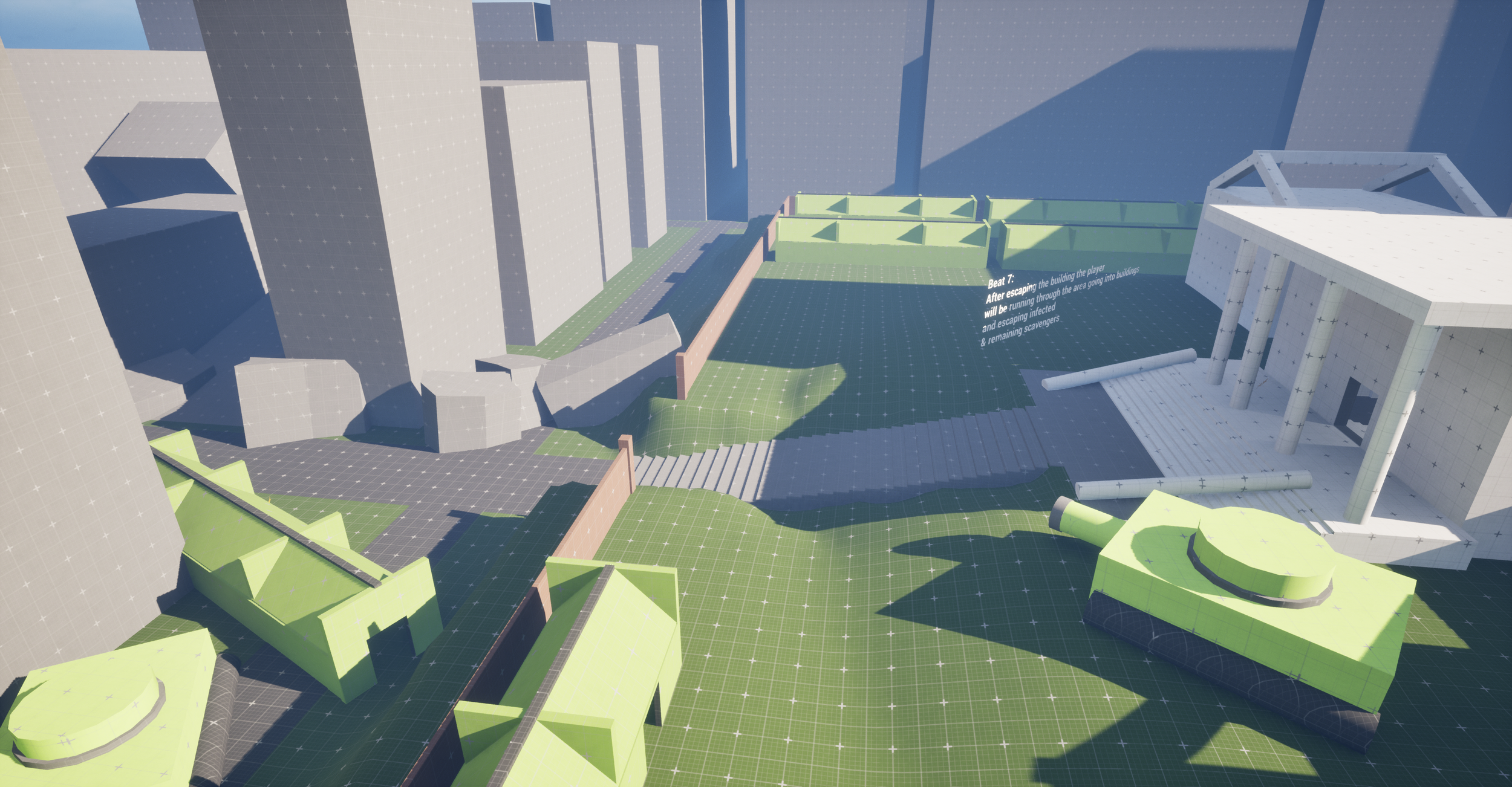
Beat 6
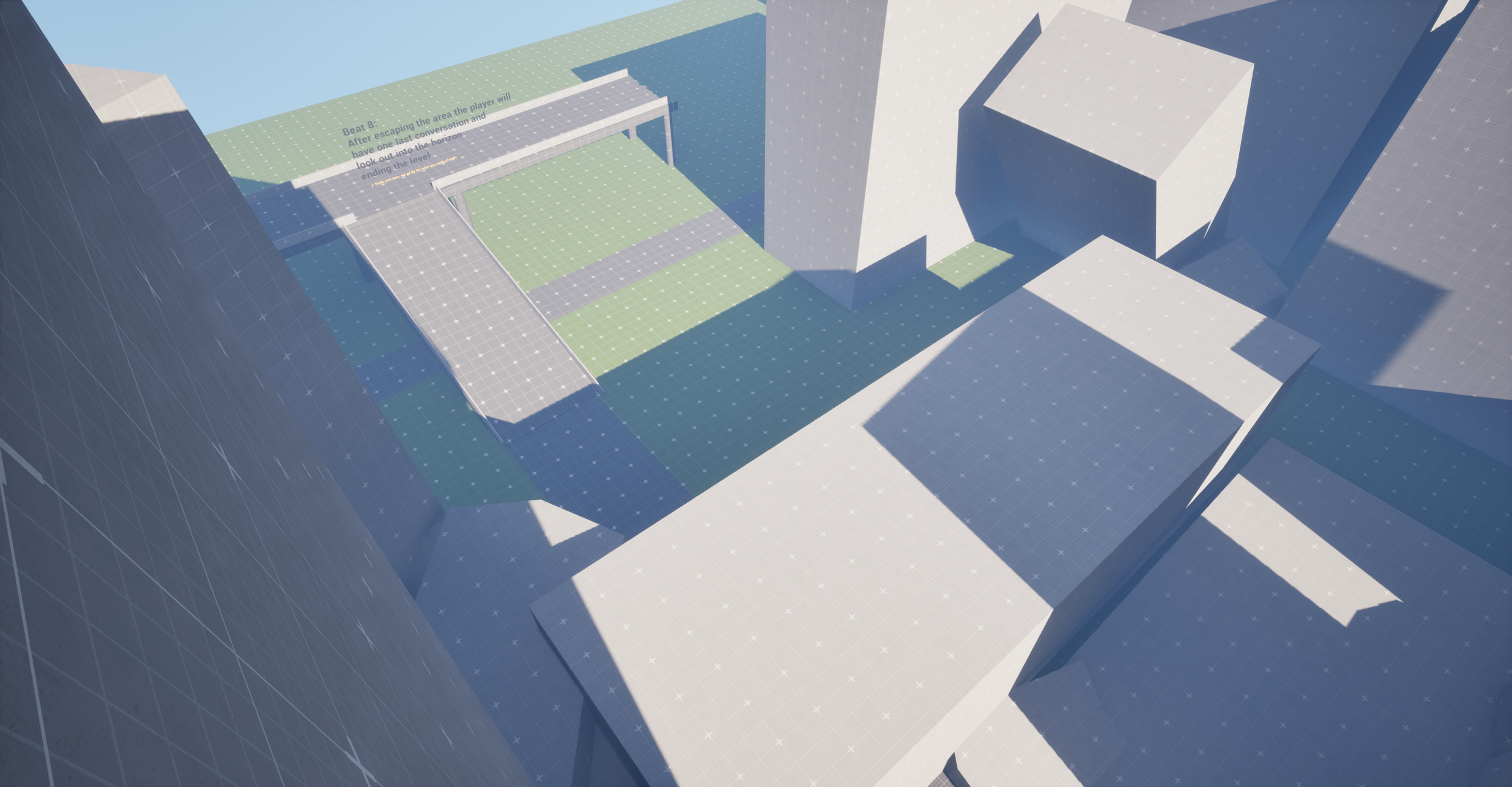
Beat 7
Iteration 3 - Enemy Encounters
Goal: Fill the level's open spaces with combat encounters and cover so their scale felt purposeful rather than empty.
Results: Spaces felt purposeful with enemies and cover in place, but the ambush encounter (Beat 6) still needed more intensity as the climax of the level.
Implementation:
Integrated enemy placements and combat encounters throughout the level so open spaces gave players something to worry about, not just empty scale
Used rubble and boxes as cover, giving previously bare areas functional purpose
Began experimenting with the ambush and infected encounters
Spread enemies across a wider range in the ambush to add pressure and address the lack of intensity
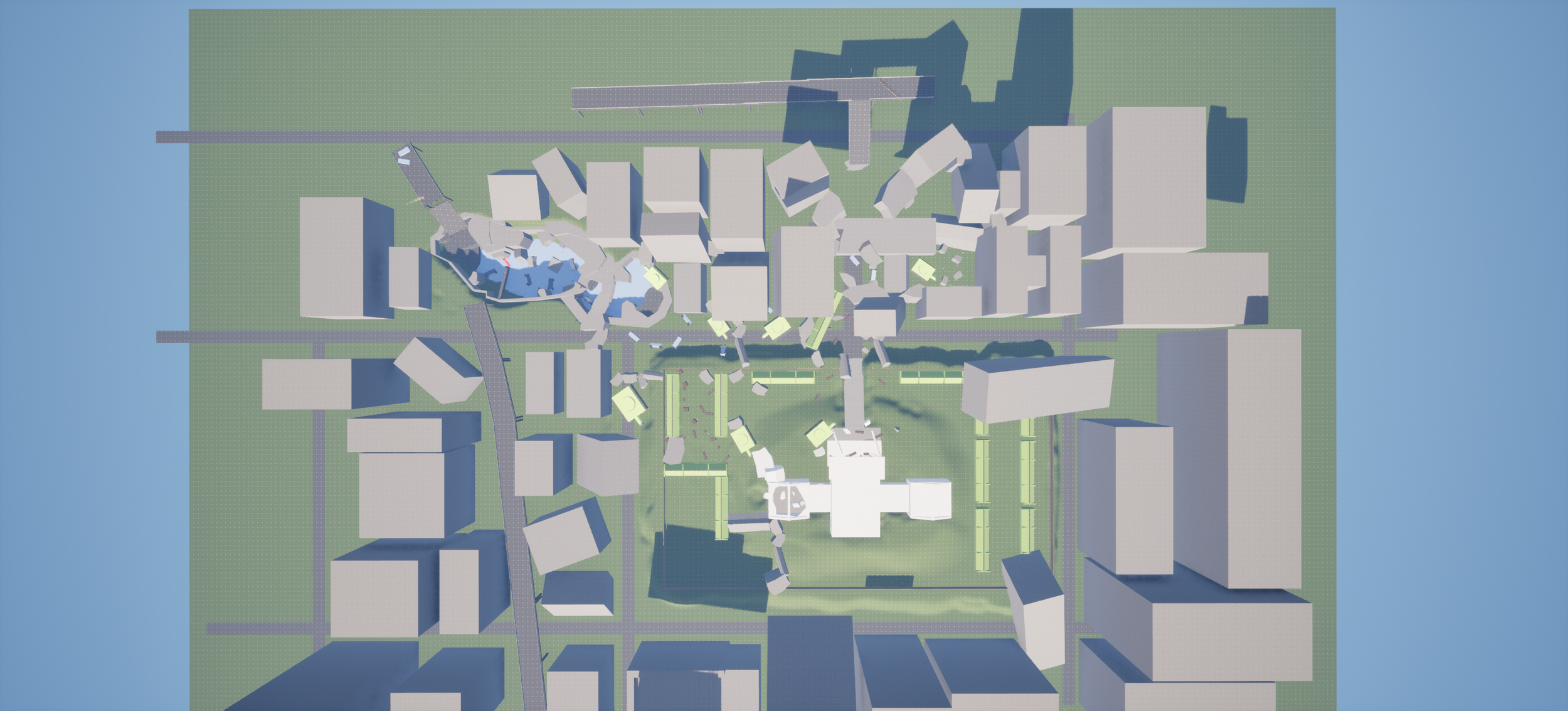
Top down
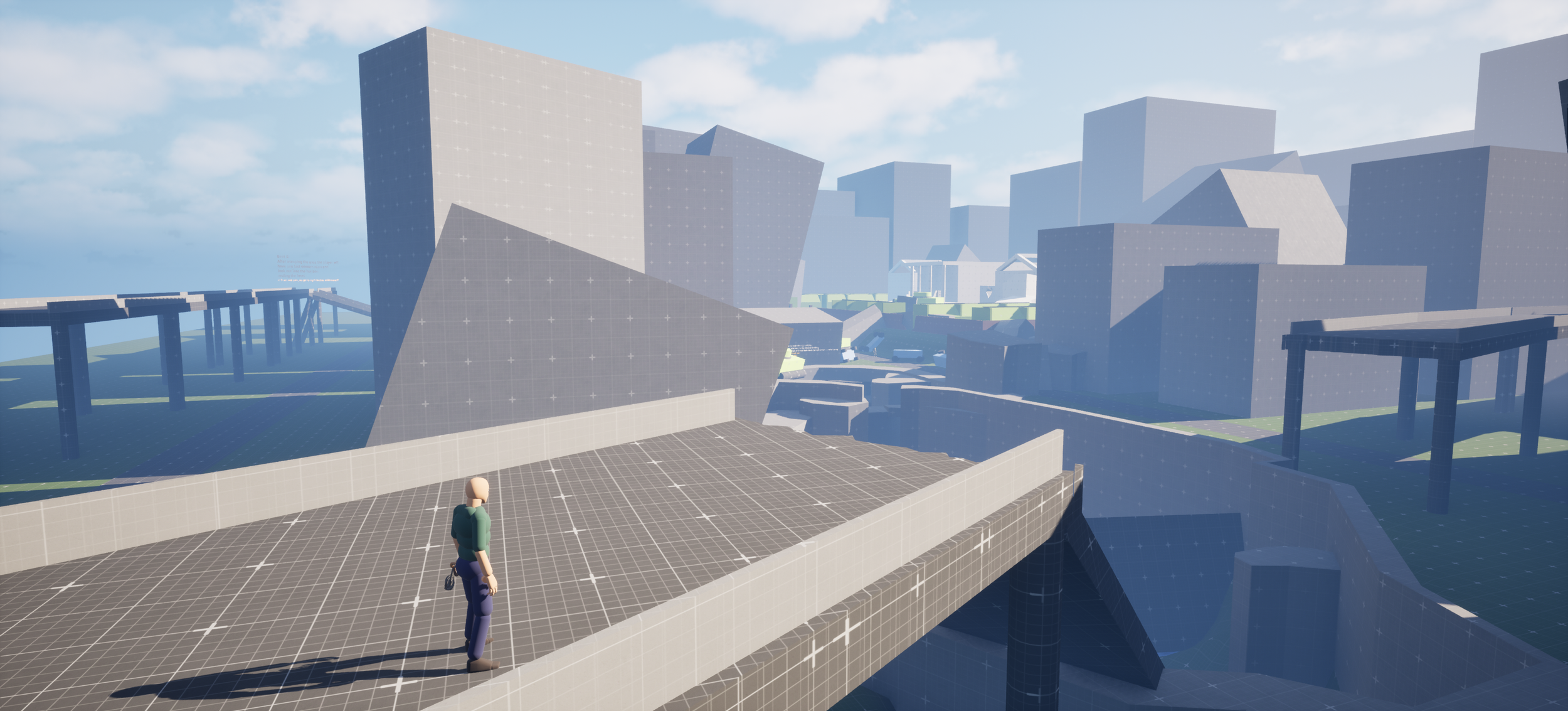
Beat 1
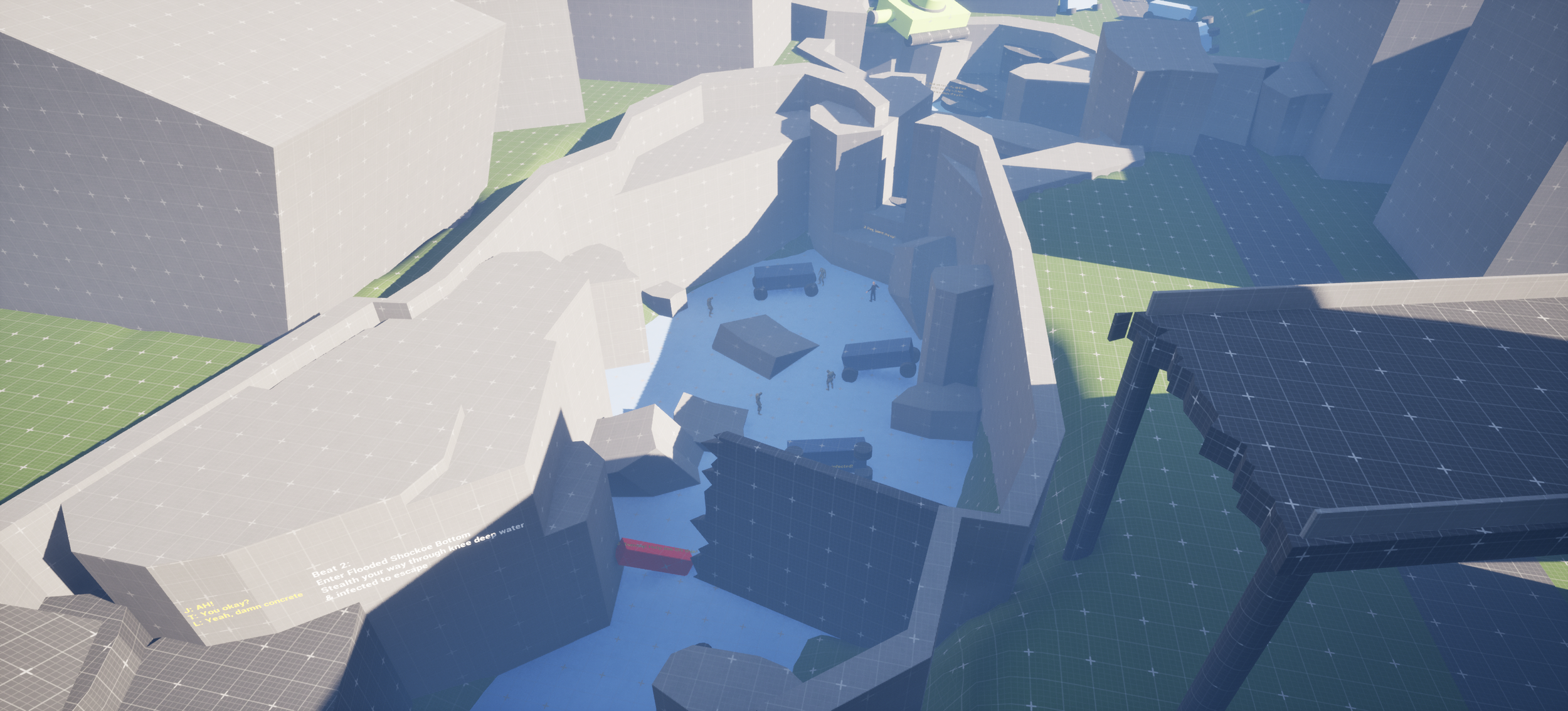
Beat 2
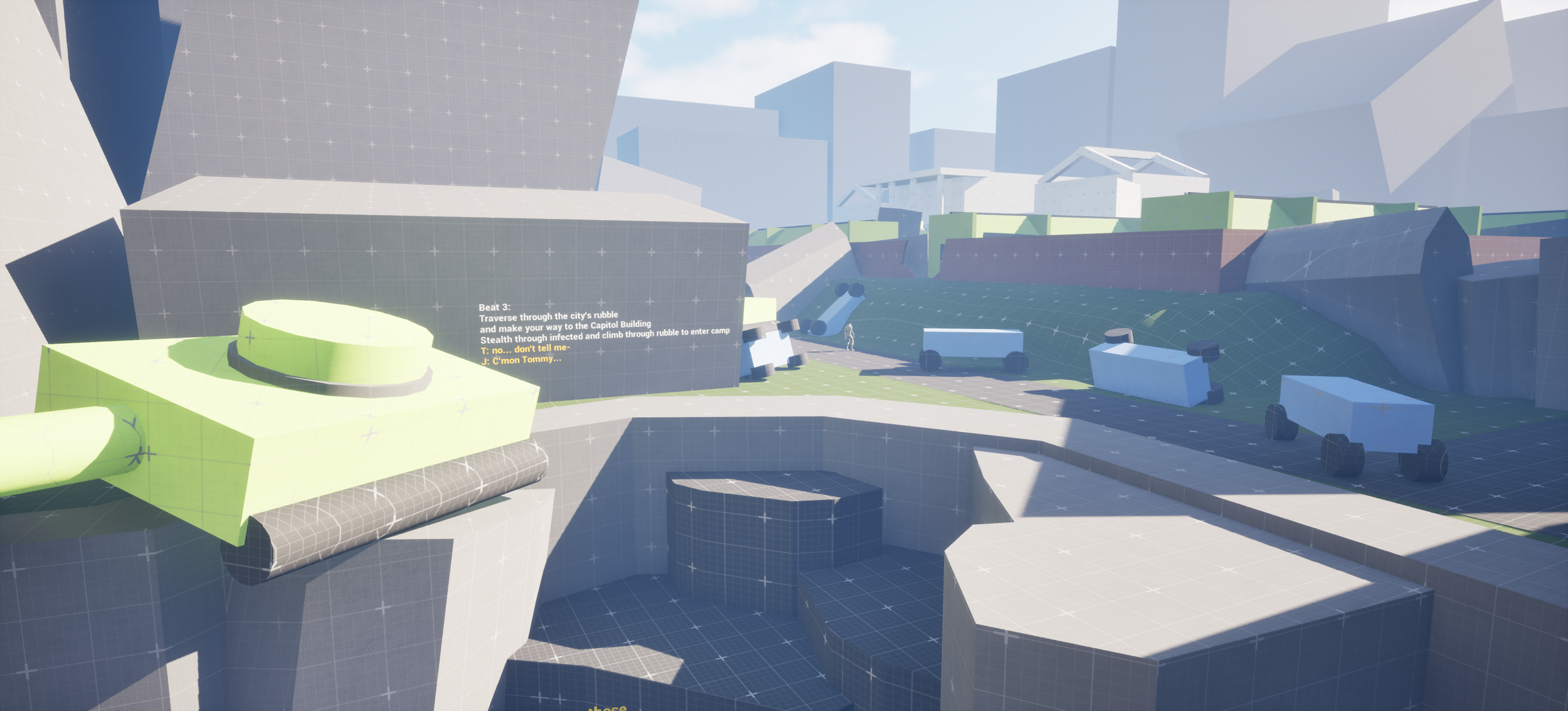
Beat 3
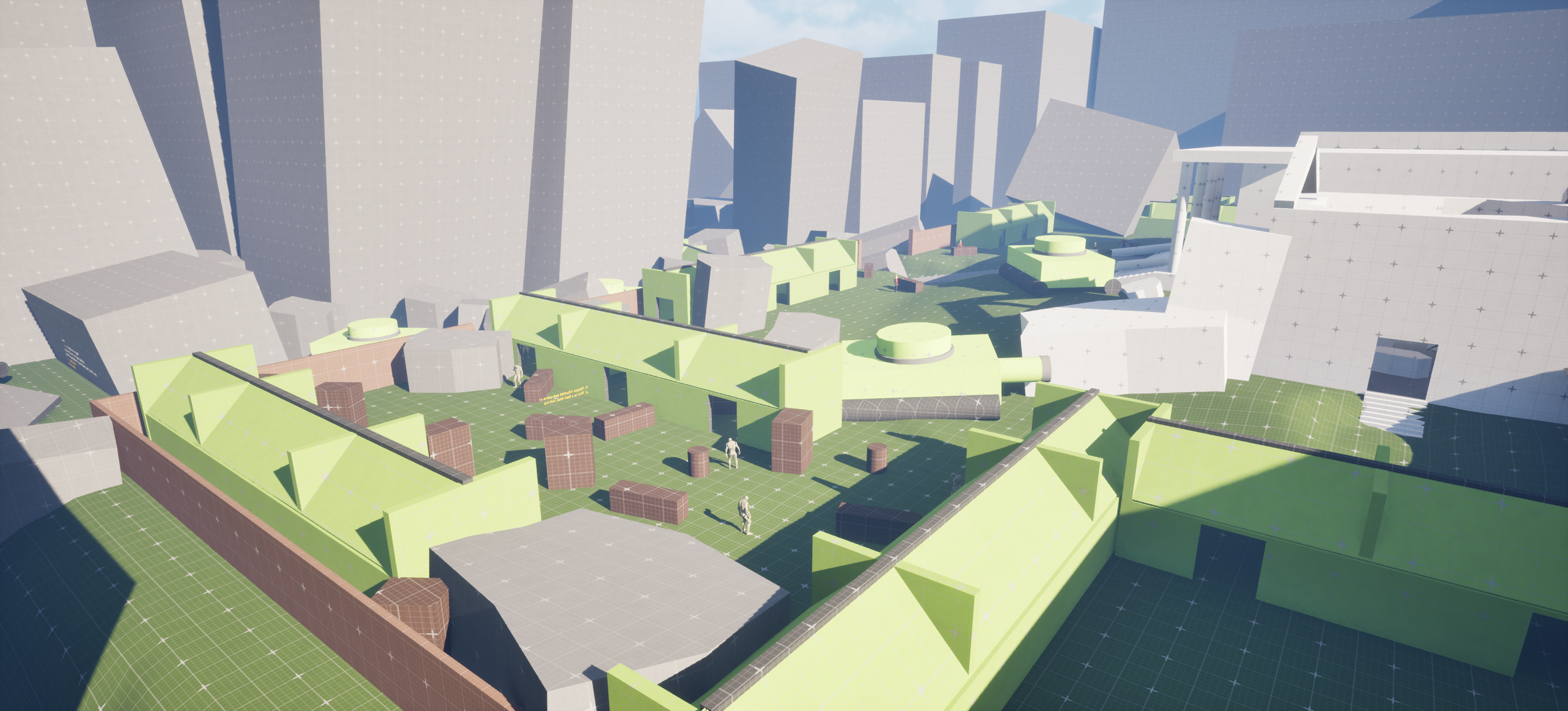
Beat 4
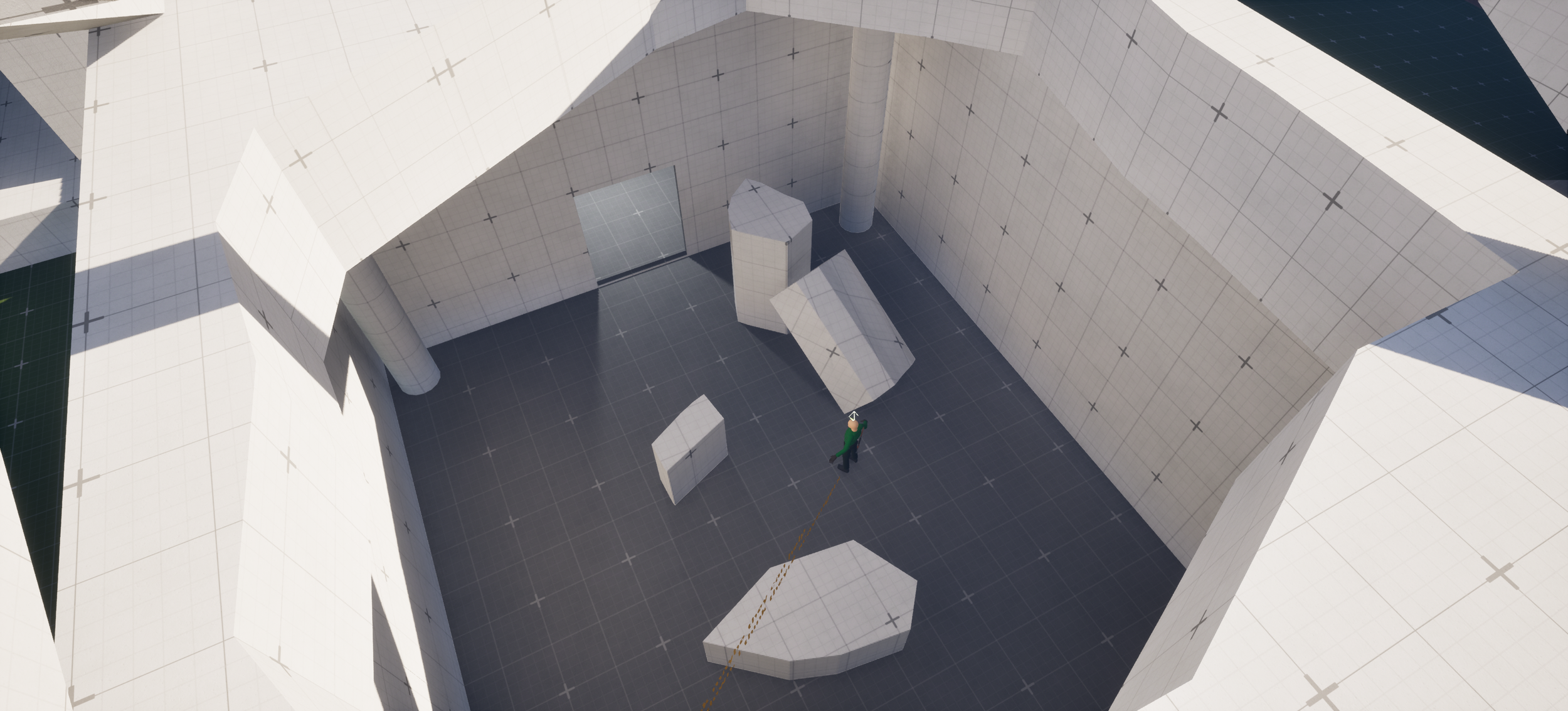
Beat 5
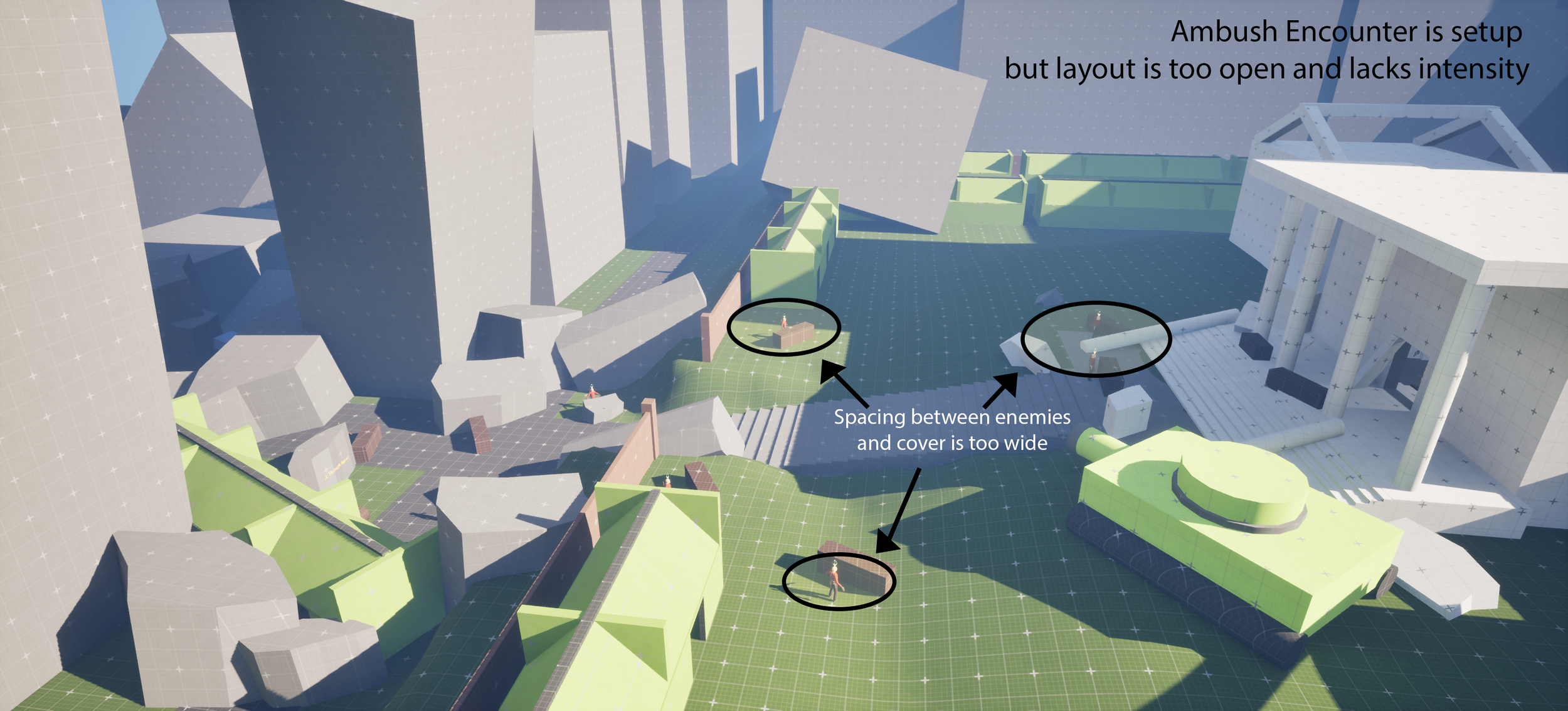
Beat 6
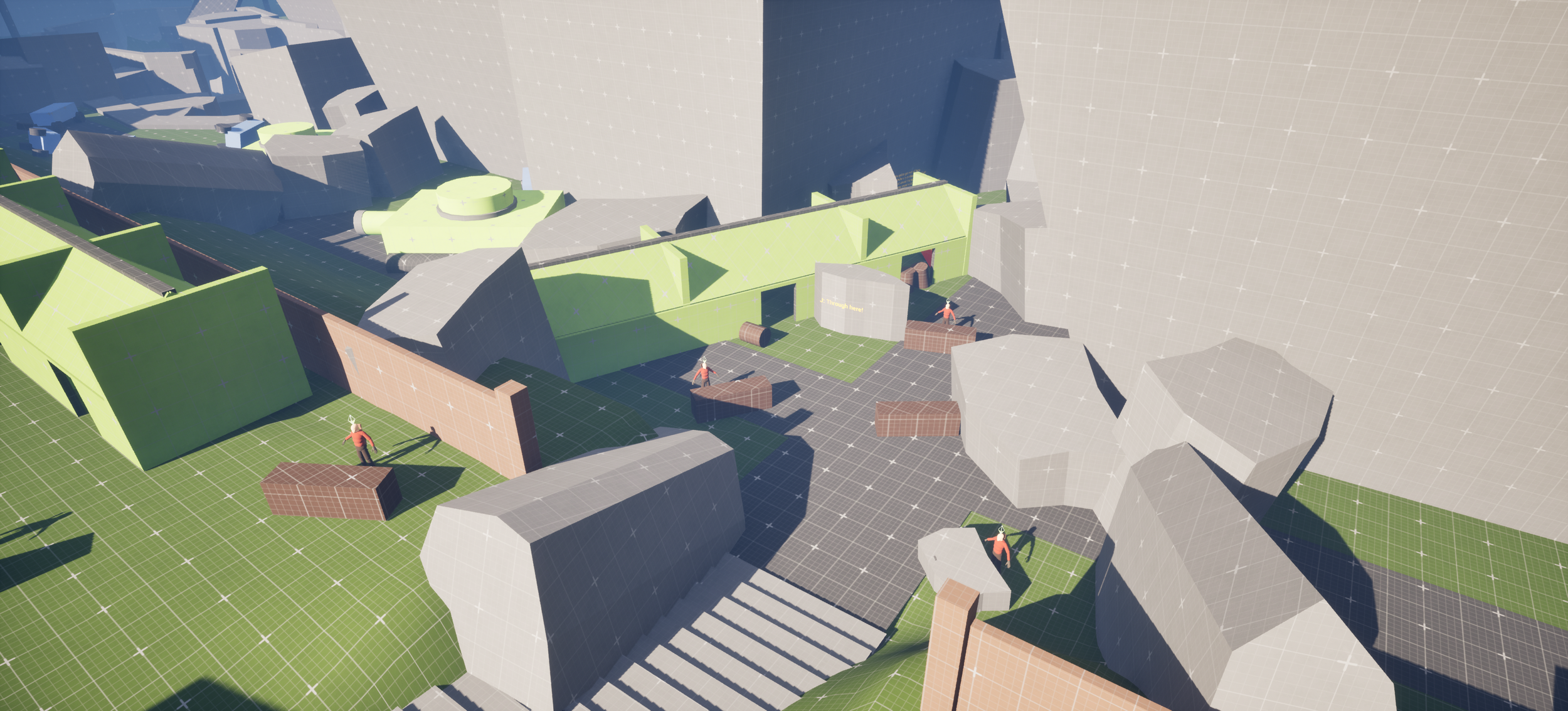
Beat 7
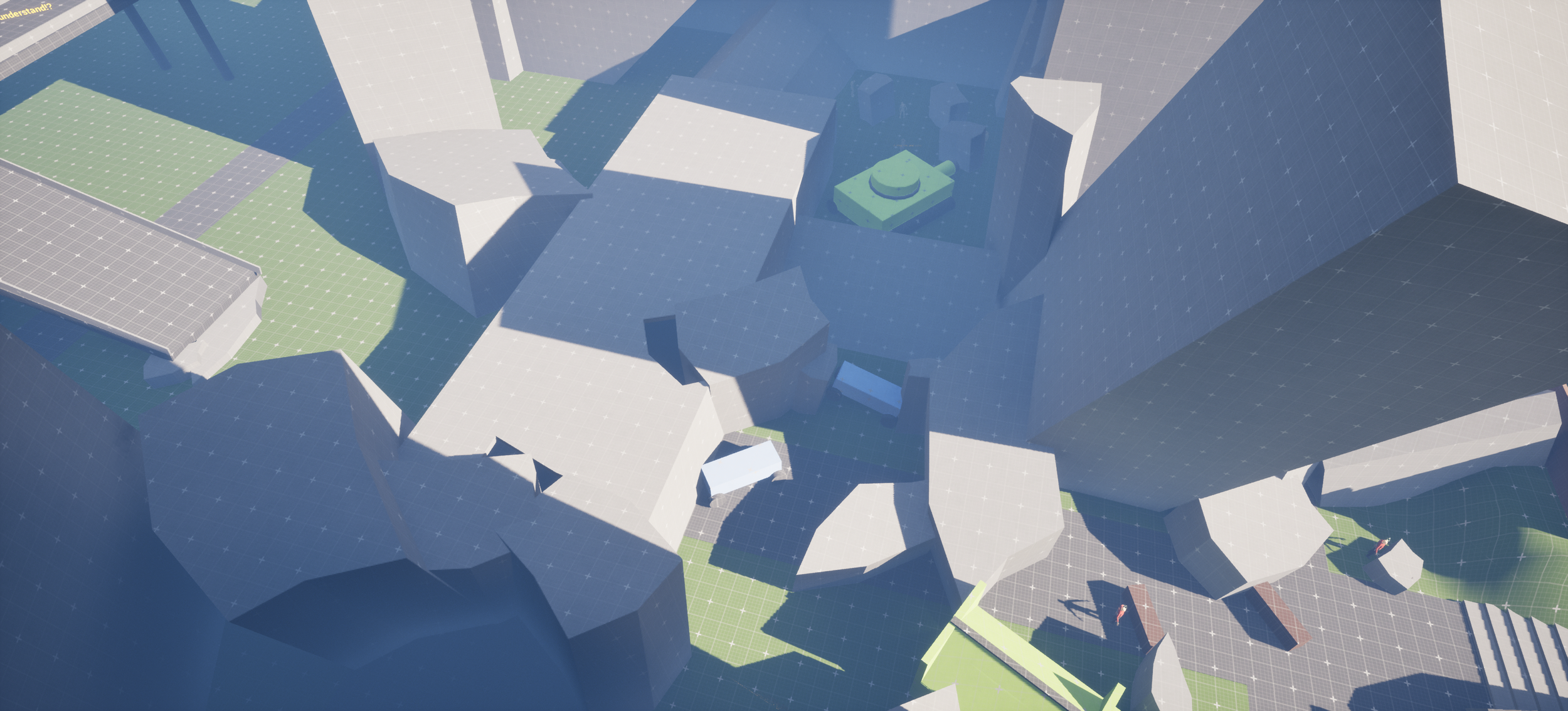
Beat 8
Iteration 4 - Scripted Events
Goal: Script cinematics, spawns, and interactive objects to bring the blockout to life and support pacing.
Results: Cinematics, subtitles, spawns, and moveable objects were scripted in. Beat 6 felt stronger but lacked some spacing for the player, and Beat 7 was reworked to route the player through the building instead of around it.
Implementation:
Scripted cinematic sequences and subtitles
Implemented enemy spawns and moveable objects
Reworked Beat 7's route to go through the building instead of around it
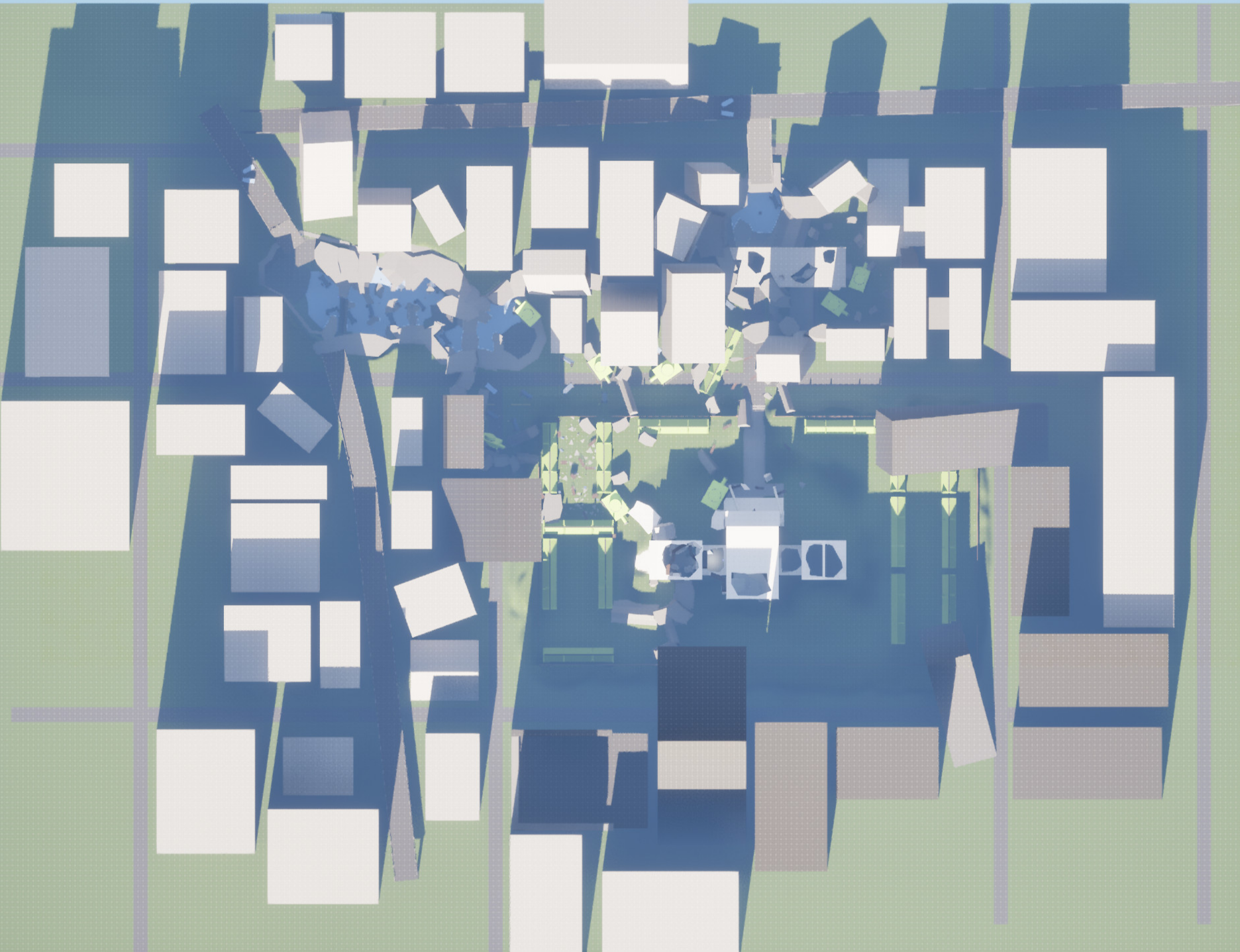
Top Down
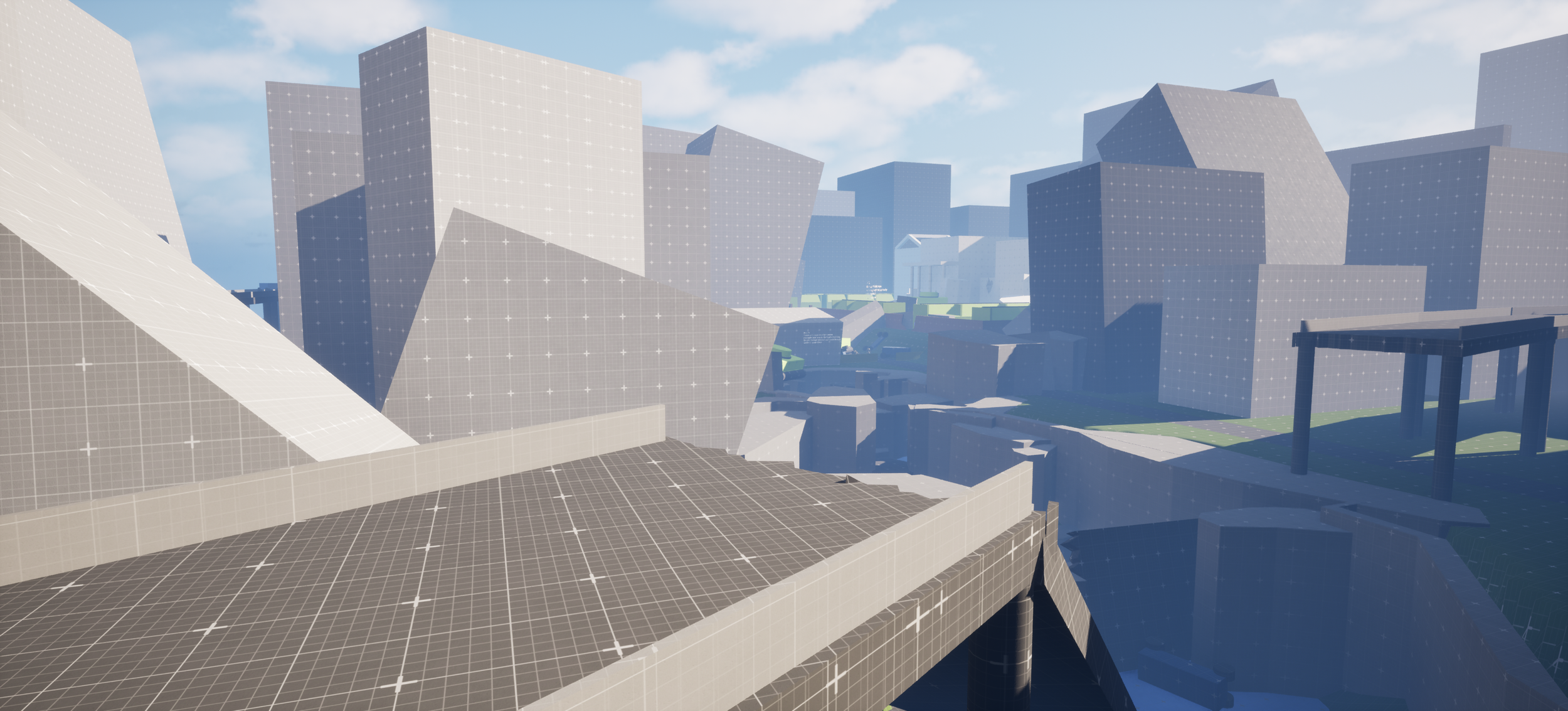
Beat 1
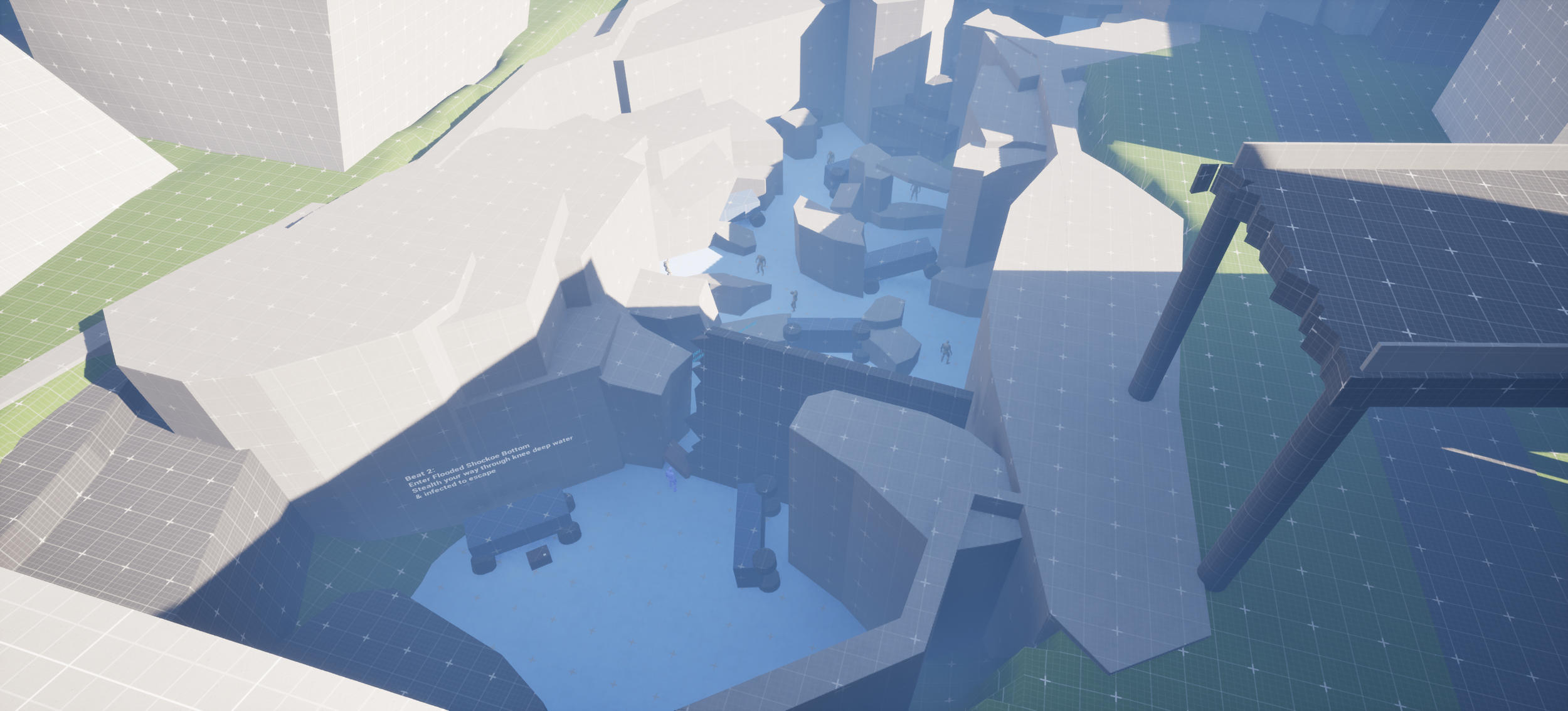
Beat 2
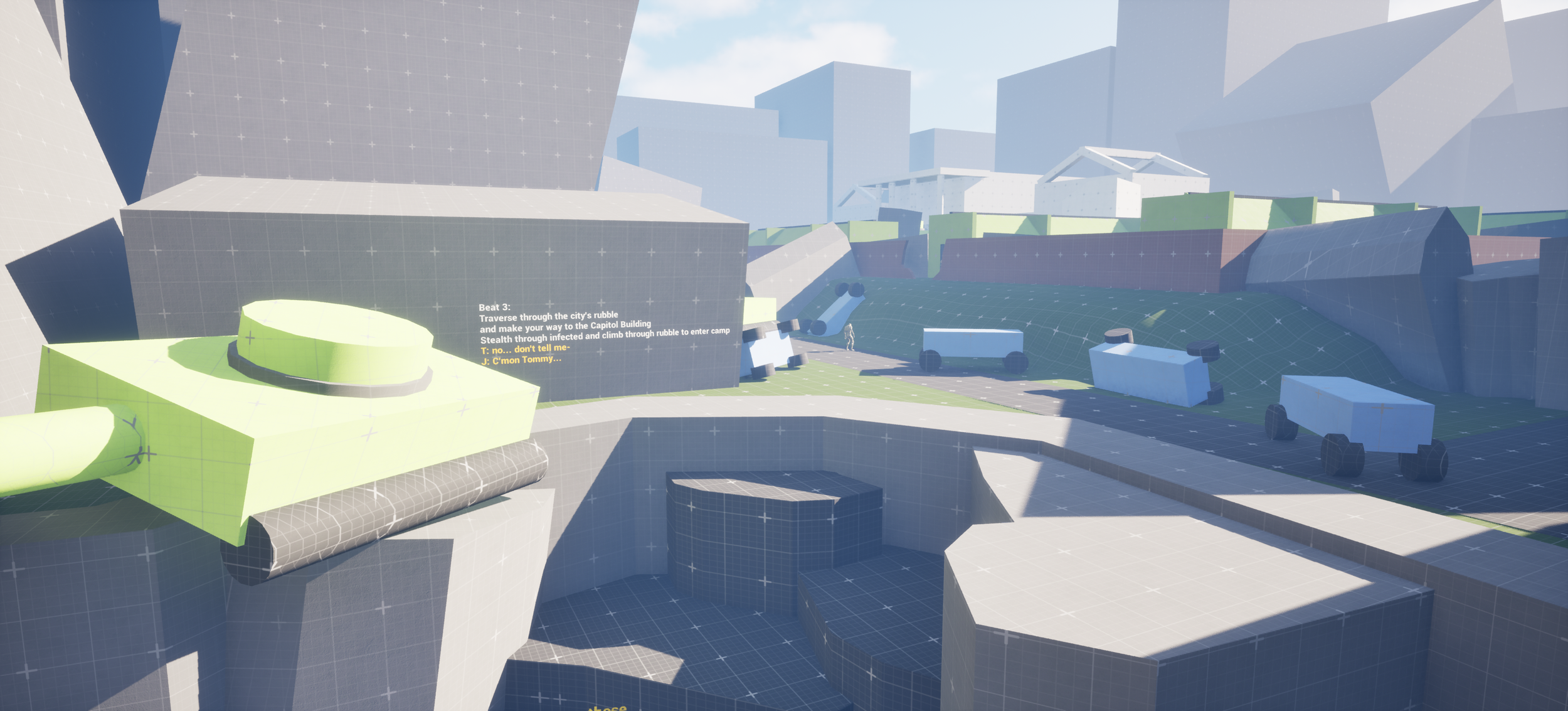
Beat 3
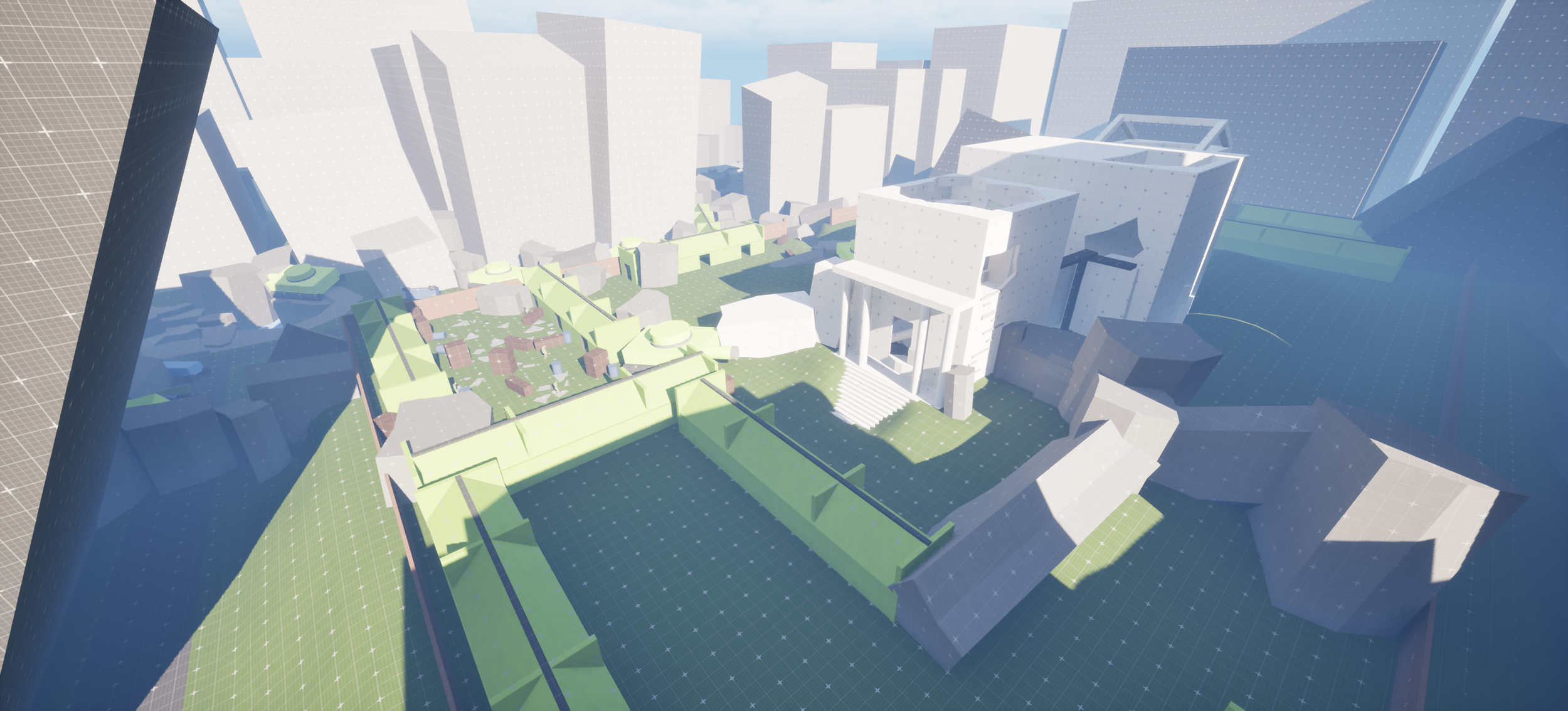
Beat 4
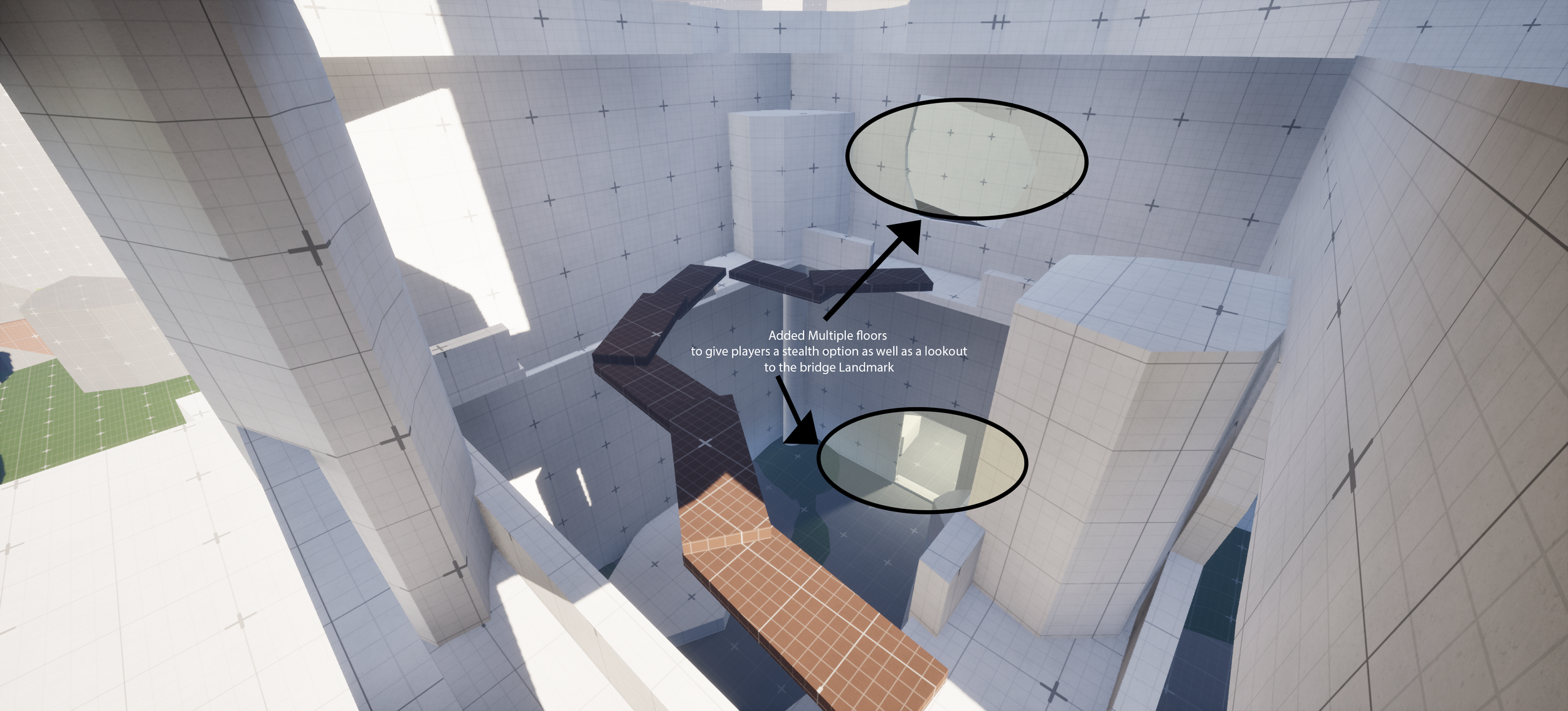
Beat 5
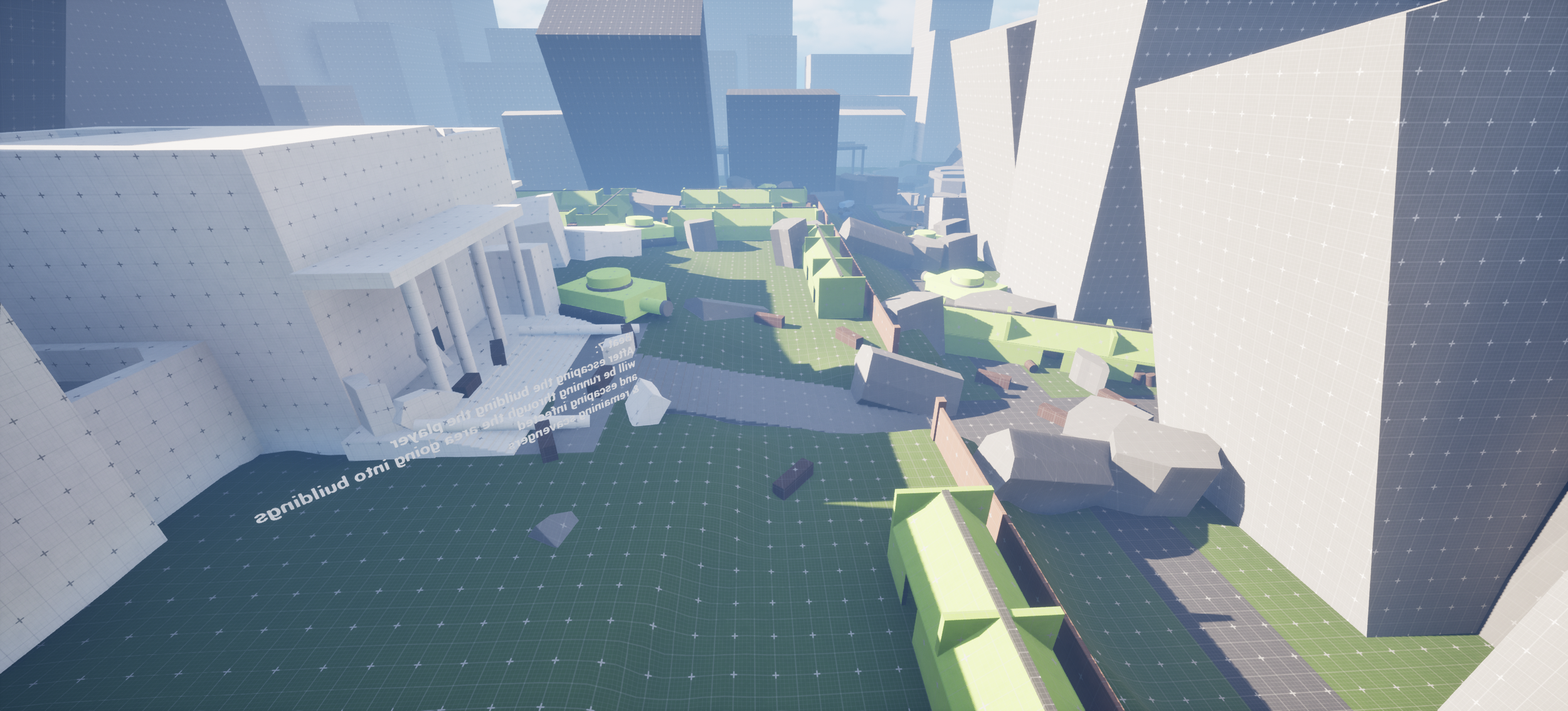
Beat 6
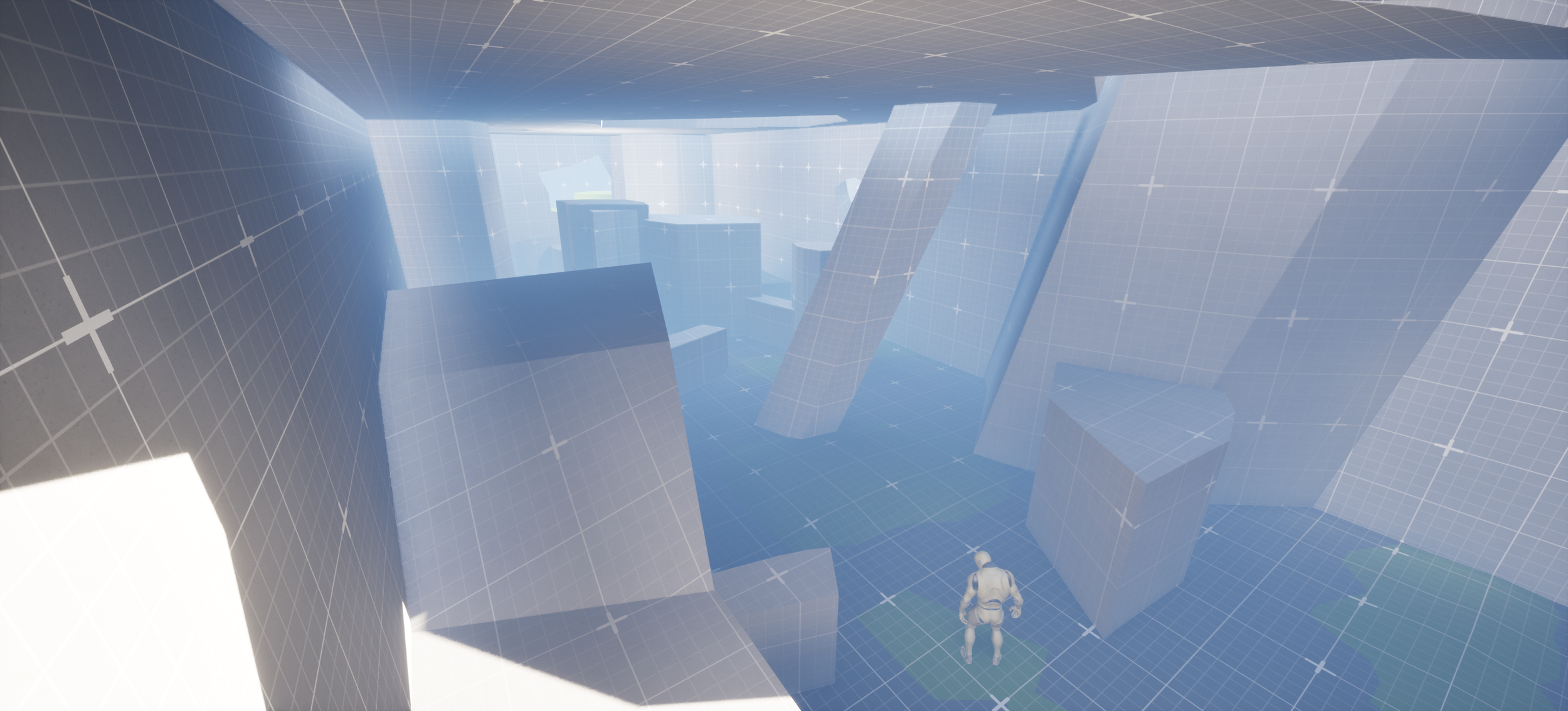
Beat 7
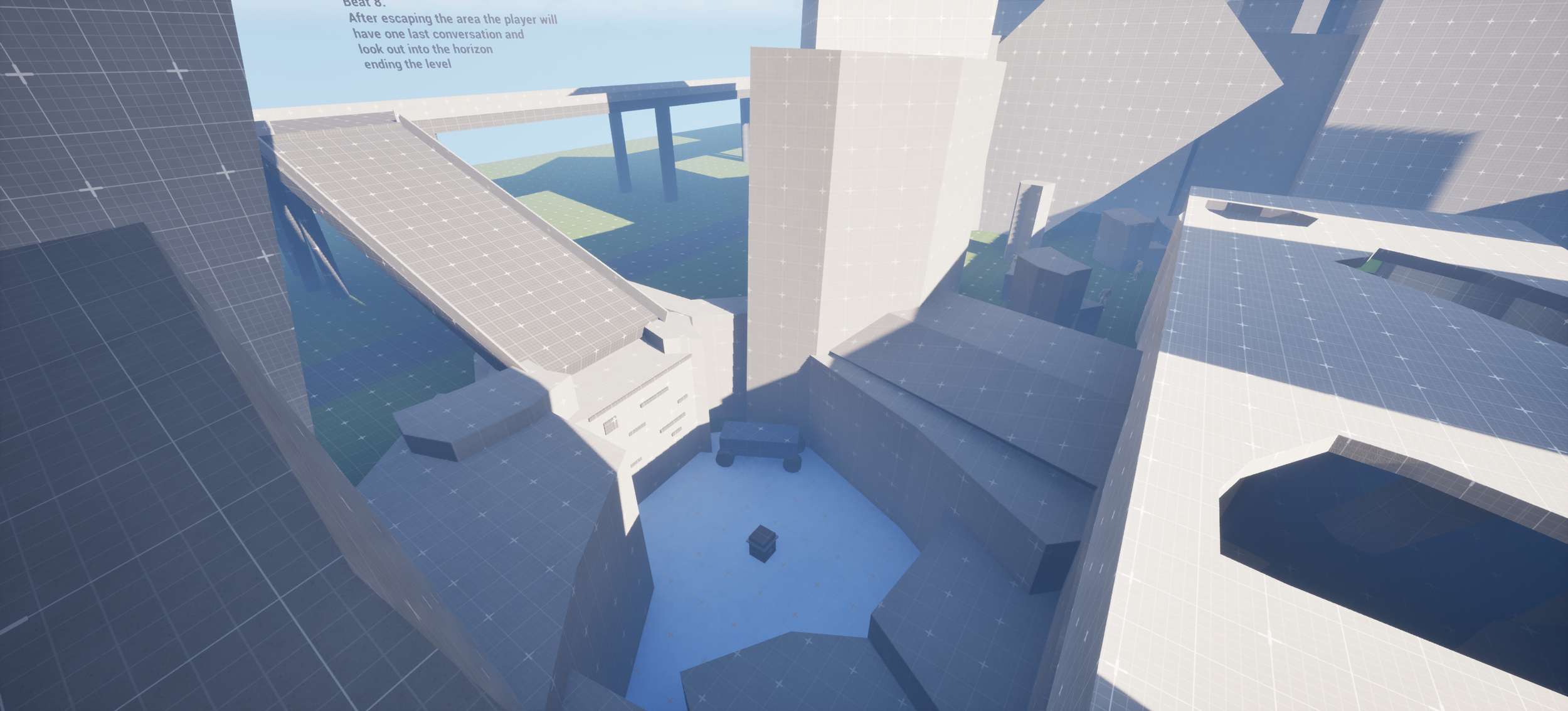
Beat 8
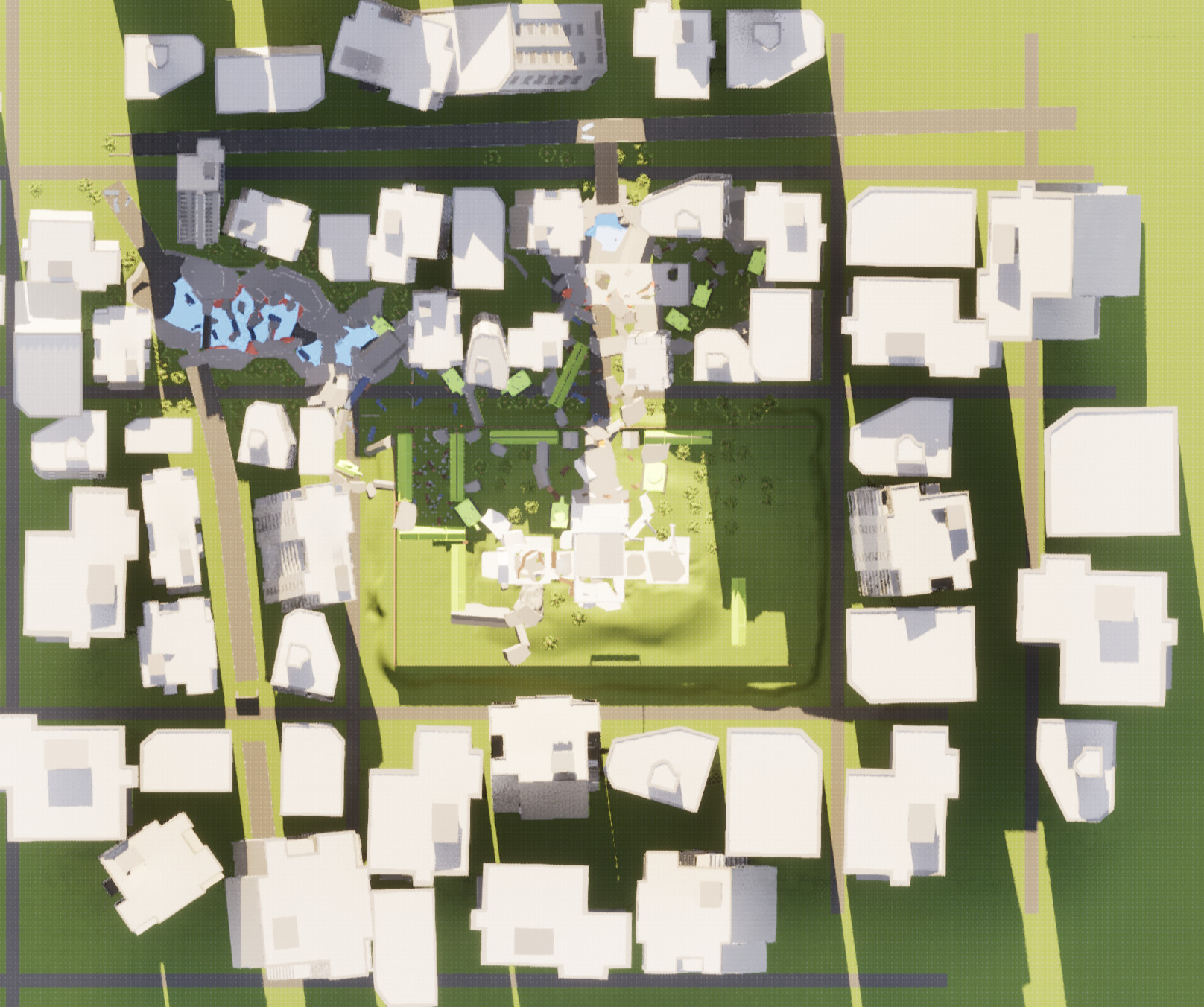
Iteration 5 - Environmental Storytelling
Goal: Add environmental detail to key areas to support environmental storytelling and strengthen the level's sense of place in the earlier days of the outbreak
Results: The detail strengthened the sense of place and the ambush felt better for playtesters, though vista lighting was too bright.
Implementation:
Detailed the Capitol Building, Shockoe Bottom, and the ambush area to support environmental storytelling within each beat
Split the ambush area into distinct sections, giving players room to heal and swap weapons before pushing forward
Top Down
Beat 1
Beat 2
Beat 3
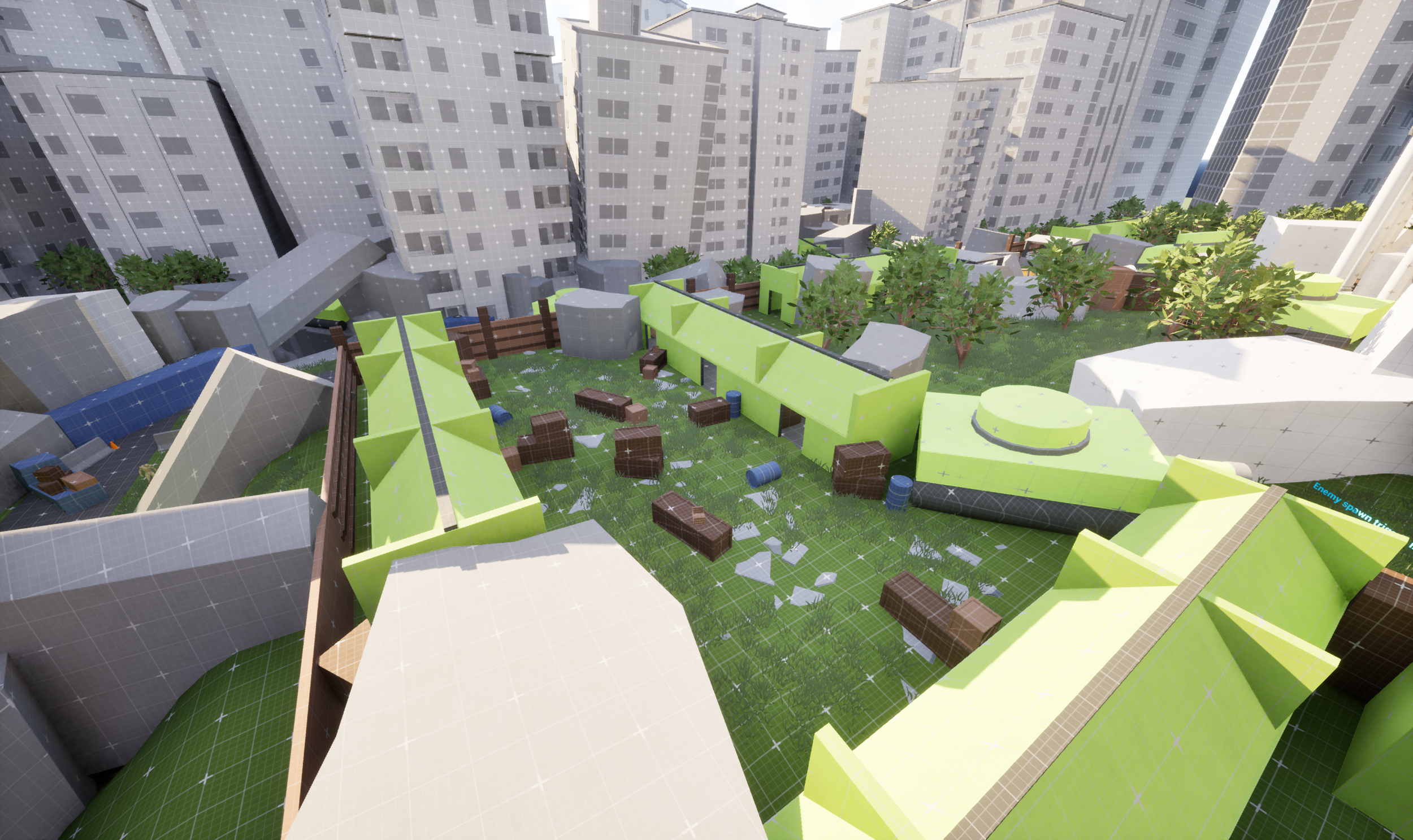
Beat 4
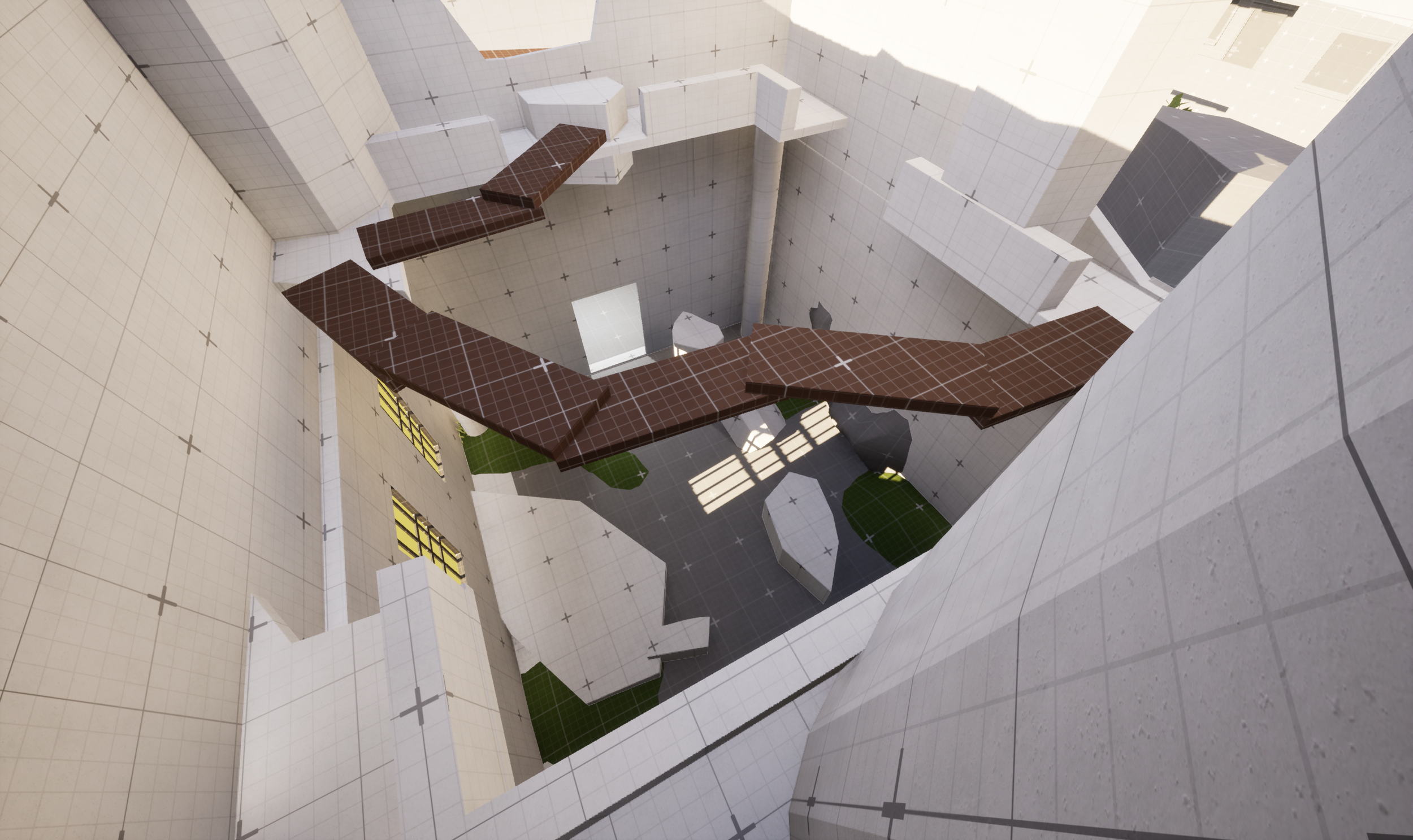
Beat 5
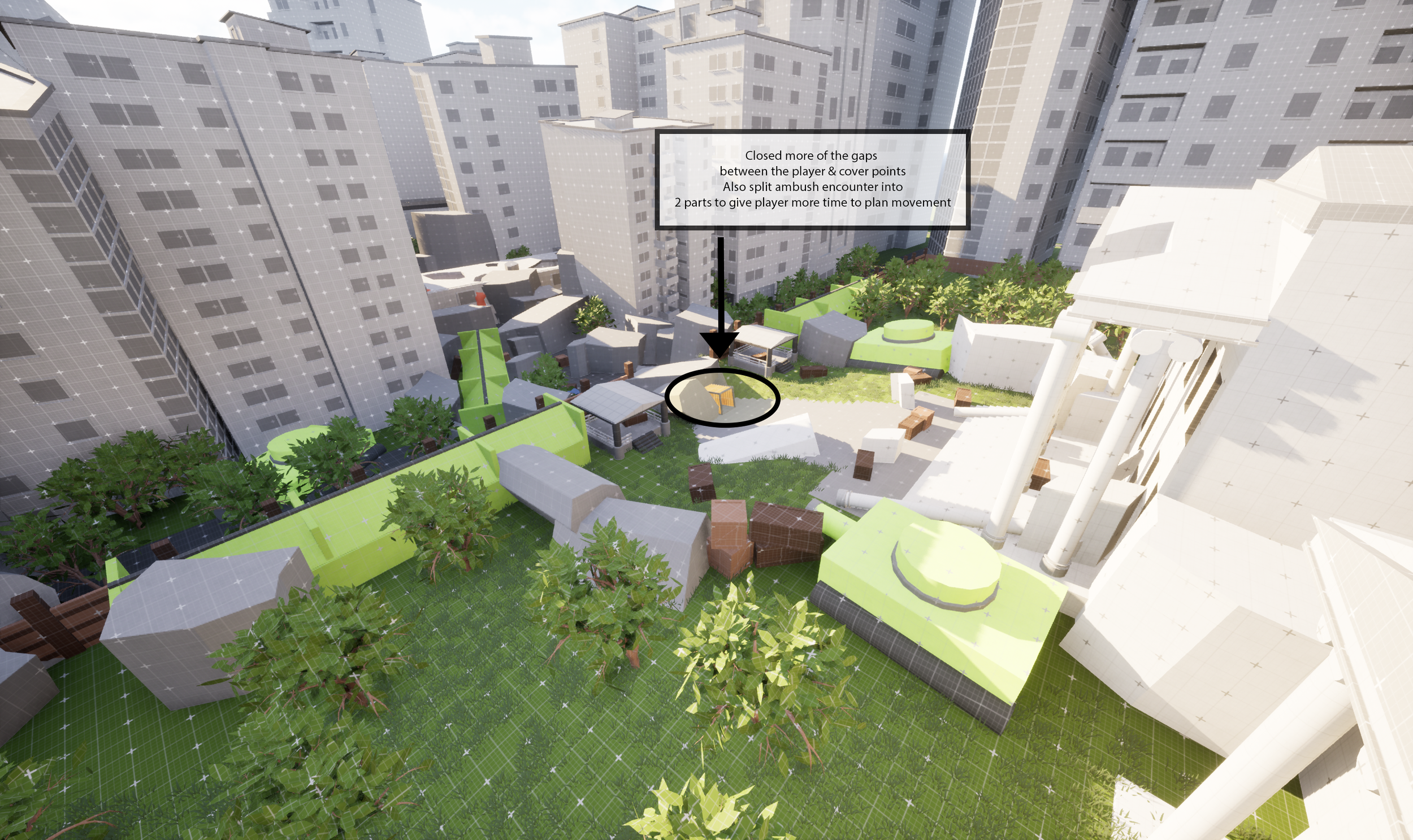
Beat 6
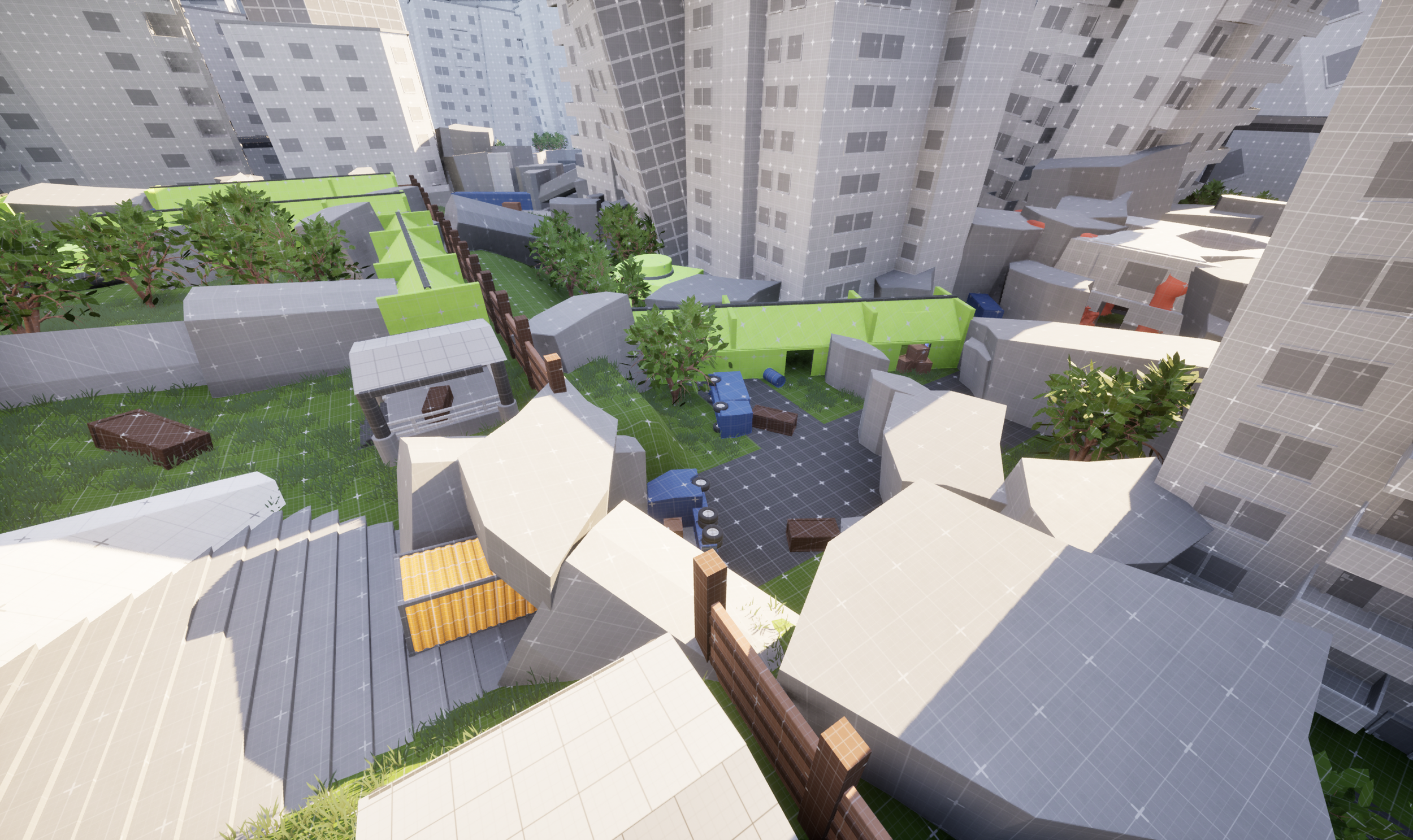
Beat 6 2/2
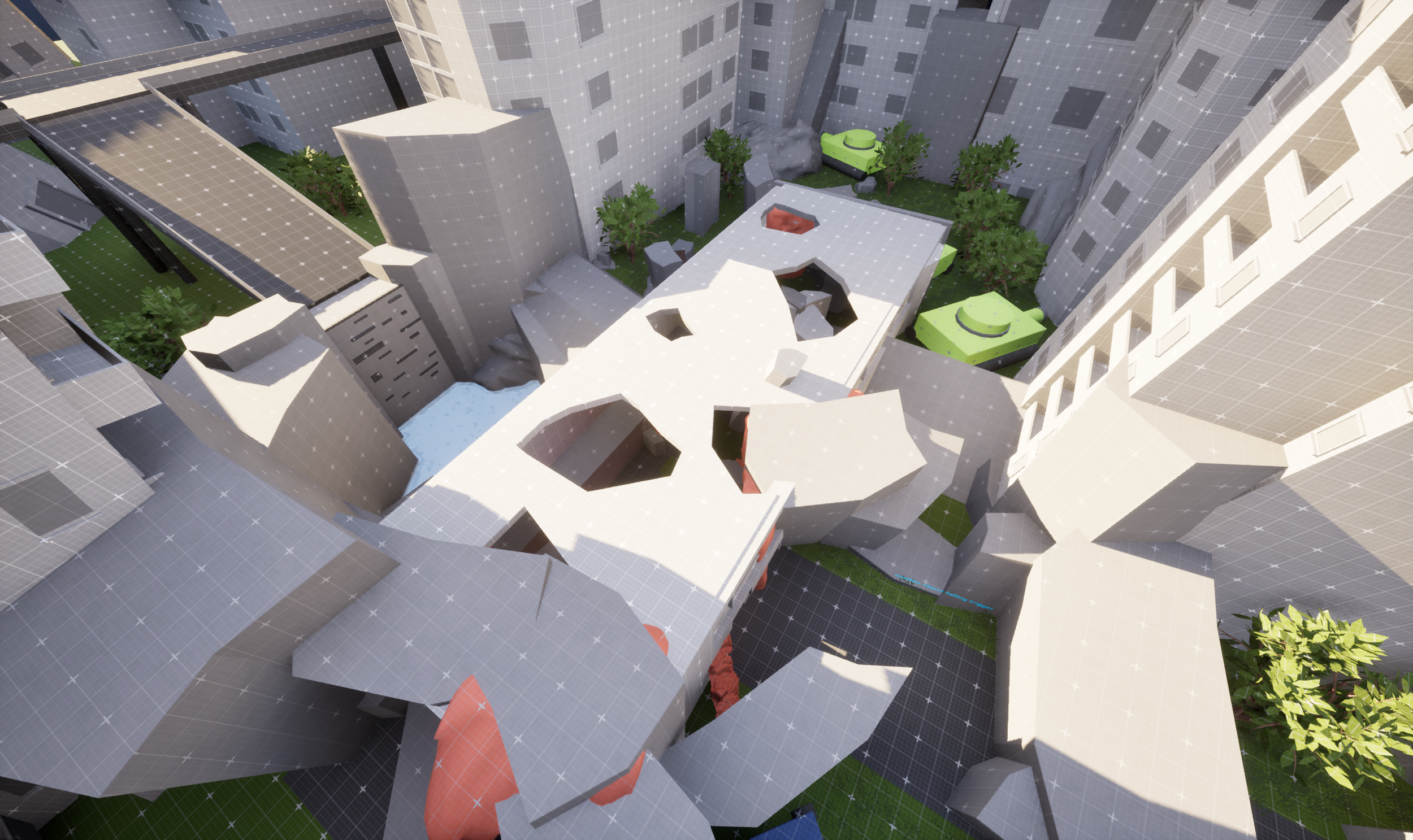
Beat 7 & 8
Final Iteration - Polish
Goal: Polish lighting and audio, drawing inspiration from The Last of Us to keep both simple but purposeful in support of readability and pacing.
Results: Lighting was dialed back for clearer vista readability, and triggered music cues reinforced key beats' emotional and narrative tone.
Implementation:
Dialed back lighting to better frame the vistas and improve readability
Studied The Last of Us's approach to lighting and music, aiming for simplicity over complexity
Added triggered music cues at the opening cinematic, the ambush encounter, and the bridge arrival to reinforce each beat's tone
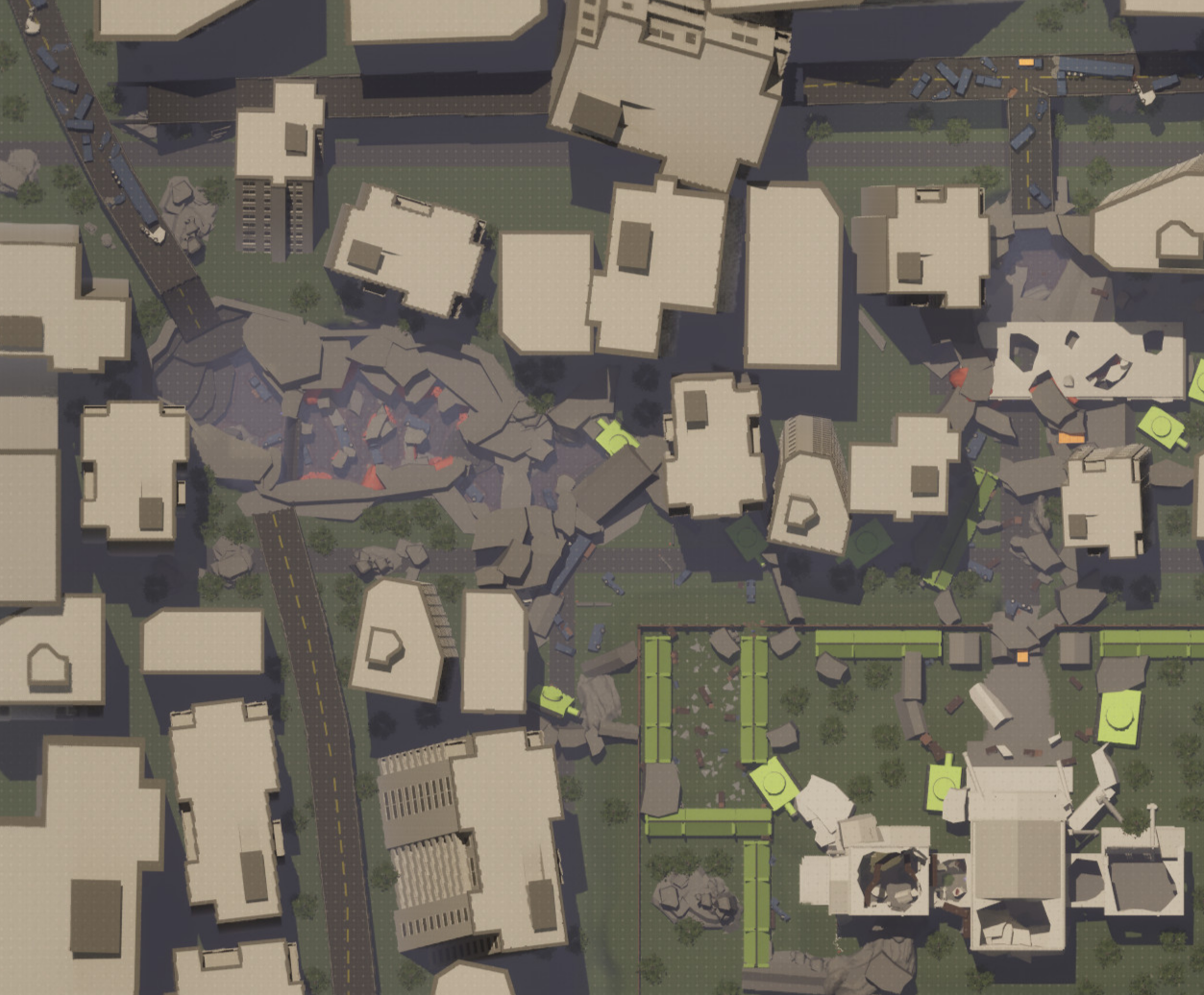
Top Down
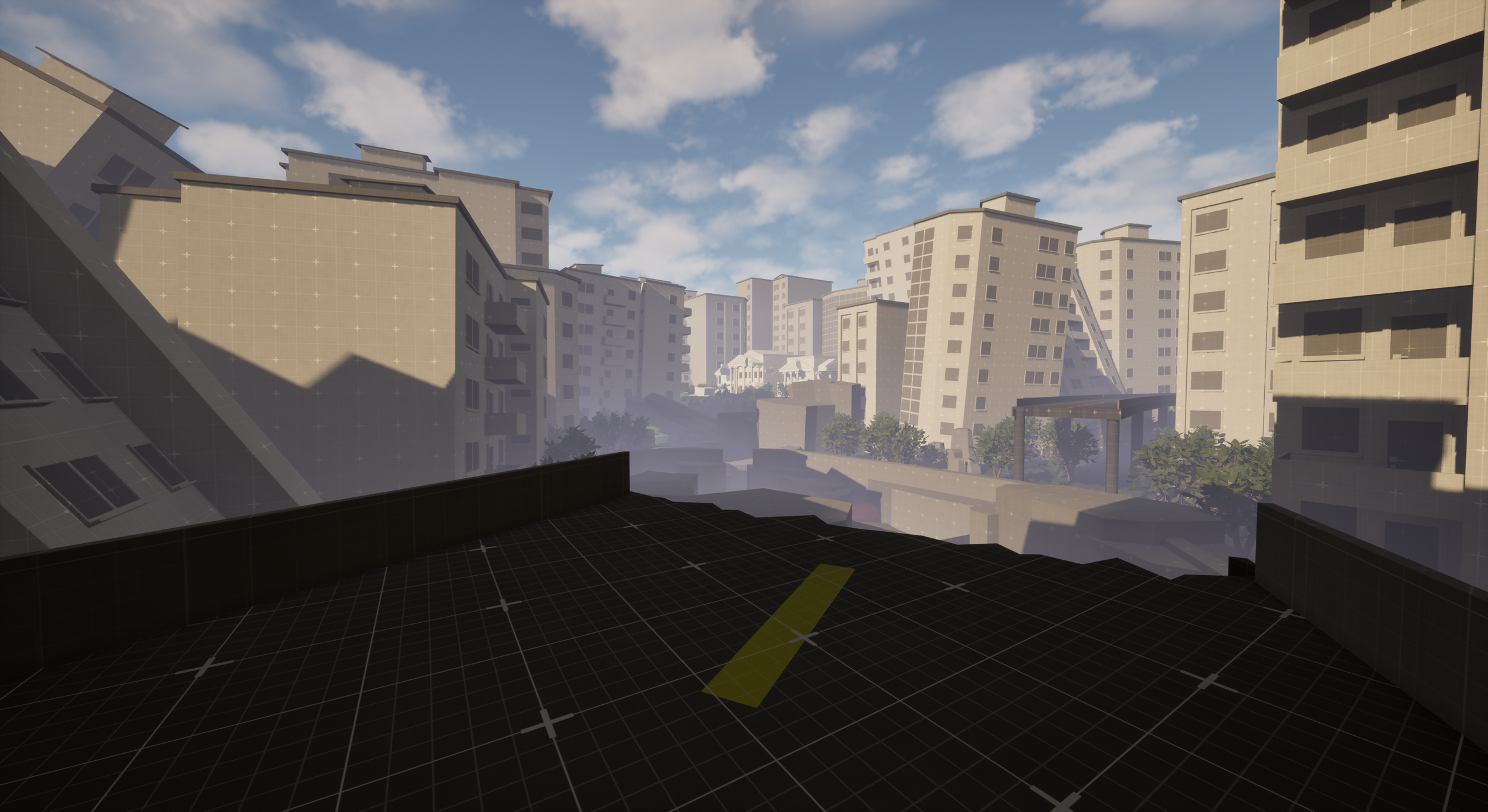
Beat 1
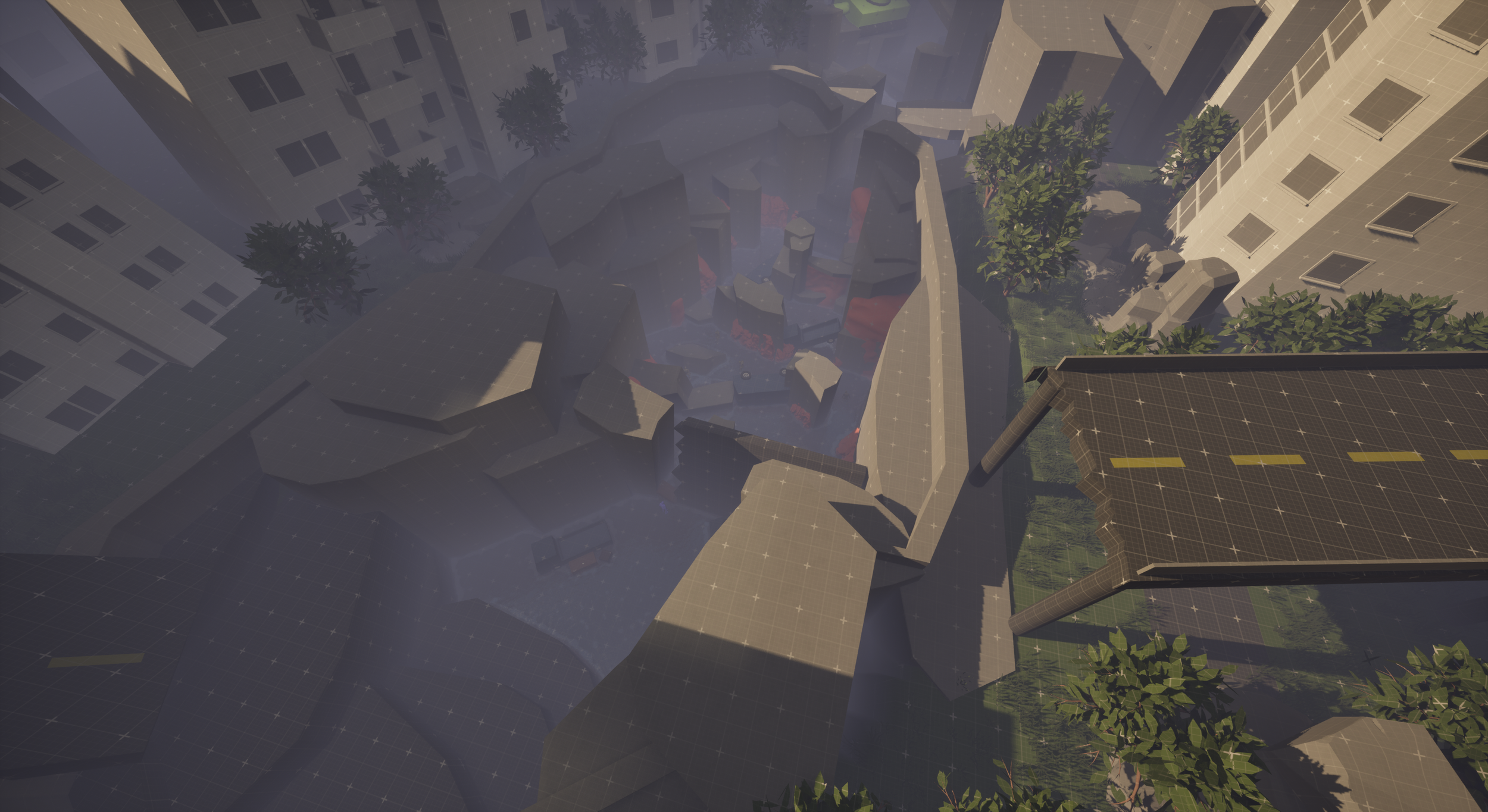
Beat 2
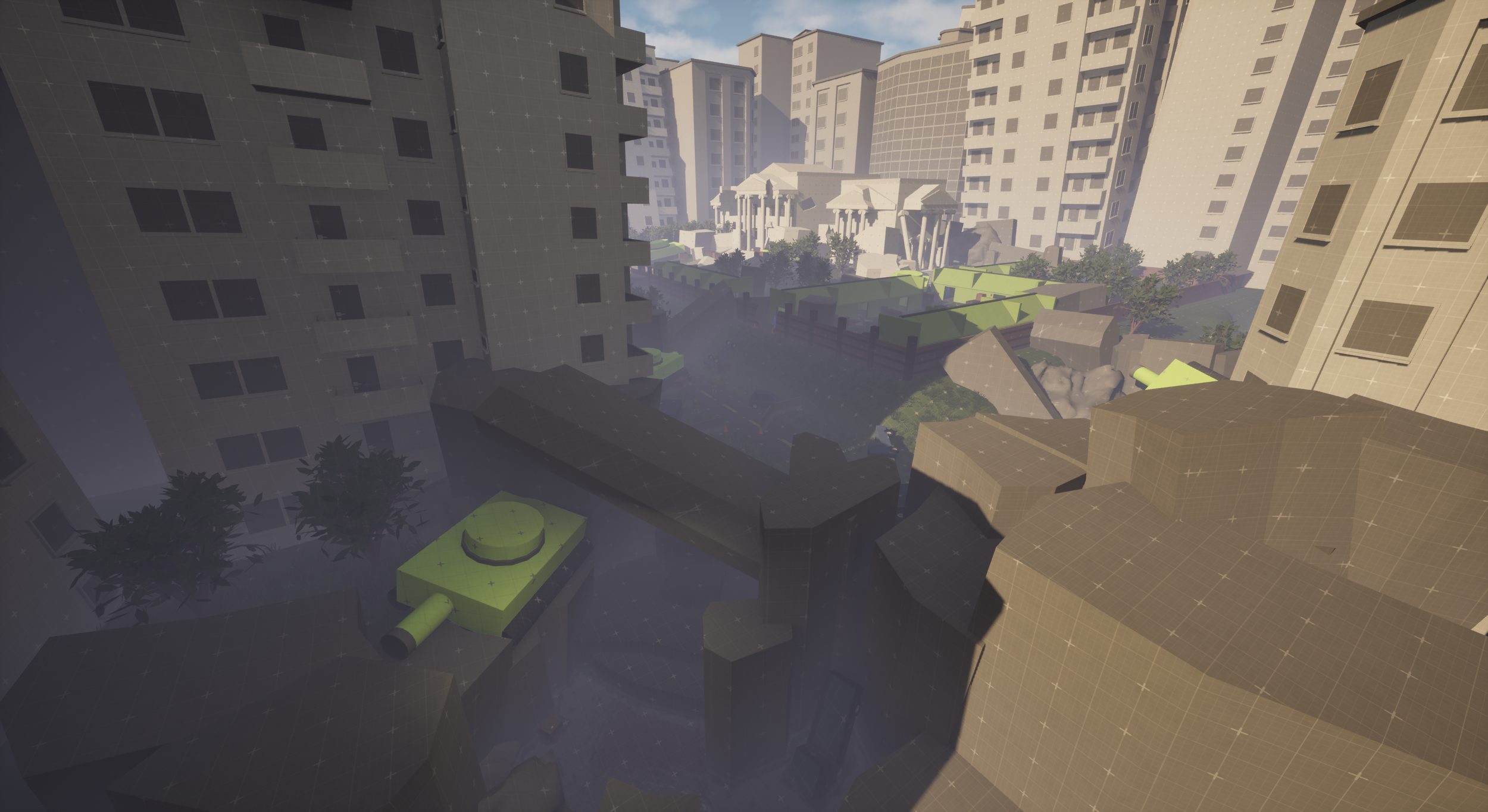
Beat 3
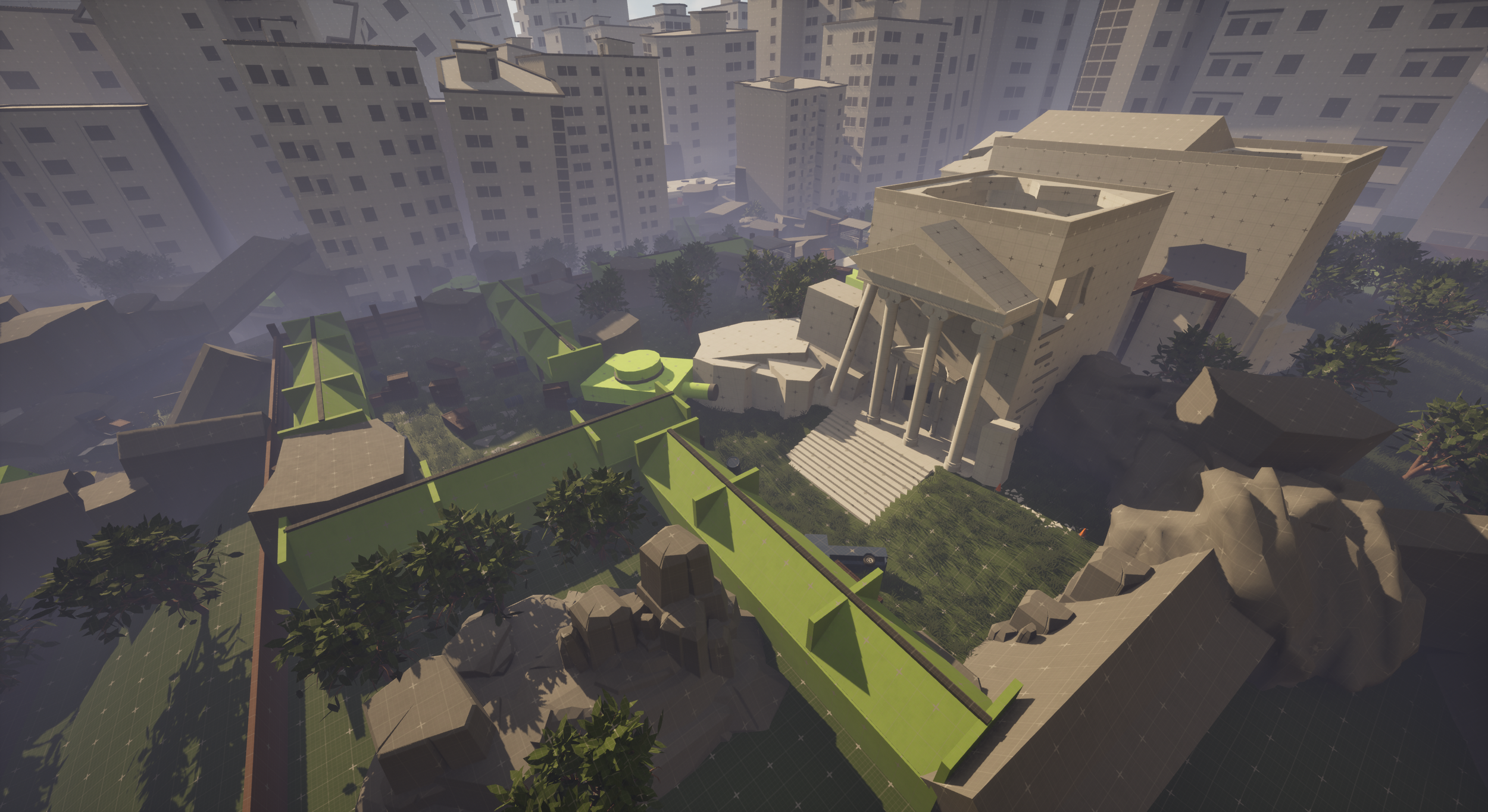
Beat 4
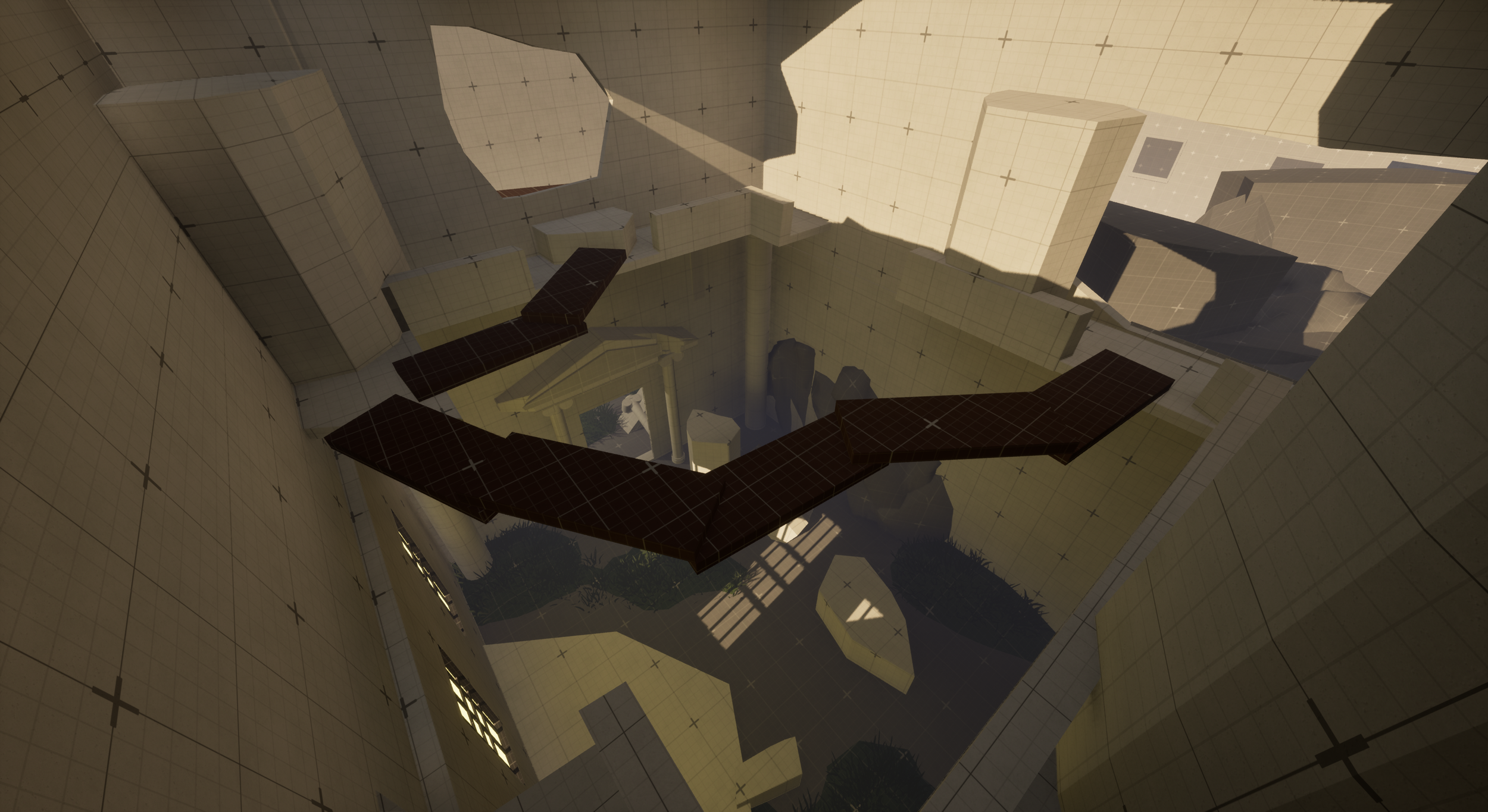
Beat 4 2/3
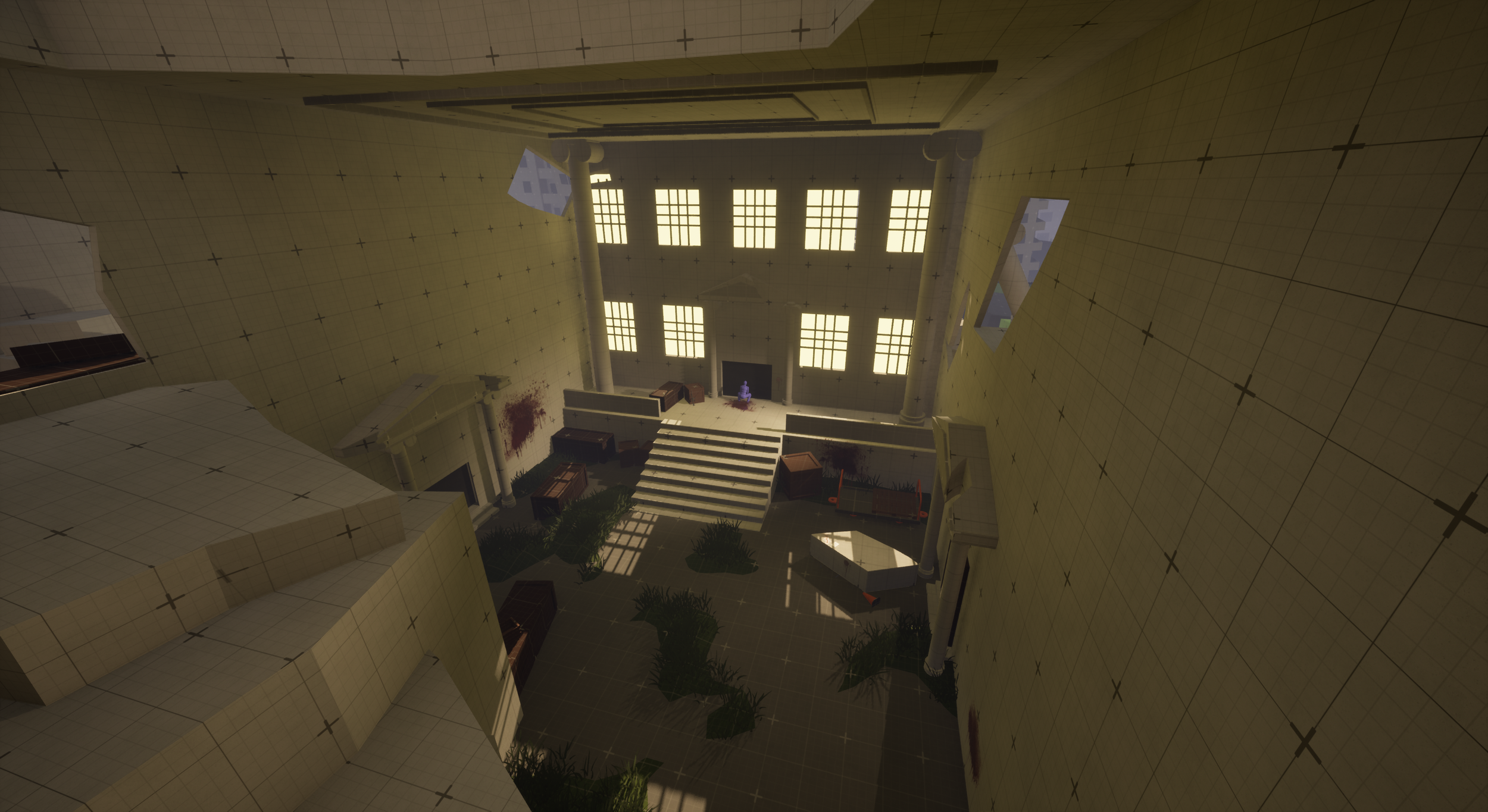
Beat 4 3/3
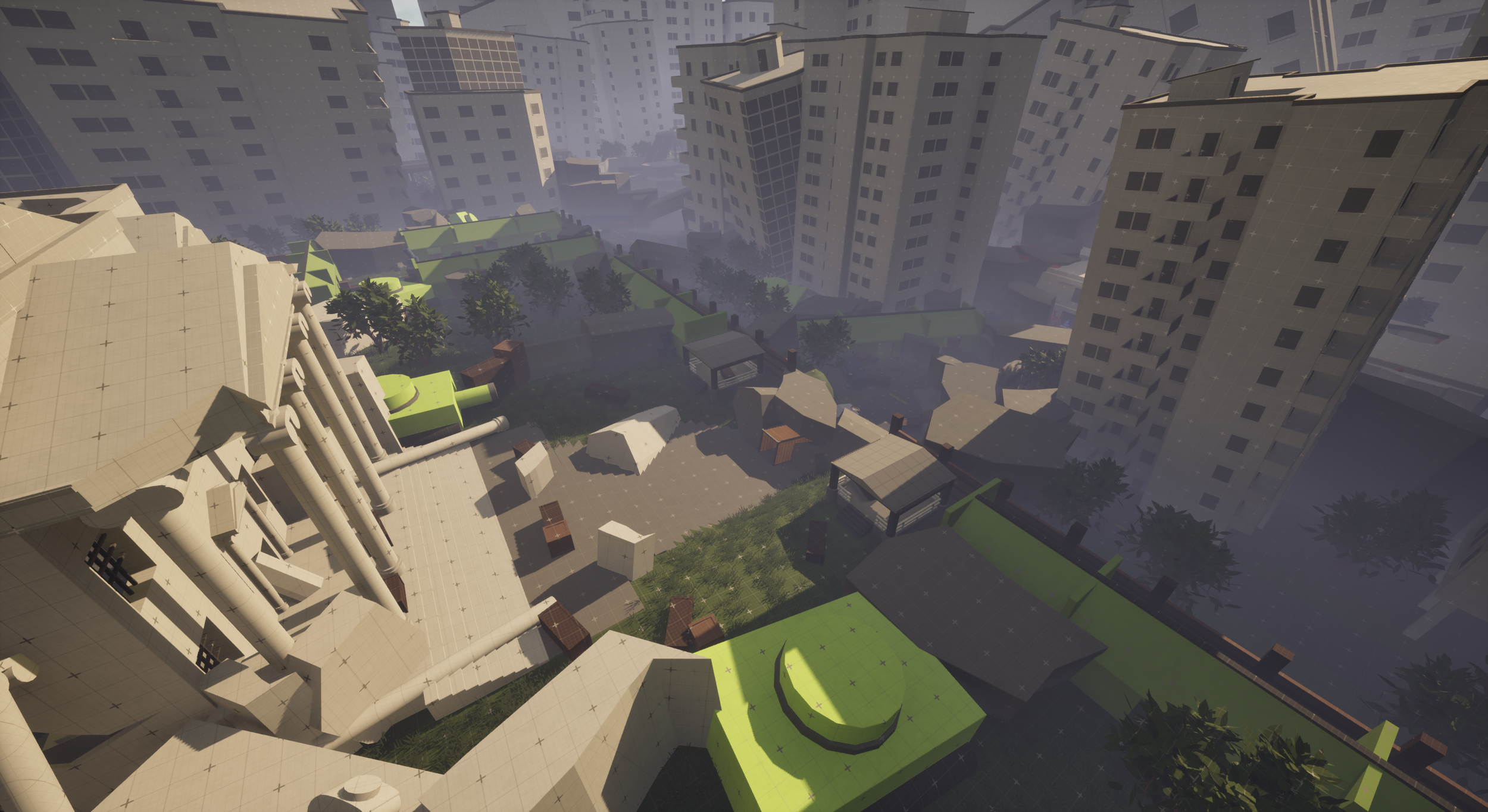
Beat 5
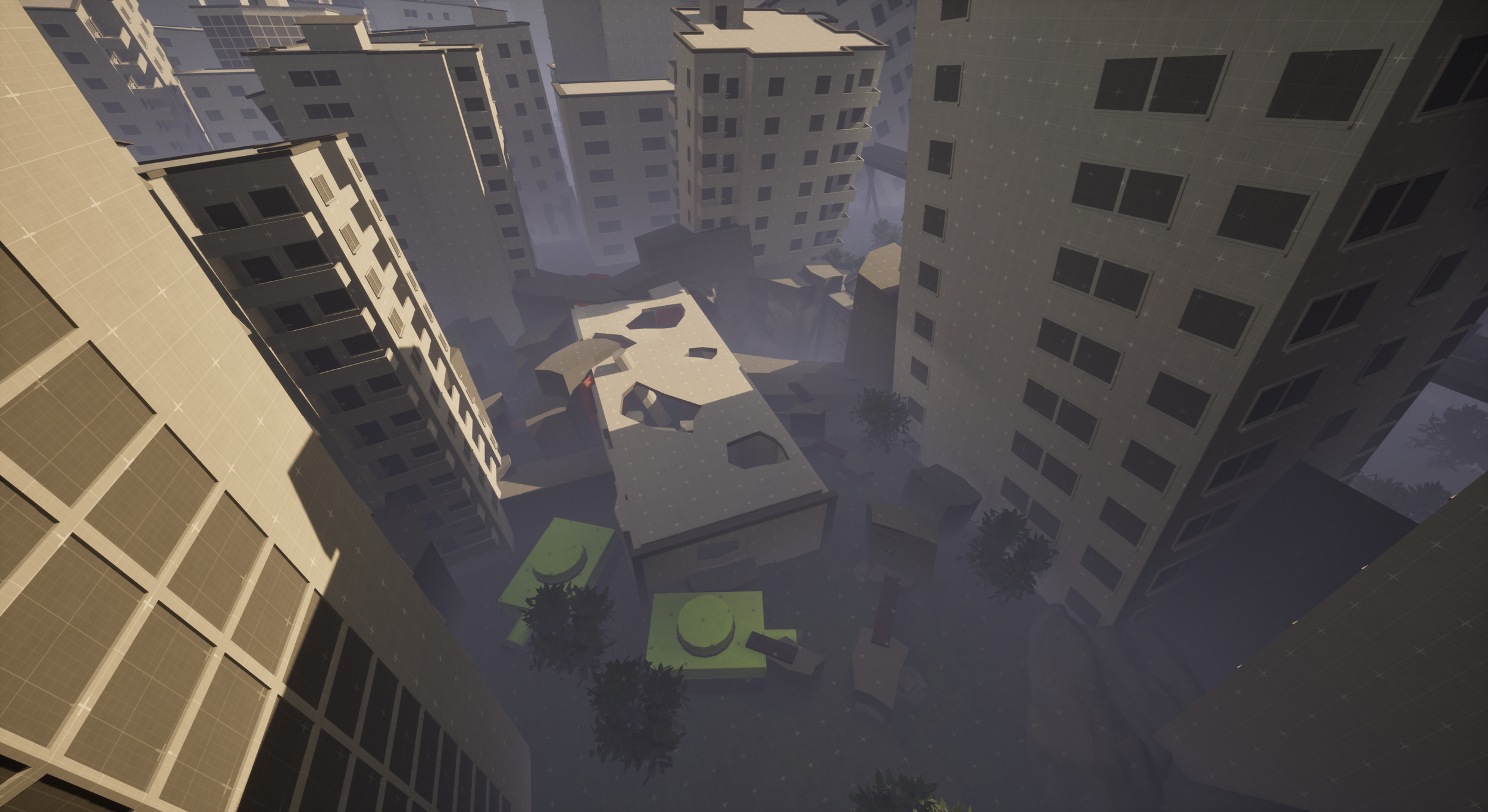
Beat 6
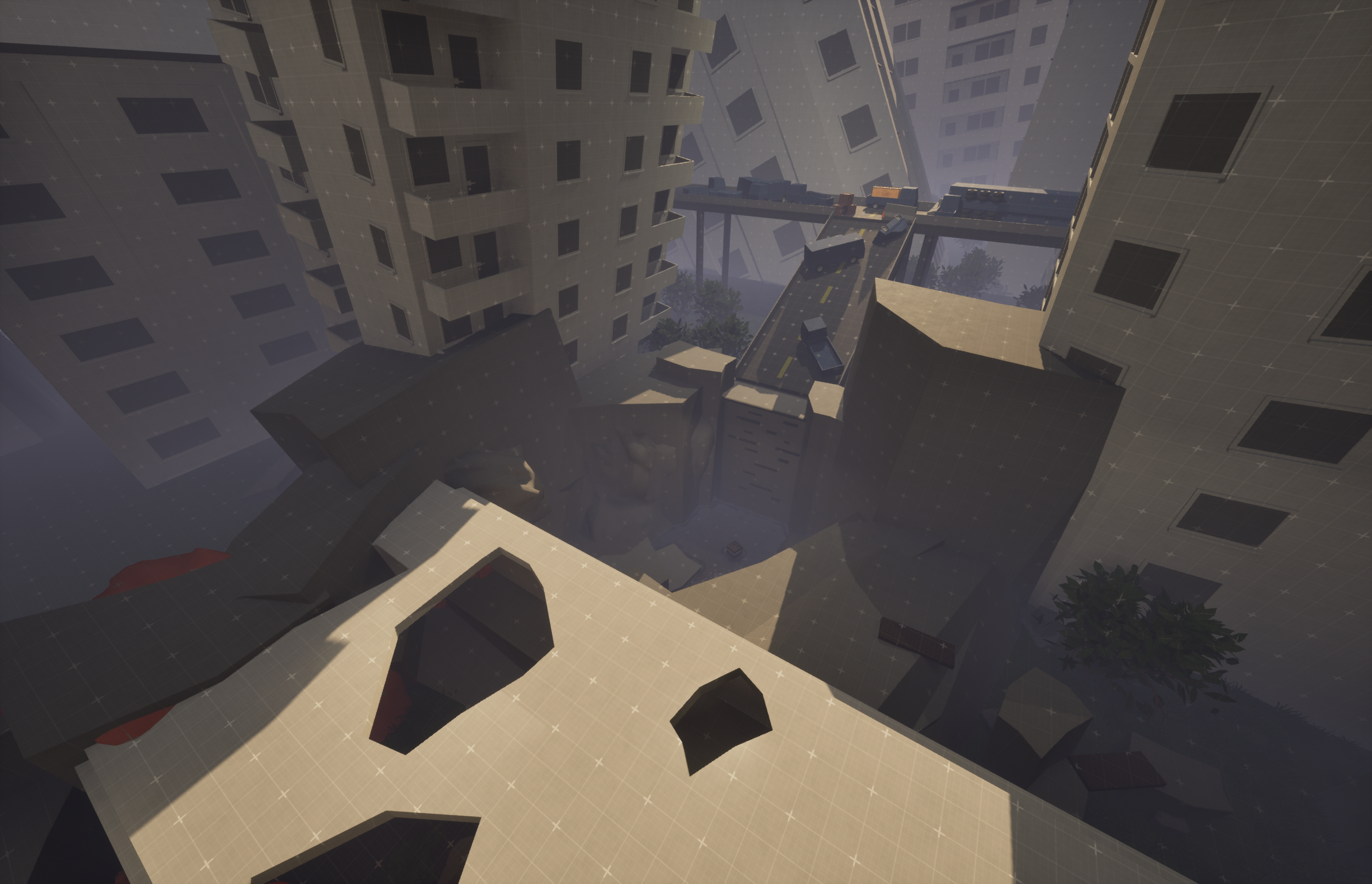
Beat 7
Project Takeaways
This project to me was really about learning how to take feedback without losing sight of what I was trying to make, while also developing a better understanding of how players actually experience a space. A lot came out of the playtesting session data things I assumed were obvious, like where to go next or what a landmark was pointing at, weren't always landing the way I intended. Figuring out that balance between designer intent and player experience was probably the most valuable thing I took away from the whole process.